
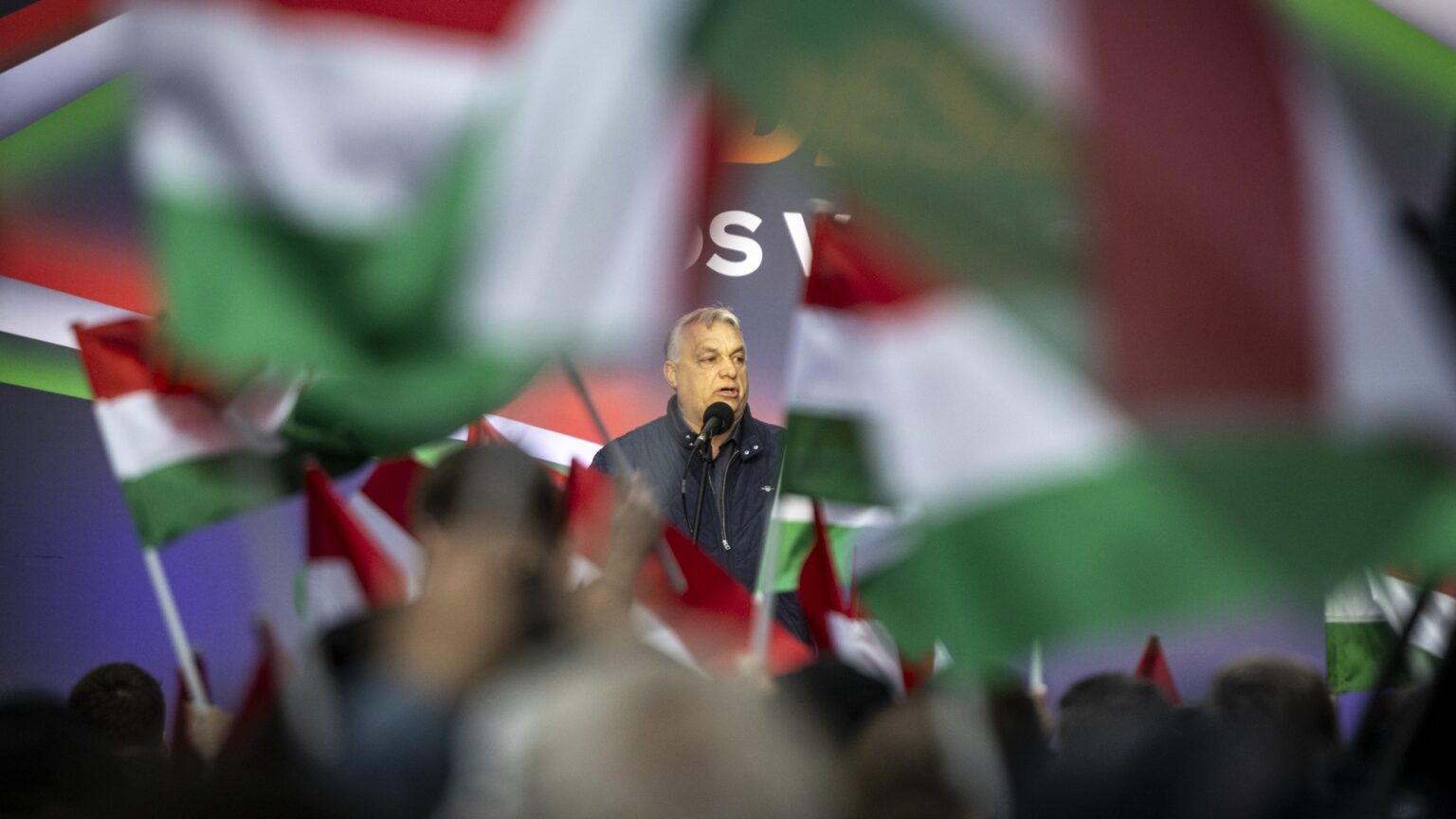
With the 2026 Hungarian parliamentary election less than two weeks away, the obvious question on everyone’s mind is: who will be the next Prime Minister? And if you do a little bit of searching online, you are bound to come across opinions saying that Péter Magyar is the far-and-away favourite to win that position.
And there are some objective data that suggest that it is the case. Namely: polling and social media engagement.
Given the track record of national polling in Hungarian elections, the latter actually holds a lot more water than the former. Yes, Magyar draws a lot more engagement on Facebook, the most commonly used social media platform in Hungary, than Prime Minister Orbán. The same goes for Instagram; while on X, it is PM Orbán who has the edge, by a wide margin. However, that is mostly due to his standing in international right-wing circles. The social media platform X (formerly Twitter) is not widely adopted among the Hungarian public.
However, Orbán still bests his challenger Magyar in follower count on Facebook, with the Prime Minister having 1.6 million followers, while the Tisza candidate’s count stands at 897,000. This also means that Magyar routinely gets a disproportionately high portion of his followers to engage with his posts. For instance, his Christmas family photo in 2025 got 225,000 likes on Facebook, at a time when he had around 800,000 followers. That is about a 28 per cent conversion rate from followers to engagement. By comparison, football superstar Cristiano Ronaldo’s post with the highest conversation rate on the same platform was 0.99 per cent this month; and pop singer Dua Lipa’s post with the highest conversion rate was just 0.4 per cent on the same platform in the same time period.
On top of the unusually high conversion rate, here is another problem in parlaying social media success to electoral success for Magyar: he already had a major advantage in Facebook engagement coming into the European Parliamentary election in 2024, and yet Tisza lost by 15.5 points nationally to Fidesz.
The Hungarian website Media1 published an analysis of the numbers in April 2024. It found that the month before, in March 2024, Magyar more than doubled the Facebook engagement of Prime Minister Orbán and Foreign Minister Szijjártó combined. Nevertheless, the EP election ended in yet another landslide Fidesz victory.
Which brings us to another point: popular vote margin shifts.
Between the 2022 Hungarian parliamentary election and the 2024 European Parliament election, the national popular vote difference shifted 4.5 points to the left. For Tisza to claim a popular vote victory, it would need a further 16-point shift over the next two-year period. However, Tisza may be in luck: between the 2019 European Parliament election and the 2022 general election, the popular vote shifted by about 17 points to the left.
‘Magyar already had a major advantage in Facebook engagement coming into the European Parliamentary election in 2024, and yet Tisza lost by 15.5 points nationally to Fidesz’
However, that is the largest swing in the popular vote between an EP election and a general election in Hungarian history, which occurred over the span of three years, not two. Also, a 0.5-point, or even a 2–3-point victory in the popular vote most likely would not be enough for Tisza to take a majority of the seats in the National Assembly.
In the Hungarian electoral system, 93 seats are allocated proportionally to the national popular vote, provided a party meets the 5-per-cent threshold needed for seats from the national party lists. The remaining 106 seats are won in regional contests in electoral districts. Fidesz has a major edge in geographically proportionate rural precincts: for instance, in 2022, PM Orbán’s party won 86 out of the 88 districts outside of the capital city of Budapest, while the United Opposition took 16 out of 18 Budapest seats.
Tisza would need to achieve such a drastic improvement in economic conditions that are much more favourable to Fidesz than in the 2022–2024 period. After the COVID pandemic, the annual inflation rate in Hungary was 14.6 per cent in 2022, and 17.6 per cent in 2023; which then dropped to 3.7 per cent in 2024, and ticked up to 4.4 per cent in 2025. Meanwhile, the primary Hungarian stock index BUX returned 40 per cent in 2025, and is currently up 8.5 per cent YTD, outperforming the Dow Jones in the United States and the EURO STOXX 50 index in Europe both years.
There are certain behaviours from major political actors that do not align with an impending Tisza victory either.
In the two months leading up to the election, Fidesz flipped two city council seats in two by-elections: in February, in Balmazújváros, Hajdú-Bihar County; then in March, in Kazincbarcika, Borsod-Abaúj-Zemplén County. Opposition media and supporters were quick to downplay those results, pointing out that Tisza did not field a candidate in either race. However, that statement in itself is more telling than they realize.
How could a political party, with a supposed double-digit national lead, eager to take over the executive branch of the government in about two months, not have the capacity to put up a winning campaign for seats that were held by the opposition, and required less than 1,000 votes to win each?
Prime Minister Viktor Orbán is certainly not the most popular man in Brussels, Belgium. Yet, the well-connected POLITICO news site ran two pieces in the last few weeks on anonymous EU sources sharing information with them about the Brussels leadership preparing for a fifth consecutive Orbán term in Hungary.
Will Viktor Orbán Win the 2026 Hungarian Election?
So, taking all these factors into account, let’s go back to the original question posed at the beginning of this piece: who will be the next Prime Minister of Hungary?
The most likely answer is Viktor Orbán. Is a Péter Magyar victory outside the realm of possibilities? No, but it is very unlikely. He is in contention to win a narrow popular vote victory, which, even if it did not grant him Prime Ministership, would put PM Orbán in a defensive position he has not been in 16 years, and could set up a Tisza victory in 2030.
The general consensus across the political spectrum in Hungary is that this will be the closest election Viktor Orbán has faced since returning to power in 2010. However, even this assessment should be taken with a grain of salt: in 2022, the same consensus prevailed, yet Fidesz ultimately increased its popular vote share and secured a constitutional supermajority for the fourth time in a row.
Related articles: