
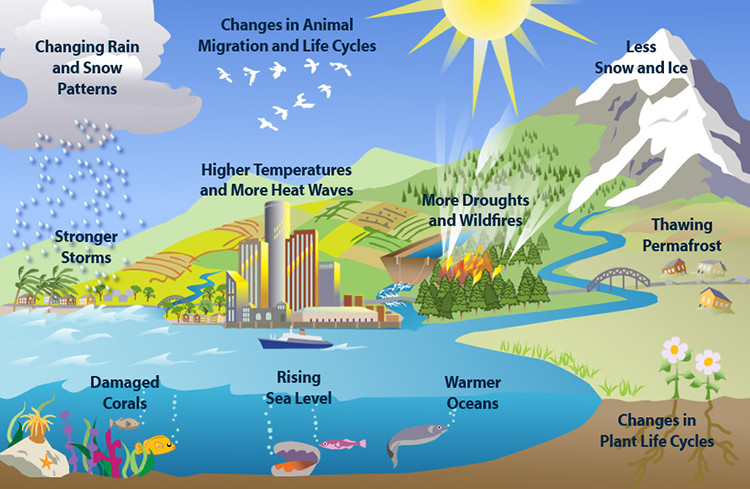
Climate change refers to long term alterations in global temperatures and weather patterns, largely driven by human activities such as the burning of fossil fuels, deforestation, and industrial processes.
It is one of the most critical global challenges because it affects natural systems, economies, and societies worldwide. Rising temperatures, changing precipitation patterns, and more frequent extreme weather events are already being observed across different regions.
Climate change is not a distant threat. It is a present and accelerating phenomenon with widespread consequences.
What are extreme weather events
Extreme weather events include unusually severe or rare occurrences such as heatwaves, floods, droughts, storms, and wildfires. These events go beyond normal climate variability and often cause significant damage.
Examples include prolonged heatwaves in Europe, intense flooding in Asia, and large scale wildfires in North America and Australia. The frequency and intensity of such events have increased in recent years.
These events can disrupt daily life, damage infrastructure, and pose risks to human health and safety.
How is climate change linked to extreme weather
Climate change increases the likelihood and severity of extreme weather events. Warmer air can hold more moisture, leading to heavier rainfall and flooding. Higher temperatures also contribute to more intense heatwaves and droughts.
Oceans are absorbing heat, which can intensify storms and hurricanes. Changes in atmospheric patterns can also lead to prolonged weather extremes.
While individual events cannot always be attributed solely to climate change, the overall trend shows a clear connection.
What regions are most affected by extreme weather
All regions are affected, but some are more vulnerable than others. Low lying coastal areas face risks from rising sea levels and storms. Arid regions are more prone to droughts, while tropical areas may experience stronger cyclones.
Developing countries often face greater challenges due to limited resources for adaptation and recovery. However, extreme weather is increasingly impacting developed countries as well.
The global nature of climate change means that no region is immune.
What are the economic impacts of climate change
Climate change has significant economic consequences. Damage to infrastructure, agriculture, and property can lead to substantial financial losses.
Extreme weather events disrupt supply chains, reduce productivity, and increase insurance costs. Governments may need to allocate more resources for disaster response and recovery.
Long term impacts include changes in agricultural yields, water availability, and energy demand.
How does climate change affect human health
Climate change poses serious risks to human health. Heatwaves can lead to heat related illnesses and increased mortality. Air quality may worsen due to wildfires and pollution.
Changes in climate can also affect the spread of diseases, as warmer temperatures create favorable conditions for certain pathogens and vectors.
Access to clean water and food may be affected, further impacting health outcomes.
What is being done to mitigate climate change
Efforts to mitigate climate change focus on reducing greenhouse gas emissions. This includes transitioning to renewable energy sources, improving energy efficiency, and adopting sustainable practices.
International agreements such as the Paris Agreement aim to coordinate global action. Countries set targets to limit temperature increases and reduce emissions.
Private sector initiatives and technological innovations also play a role in mitigation efforts.
How are countries adapting to climate change
Adaptation involves adjusting systems and practices to minimize the impacts of climate change. This includes building resilient infrastructure, improving water management, and developing early warning systems.
Urban planning is being adapted to cope with heat and flooding, while agricultural practices are evolving to deal with changing conditions.
Adaptation is essential because some level of climate change is already unavoidable.
What role does technology play in addressing climate change
Technology is a key tool in both mitigation and adaptation. Renewable energy technologies such as solar and wind power are reducing reliance on fossil fuels.
Advances in data analysis and climate modeling improve our understanding of climate patterns and risks. Innovations in agriculture, transportation, and industry contribute to more sustainable practices.
However, technology alone is not sufficient and must be combined with policy and behavioral changes.
How does climate change affect global food security
Climate change impacts agriculture through changes in temperature, precipitation, and extreme weather events. Droughts, floods, and heatwaves can reduce crop yields and disrupt food production.
This can lead to higher food prices and increased risk of food insecurity, particularly in vulnerable regions.
Ensuring food security requires adapting agricultural practices and improving resilience.
What are the risks of inaction
Failing to address climate change could lead to more severe and frequent extreme weather events, greater economic losses, and increased social instability.
Rising sea levels could displace populations, while resource scarcity could lead to conflicts. Ecosystems may be permanently altered or destroyed.
The longer action is delayed, the more difficult and costly it becomes to manage the impacts.
What scenarios could unfold in the future
Future scenarios depend on the level of global action. Strong mitigation efforts could limit temperature increases and reduce risks.
If emissions continue to rise, more severe impacts are likely, including intensified weather events and greater environmental damage.
Intermediate scenarios involve gradual changes with ongoing challenges.
The choices made today will shape these outcomes.
Why does climate change matter globally
Climate change is a global issue because its impacts are interconnected. Environmental changes in one region can affect others through trade, migration, and economic links.
Addressing climate change requires international cooperation and coordinated action. No single country can solve the problem alone.
The global nature of the challenge makes it one of the defining issues of our time.
Conclusion
Climate change and extreme weather events are reshaping the world in profound ways. The increasing frequency and intensity of these events highlight the urgency of action.
While efforts are underway to mitigate and adapt, significant challenges remain. Balancing economic development with environmental sustainability is a key task for governments and societies.
The future will depend on how effectively the global community responds to this challenge.