
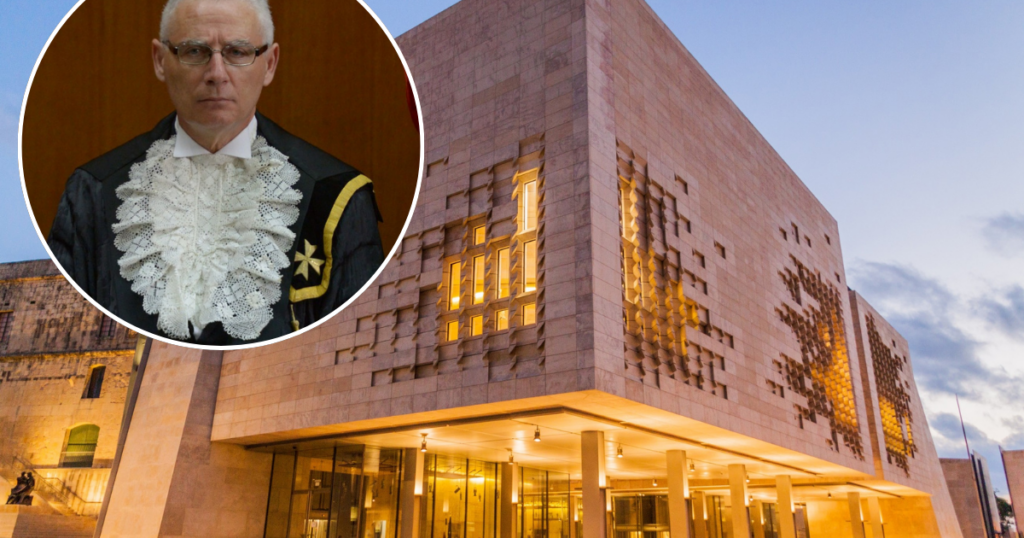
Maltese citizens are being blocked from fully fighting discrimination in local courts because the government has failed to add a key international treaty to Maltese law, a decade after it was signed, according to the Ombudsman.
In a statement issued on Wednesday, Ombudsman and former judge Joseph Zammit McKeon said that while Malta officially agreed to Protocol No 12 of the European Convention on Human Rights (ECHR) in 2015, the government never took the final step of writing it into national laws.
This means that if a public authority treats a citizen unfairly, the individual cannot use this specific provision to defend themselves in a Maltese court. Instead, they are forced to take the long and expensive journey to the European Court in Strasbourg.
Zammit McKeon issued the sharp reminder on the 10-year anniversary of the protocol, which technically came into force for Malta on April 1, 2016. He described the current situation as a major gap in the justice system that leaves citizens vulnerable.
“This is a serious shortcoming that remains unaddressed till this very day, despite repeated calls by the Office of the Ombudsman in its public statements in Malta and abroad, in its reports and annual Ombudplans,” he said.
“Depriving persons from seeking redress before the Maltese courts because Protocol 12 is not part of the laws of Malta is a fundamental concern that remains unresolved.”
Why it matters
Protocol 12 is a treaty of the ECHR that is essentially a general prohibition of discrimination.
The protocol prohibits any discrimination in the enjoyment of any right enshrined in the law, even if it is not specifically listed in the ECHR. This includes rights granted by national laws.
Currently, Maltese law only lets people claim discrimination if it is tied to another specific right, like their right to property or their right to a fair trial.
Protocol 12 is different because it is a standalone right. It simply says that no public authority can discriminate against you for any reason.
If the law were updated, a person who felt discriminated against by a government department or a local council could take their case directly to a Maltese judge.
As things stand, the Maltese judiciary’s hands are tied because the government has not given them the legal power to enforce this specific protocol.
“Subsidiarity presupposes that persons should be enabled to seek effective protection within their own national legal systems before turning to Strasbourg,” the statement said.
“Because Protocol 2 is not part of the laws of Malta, persons seeking protection have to turn to the ECtHR directly to the exclusion of Maltese courts.”
The Ombudsman is now calling on MPs to finally enshrine the protocol in Maltese law.
“The matter should therefore be addressed, remedied and resolved without further unnecessary delay,” he said.