
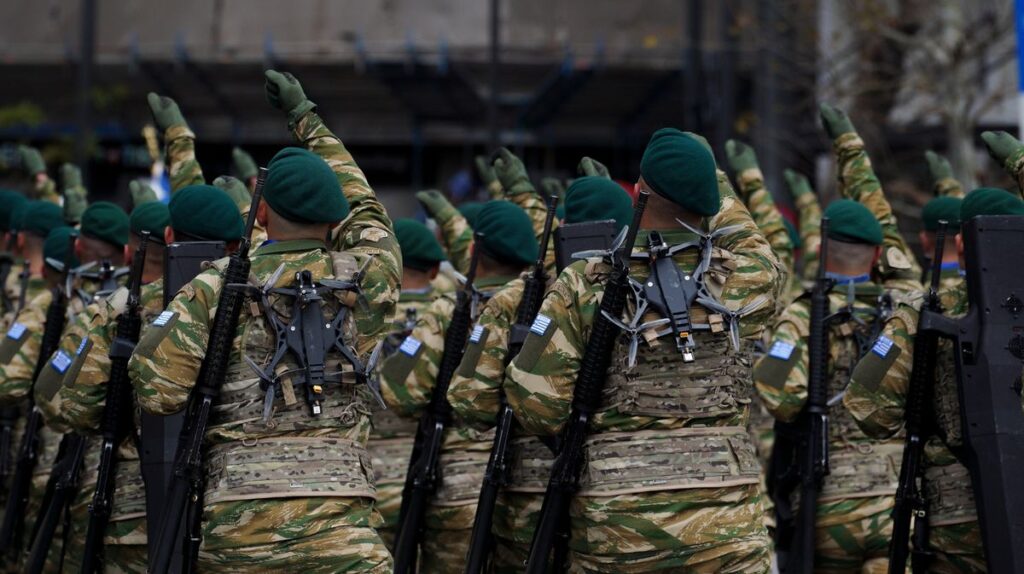
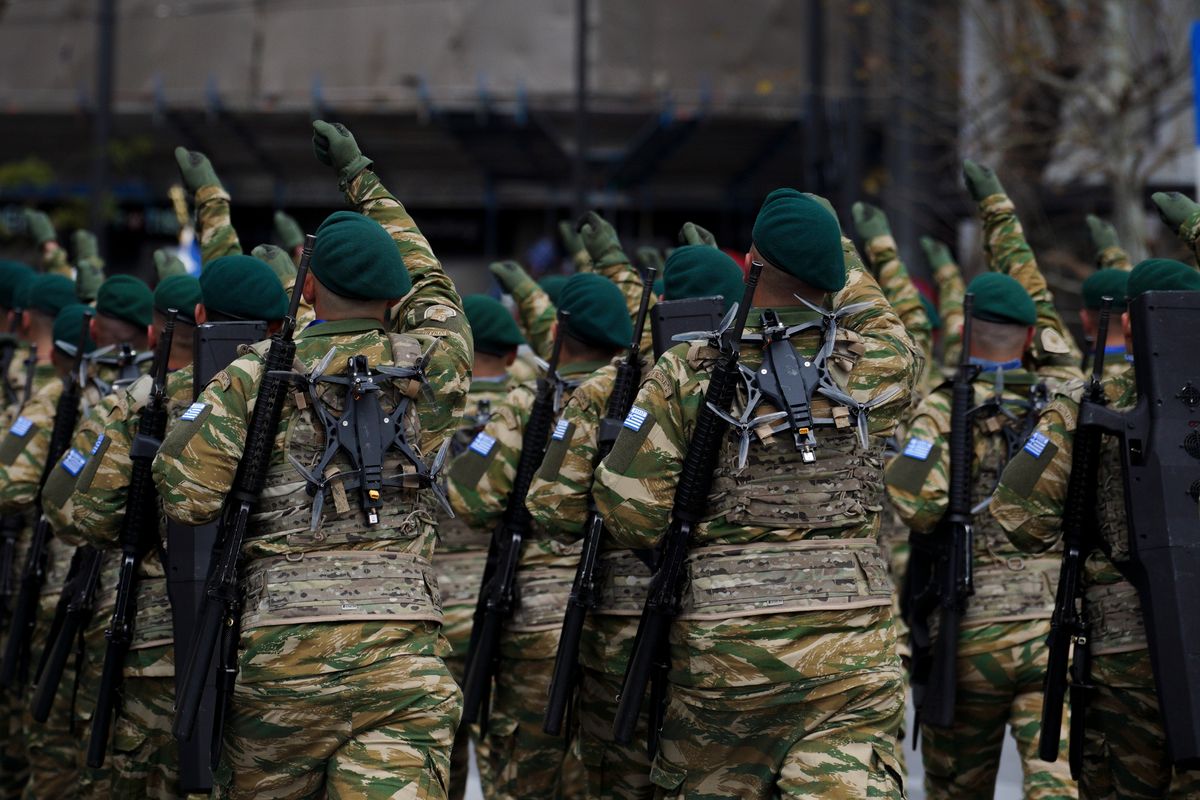
Greece could be at risk of attacks from Iran(Image: NurPhoto via Getty Images)
Greece is preparing to defend itself from Iranian attacks amid the growing threat of the Middle Eastern war spilling into Europe.
The EU nation’s government carried out a “routine” military exercise as a “preventative drill because we live in uncertain times”, Greece’s Merchant Marine Minister warned. The drill saw a coastguard helicopter respond to a simulated drone strike on an oil tanker in the Bay of Elefsina, just 15km from Athens, similar to the attacks Iran has conducted on nations like the United Arab Emirates and Qatar.
There are grave implications for the UK, which while it does not have military bases in Greece, has two close sovereign bases in Cyprus. The island has already been a target of Iran due to the military presence of NATO forces – which includes a sizeable US contingent. The alert on Greece making military preparations was raised by the United States: After the Greek military drill, the United States Secretary of Defense advisor Douglas Macgregor wrote in a post on X: “BREAKING: Greece preparing for Iranian attack.”
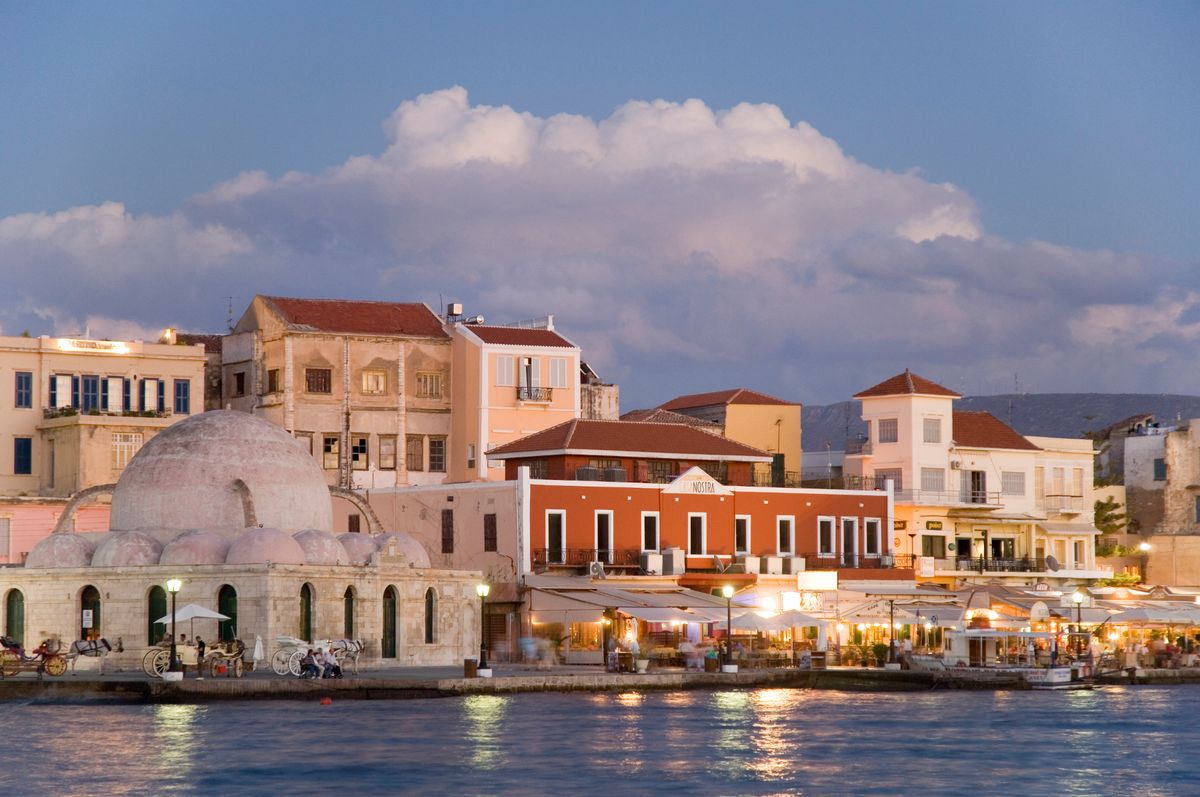
There is a naval military base on Crete, next to the capital Chania(Image: Getty Images)
READ MORE: Iran war LIVE: Donald Trump announces emergency address to nation on IranREAD MORE: Urgent warning to tourists as hotels become ‘potential targets’ for Iran strikes
Greece would be a tempting target for Iran given there are approximately 400–415 active-duty U.S. military personnel permanently stationed in the country, the majority at a base in Crete. However, U.S. military presence can spike to around 2,000 personnel during large-scale exercises – and the current Iran situation has seen a spiralling in US forces in the area.
The UK has around 3,500 military personnel station in nearby Cyprus – members of the RAF, Army and Royal Navy – and another 7,000 civilian support staff.
Crete Naval Base
A major naval base sits in Crete – a major holiday hotspot for British tourists – in Souda Bay, a town in the island’s capital of Chania. This strategic military spot is home to the U.S. Naval Support Activity (NSA) which enables the US and its allied partners a military location between Europe, the Middle East and north Africa.
This military site is home to around 1,000 people, including active military personnel, US civilian workers, family members and local employees.
This base is also worryingly close to the Chania International Airport at less than 3km away. This airport operates several direct flights from the UK, including from airlines like Ryanair, British Airways and EasyJet.
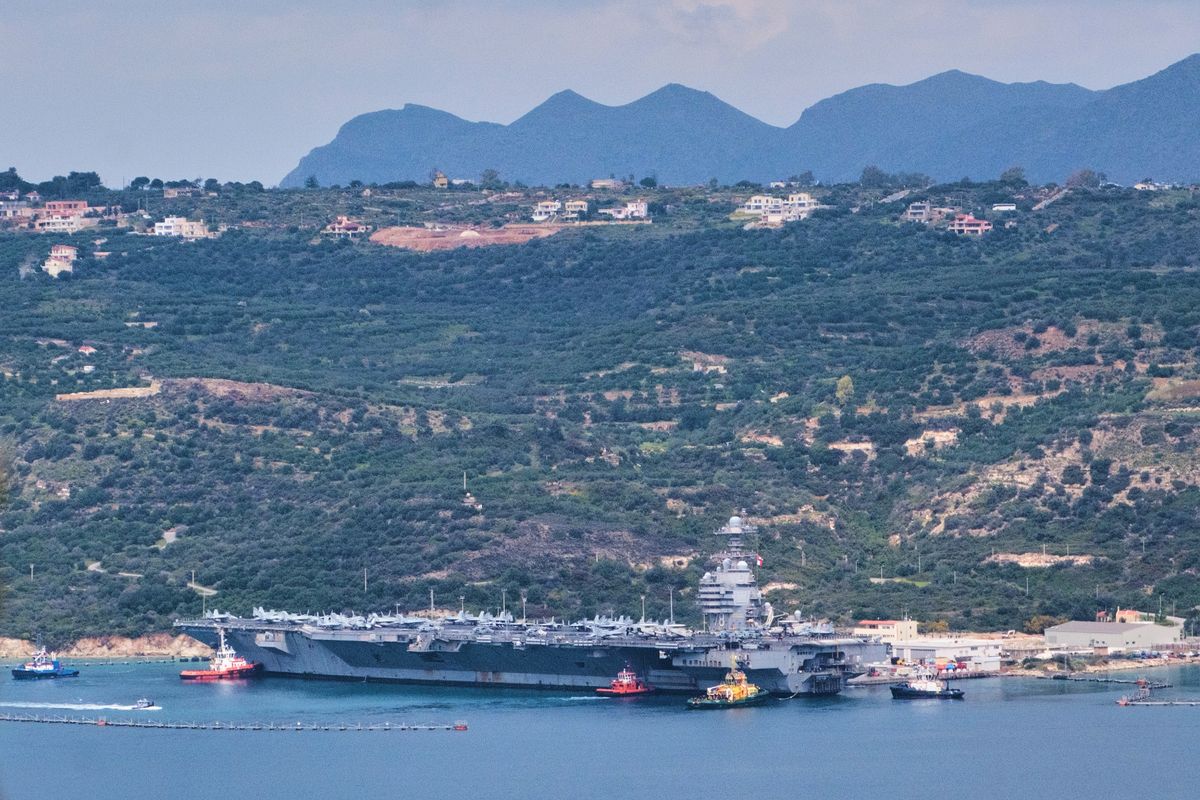
The USS Gerald R. Ford aircraft carrier docked at Souda Naval Base on March 23, 2026(Image: AP)
The world’s largest aircraft carrier, the USS Gerald R. Ford, was spotted in the Souda Bay on March 23 . The massive US warship sailed to Europe amid the US/Israeli conflict with Iran and docked at the Cretan base to take on food, fuel and ammunition.
Iranian missile threat
Although Iran’s exact military capabilities are not known it is thought the regime holds an arsenal of long-range missiles that could potentially reach Europe. Its domestic ballistic and cruise missile stocks are still a danger – that is huge space-entering ballistic bombs that are more difficult to shoot down.
Iran also still has cruise missiles which although easier to spot and intercept because they fly on a relatively even trajectory. The UAE has come under attack from both of these in the past 24 hours, even though it has intercepted hundreds in the past four weeks.
And it is thought Iran still has thousands of killer Kamikaze drones, again slow moving and easy to shoot down, but potentially deadly if many are fired at once.
These could be fired in vast swarms which could overwhelm European defence systems on a vast armada now based in the Mediterranean.
Analysts have previously predicted that Iran’s furthest reaching missile is the Khorramshahr 4 missile which could hit from 1,200 to 1,900 miles away from the launch site. Greece is around 1,500km away from Iran meaning it is potentially within the regime’s strike zone.
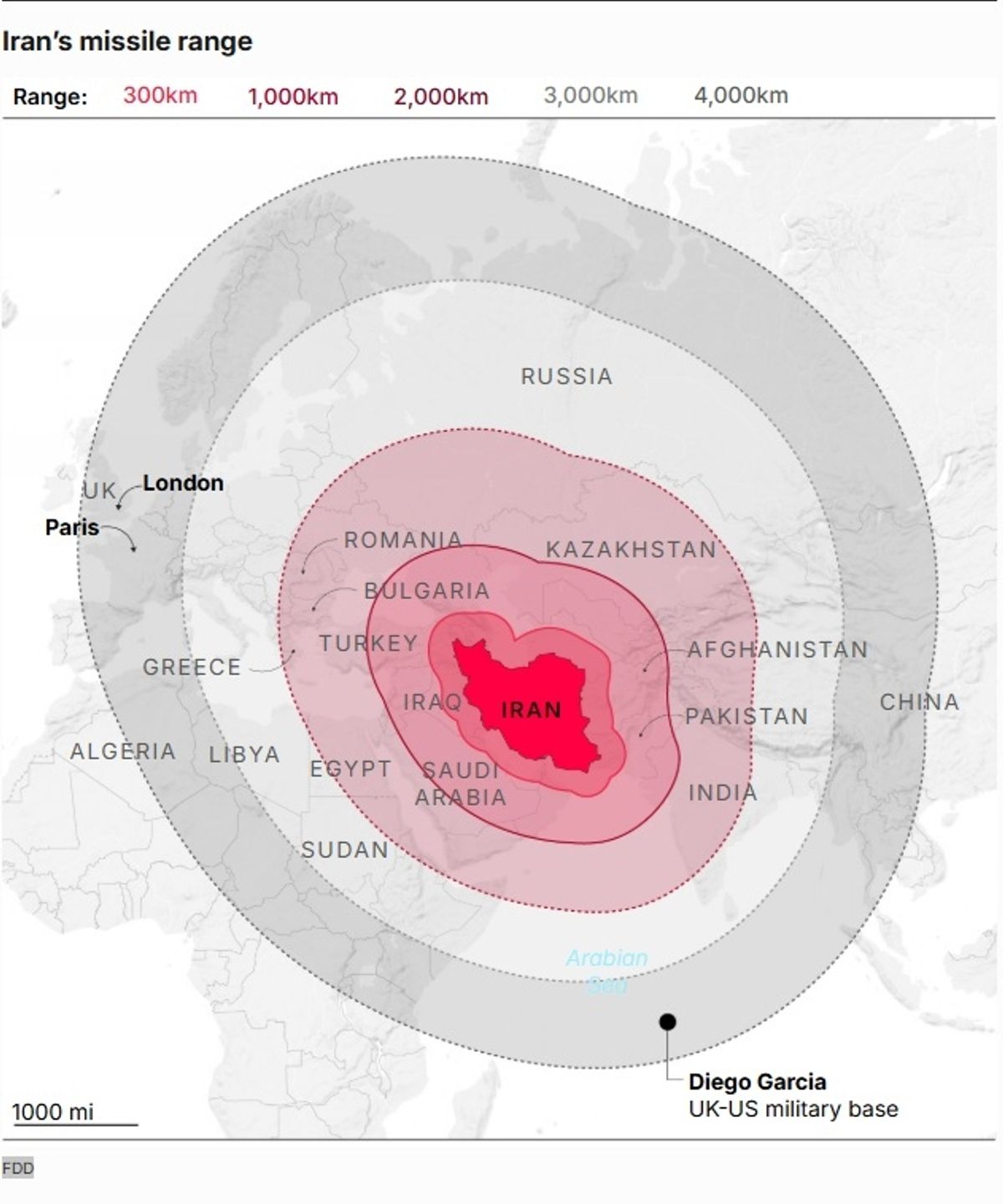
Map of potential Iranian missile range(Image: FDD)
Iran fired two long-range missiles at the joint US-UK military base in Diego Garcia, in the Indian Ocean. Both missiles failed to reach their target and they appeared to be outside of the Tehran’s capable range, but it showed Iran could try and hit a NATO and British military site.
Iran’s ally Hezbollah, in Lebanon, also had Shahed drones, which are unmanned combat aerial vehicles and these can travel 1,500km, which could also potentially reach the Brit holiday hotspot.
Iran’s next major weapon in its arsenal is Lebanese Hezbollah – closer to Europe and the most likely culprit in the Cyprus attack. Before this war it had 25,000 rockets and missiles, primarily short-range and medium-range.
But it too has a vast array of drones and long-range missiles. Its Shahed drones – the kind being used against Ukraine by Russia – can travel 1,500 miles, putting Greece in range.
The Iraqi Popular Mobilisation Forces umbrella a wide array of Shia and pro-Iranian militia with close ties to Tehran’s Islamic Revolutionary Guard Corps. Major factions include Kataib Hezbollah, Asaib Ahl al-Haq, the Badr Group and Karakat al-Nujaba.
It is entirely possible Tehran has smuggled powerful missiles to these groups as they are geographically nearer to Israel and perhaps Europe. But these too also have potentially deadly drone supplies.
And the Houthis in Yemen are a major threat with increasingly sophisticated missile capability. They have been harassing and targeting western shipping for years, opening fire on Israel many times.
However Greece is more than 2,000 miles away from Yemen. All of which said, they do have a Shahed Drone variant called the Wa’id, which can fly 1,600 miles – and with a smaller explosive payload it may just reach Greece.
Meanwhile Iranian terror threat to Europe is almost unlimited, as the IRGC has a huge web of contacts and possible sleeper cells embedded across the continent. This, to a degree, includes Greece and countries such as the UK.
Brit military in the Mediterranean
The British warship HMS Dragon has joined the growing fleet of the Western anti-missile fleet in the Mediterranean Sea, protecting Europe from threats.
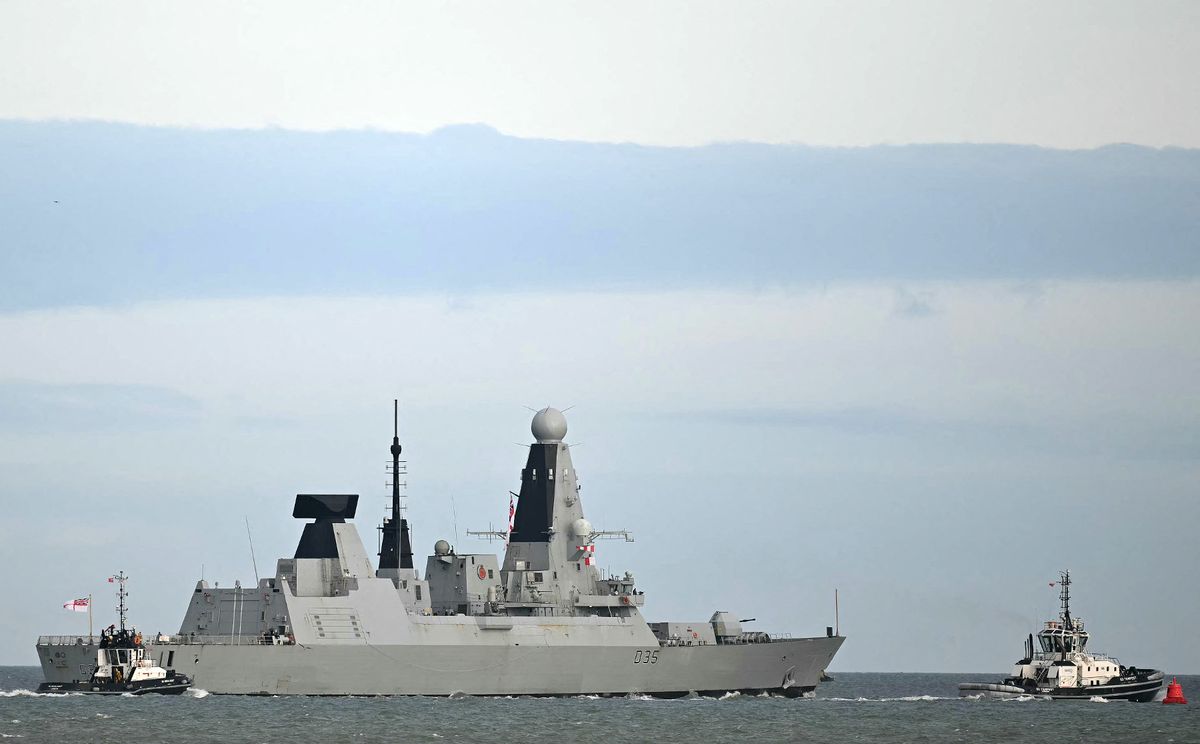
The HMS Dragon departing from HM Naval Base Portsmouth last month(Image: AFP via Getty Images)
As mentioned. Iran however could also strike Europe and Western vessels in the Med from its Hezbollah allies in Lebanon using rockets and missiles, drones and some long-range missiles.
Despite these threats, there is a defensive ground to air missile shield guarding a great deal of Europe – now vastly bolstered by the fleet in the Mediterranean, of which HMS Dragon is part.
Brit bases in Cyprus
Cyprus represents one of the key parts of the British military presence in the Med. The UK has two sovereign bases on the island – RAF Akrotiri and the Dhekelia Station.
The Akrotiri RAF base was hit by a drone at 12am on March 2 the opening hours of the war. It is thought the weapon was launched from either Hezbollah or Iraqi militia and it was so small it avoided detection en route.
There were no casualties and the damage to the base was minimal but Defence Secretary John Healey said it was an example of the “dangerous and indiscriminate attacks” carried out by Iran and its proxies.
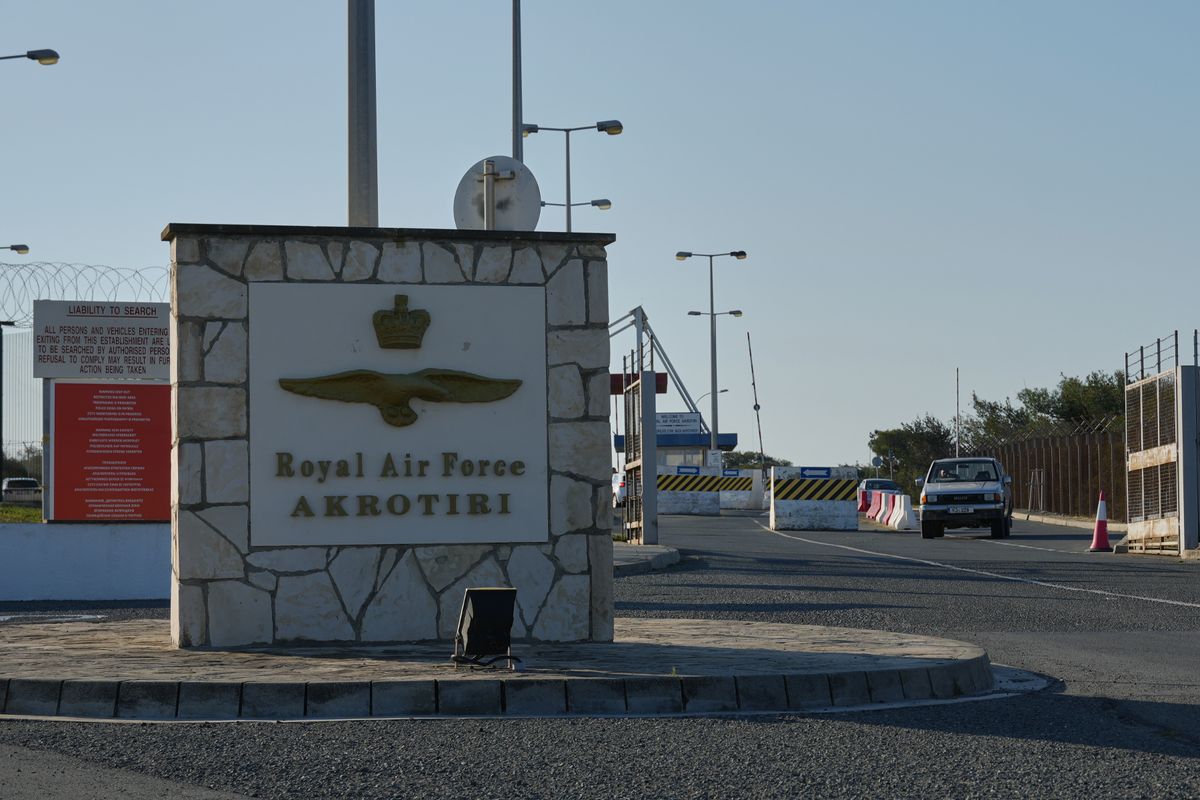
The main gate of the Britain’s RAF Akrotiri base(Image: AP)
NATO Rapid Deployable Corps
Greece contributes to NATO forces with its own rapid deployable corps which can comprise up to 60,000 troops. It is based in Thessaloniki and carried out military exercises under the NATO banner and it available for deployment beyond Greece in NATO operations.
British tourism to Greece
Greece is one of the most popular holiday locations in the world and especially for Brits. It was the 10th most popular country for international visitors in 2024, with 36million arrivals. Greece is particularly popular with Brits with 3.8million Brits travelling to the country in 2024.
The Foreign Office has been contacted to ask whether it has any advice for UK tourists or Britsh citizens living in Greece.