
A woman asked what made me the proudest of all
I had written. It isn’t books. Maybe one. It’s not the films. It’s not the
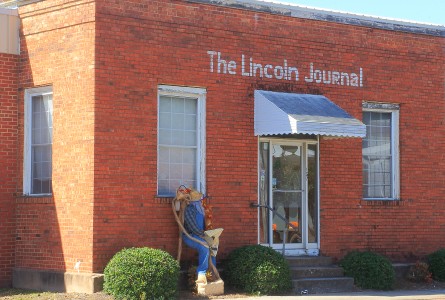
magazine features. It’s a few columns that trace their origin to Lincolnton,
Georgia’s hometown weekly. Stories that taught me something about life.
“A Song
for Miss Johnnie”—Ronnie Myers told me of Miss Johnnie O’Bryant, a lonely
happy, happy lonely old maid who loved trains and the men who ran them. She waved at passing trains. “We
all looked for her,” said Ronnie. “Even in the wee hours we’d see her
flashlight waving from her window. We always blew the whistle when we passed.”
Miss
Johnnie passed. “I hope to go by her grave someday,” said Ronnie. “I heard her
little four-room house was torn down and an appliance store built there but to
us older railroad guys, Miss Johnnie O’Bryant will always be there.”
“Moonshine
Memories” recalled my father’s father. Granddad, suffering chest pains died July
23, 1972, in his car outside a home clinic. Forty-three days after he passed,
my daughter, Beth, came into this world in the clinic 30 feet from where
Granddad died. Her spirit entered this world where his departed. Spirits
commune. She may know more about him than anyone.
Columbia’s “Lincoln Street” brings home to
mind. The Blue Marlin restaurant sits where the old Seaboard Air Line Passenger
Depot sat. Its where a woman and I boarded the Silver Star at 2:30 a.m. long
ago. Nightriders, we stopped in Savannah where upheaval boarded the
train—a drunken woman with unruly hair, a burnt-out go-go girl who went-went
one time too many. A business lady, “My name is Mandy, and I have sweet candy.”
She sang at a bar in Savannah, this gypsy chanteuse. The conductor put her off
at the next stop.
We gazed at a blur
of ghostly woods, fields, and swamps. Perhaps alligators watched as we careened
by, our diesel breath rattling palmetto fronds and streaming Spanish moss back
like an old woman drying her hair. Days later we rode the train back to Lincoln
Street.
“The Sad Ballad of
Moses Corely”—Even now I see his stately snow-white Afro. His wife
was his sun, moon, and stars. Back then I taught aspiring elementary teachers
how to make colored overhead transparencies. At day’s end, colored scraps
littered the floor. Moses began to clean the lab. He studied how one student placed
red apples on a transparency. When he began to put scraps in a box, I was
curious. “Moses, what are you going to do with those?”
“My wife’s got one leg and has the diabetes.
All she can do is lie in bed and watch TV. I promised her I’d give her a color
TV someday. I’ll stick ’em on the TV and she can see in color!”
I began working downtown.
One cold November day I ventured out for lunch. As I walked past the art deco bus
station, legs waggled from a green dumpster. Out popped a bedraggled Moses
Corley. His wife had died and he had lost his home. Fired. He asked the wrong
person for $10. I never saw him again.
—Grandmother Walker
imagined beautiful horses grazed in her front yard. Lonely, she told me
something I cannot un-remember. “All my friends are in their graves.” I find
her words terrifying but I have stories to keep me company. With luck, I hope
to add to my body of work, such as it is. Maybe shed a bit more light on life
for those who read between the lines … for those who appreciate something
more than a sound bite.