
- by croatiaweek
- April 6, 2026
- in
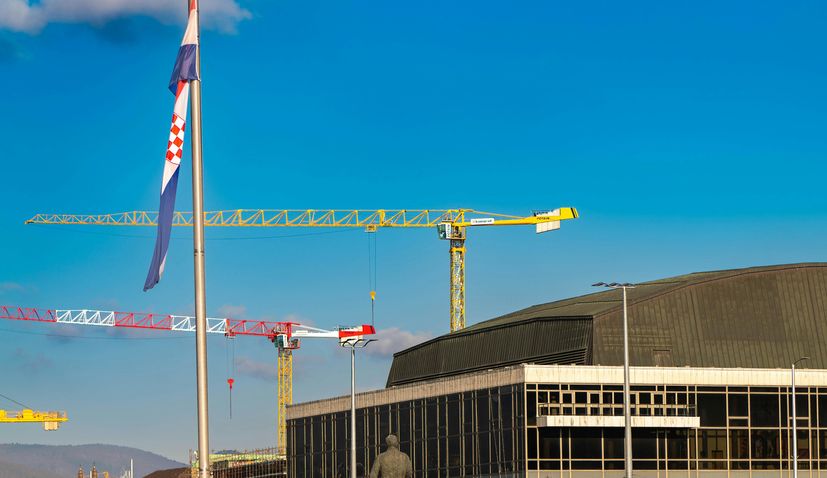
Croatia’s construction sector has emerged as one of the strongest drivers of the national economy, with rapid growth recorded in recent years.
Figures show that the number of construction trades in the country has increased by more than 10% in the past year alone, while the sector has expanded by over 60% in the last five years, Poslovni dnevnik writes.
Today, nearly 17,000 construction trades operate across Croatia, employing more than 29,000 people.
This growth has been fuelled by a strong investment cycle that includes post-earthquake reconstruction, energy efficiency upgrades, residential development and continued investment in tourism infrastructure.
However, industry leaders say the next phase of development must focus less on quantity and more on quality, organisation and long-term sustainability.
These issues were highlighted at the 5th Meeting of Builders organised by the Croatian Chamber of Trades and Crafts, which brought together tradespeople, experts and institutional representatives to discuss the sector’s future.
One of the central topics was energy renovation, expected to play a major role in shaping the industry in the coming years.
While progress has been made, participants noted several structural challenges. Contractors frequently report that project plans are not always aligned with real construction site conditions, deadlines or labour availability.
Experts emphasised that energy renovation must also adopt a more comprehensive approach, integrating architectural, construction and engineering solutions rather than relying on partial upgrades.
A key conclusion from the meeting was the need to involve contractors earlier in project planning to ensure projects are realistic and deliverable.
Labour shortages remain another major challenge. While interest among young people in craft professions is rising, industry representatives say stronger vocational education and continuous professional training will be essential to meet demand.
Workplace safety was also highlighted as a critical issue. Despite clear regulations, problems often arise due to inconsistent implementation and unclear responsibility between investors, contractors and subcontractors. Experts stressed that safety must begin at the planning stage rather than once construction starts.
Industry representatives also expressed concern over proposed vocational curriculum changes introducing the general title “construction worker” instead of traditional craft roles such as mason or roofer. They argue that weakening the “master craftsman” identity could damage the profession’s long-term attractiveness.
With stable investment, stronger collaboration across the sector and continued investment in skills, Croatia’s construction industry now has an opportunity to evolve from a period of rapid expansion into one defined by quality, expertise and safety.