

BirdLife Malta has strongly condemned the presence of the “Noma Island” floating entertainment platform that has been positioned by the island of Comino. The environmental NGO said on Monday that “the presence of such a platform in close proximity to a key breeding site is therefore both reckless and ecologically irresponsible.”
The eNGO noted that Comino, as “one of Malta’s most ecologically sensitive and legally protected sites,” is a Natura2000 site surrounded by a Marine Protected Area.
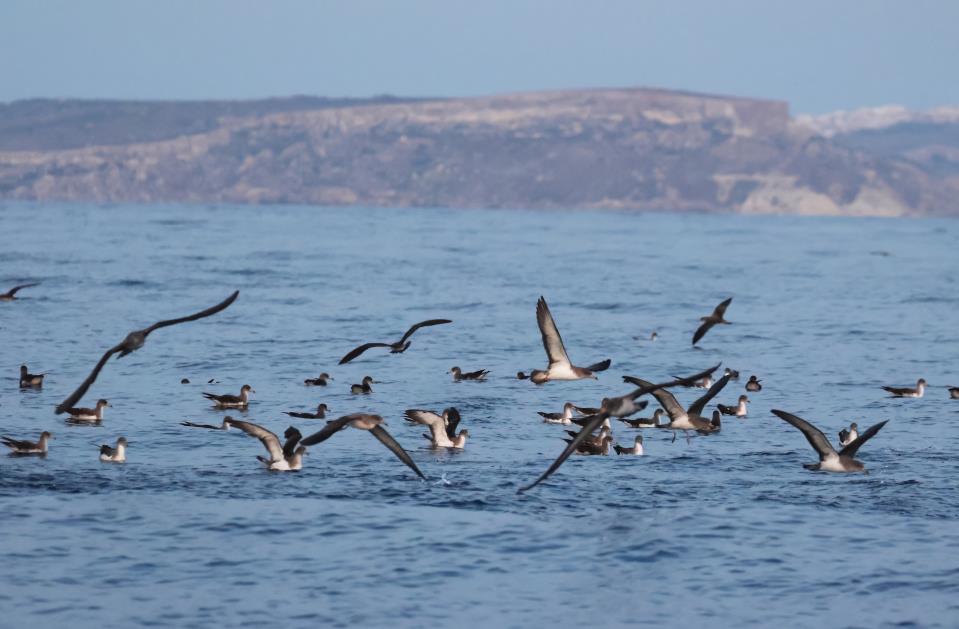
It observed how Comino is widely recognised for its critical importance to wildlife, particularly for pelagic seabirds such as Yelkouan Shearwaters and Scopoli’s Shearwaters.
BirdLife Malta said that these kinds of birds “depend on dark, quiet environments for successful breeding,” and hence, the introduction of this Noma Island platform in this area, through its artificial lighting, will severely disorient these birds and disrupt breeding processes.
“The impact on seabirds cannot be overstated,” BirdLife said, adding that pelagic seabirds nesting around Comino are highly sensitive to artificial light and noise, with light pollution known to disorient fledglings and lead to grounding, injury, or death, while disturbance from noise and human presence disrupts breeding behaviour and can result in nest abandonment.
BirdLife said that Comino also forms part of Malta’s recognised dark heritage sites, “where artificial lighting after sunset is restricted, and any introduction of light pollution is not only harmful but incompatible with existing protections.”
It recalled how the Noma Island has already faced heavy criticism and rejection abroad due to environmental and regulatory concerns. Most recently, its introduction to Maltese waters has also been met with “clear opposition from Maltese local councils.”
Earlier on Monday, the Għajnsielem Local Council formally objected to plans for Noma Island to operate in waters near Comino and along the local coastline, arguing that the proposal is incompatible with the area’s protected environmental status. Comino falls under Għajnsielem’s jurisdiction.
BirdLife has condemned that despite several forms of environmental protection on and around Comino, this entertainment platform has now been positioned right near it.
It deemed this as “a location where such activity is entirely inappropriate and incompatible with the island’s protected status.”
The eNGO said that “Comino is already under extreme and unsustainable pressure from intensive commercial exploitation, with years of poorly managed activities turning parts of the island into a cash-driven operation that prioritises short-term profit over the protection of public land and natural heritage.”
“The introduction of a high-capacity entertainment platform in such a context represents a further intensification of this pressure, inevitably bringing increased noise, artificial lighting, and marine traffic, all of which contribute to the degradation of this fragile environment,” BirdLife Malta said.
In its statement, BirdLife said it expected the Environmental and Resources Authority (ERA) to step in, through its “clear legal obligation to safeguard Malta’s most sensitive natural sites,” and take “immediate and decisive action to ensure that this platform is removed from the vicinity of Comino and that such operations are not permitted within or near Natura 2000 sites or other environmentally sensitive areas.”
It concluded that this latest situation reflects “a broader and deeply concerning trend” where environmentally damaging activities have grown increasingly normalised within protected areas – undermining both national and European environmental commitments.
BirdLife said that “protected areas must be respected in practice and not reduced to nominal designations, and public natural heritage must not be sacrificed for private gain under the guise of commercial activity.”
“Comino is not for sale. It is a national and ecological treasure, and its protection is a legal and moral responsibility. BirdLife Malta will be ready to safeguard this island for the benefit of the common good,” it said.