
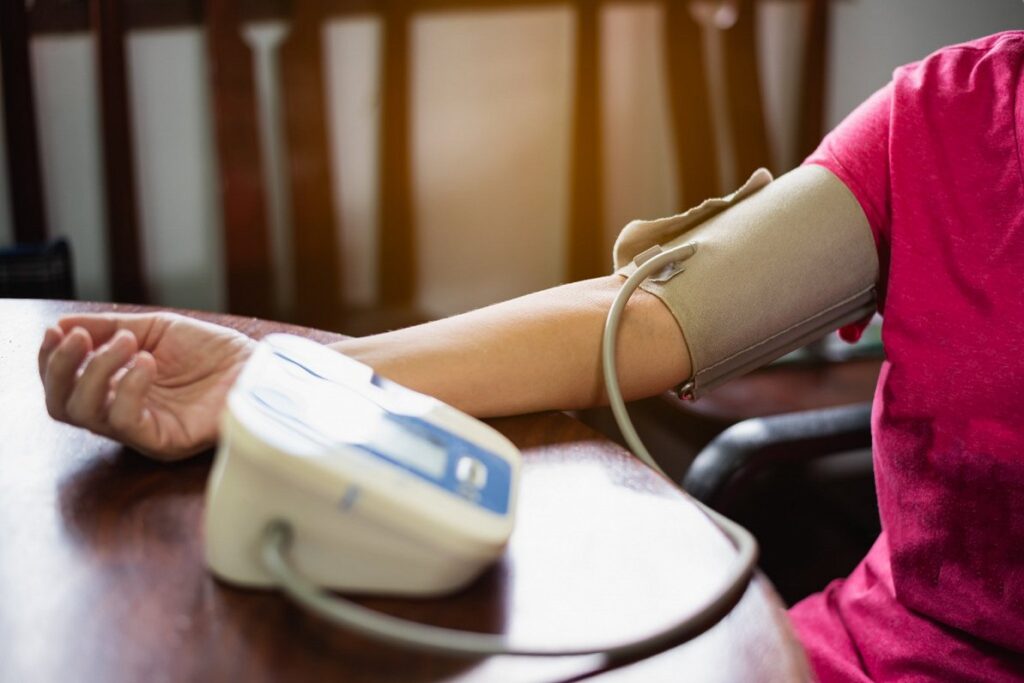
Slightly more than a third (36.8%) rated their health as average, according to data from the Central Statistical Bureau (CSB), while 15% rated their health as a poor or very poor.
It should be stressed that the views are entirely subjective – one person’s “healthy” might be another person’s “average” – but even so it is clear that the health assessment of the population has generally improved over the past two decades.
The total number of people who rate their health as “good” or “very good” has increased from 35.1% in 2005 to 48.2% in 2025.
The proportion of poor self-rated health has halved. “Poor” and “very poor” combined were 21.6% in 2005, but 15.0% in 2025.
Men rated their health status more optimistically than women, despite the fact that they tend to die a decade earlier on average. In 2025, 53.7% of men and 44.0% of women rated their health status as good or very good, while 17.2% of women and 12.2% of men rated their health status as bad or very bad. The best self-assessment of health was among young people aged 16 to 24: 88.2% of them rated their health as good or very good.
In turn, almost half (48.3%) of residents aged 50–64 assessed their health as average, and upon reaching retirement age (65 years and over), this indicator increased to 51.9%, and every third (33.8%) resident of retirement age considered their health to be poor or very poor.
Compared to 2024, the proportion of residents who faced restrictions caused by health problems has decreased by 5.3 percentage points – in 2025 they were 35.9% of residents, in 2024 – 41.2%. Young people aged 16–24 indicated the least restrictions caused by health problems, namely 7.9%, but the most – seniors aged 65 and over (67.2%). In 2025, 42.8% of residents aged 16 and over faced long-term (six months or longer) health problems2 , which is without significant changes compared to 2024 (41.9%).
A healthy lifestyle is becoming ever more important
In the “Public Health Guidelines for 2021–2027”, one of the directions of action is a healthy and active lifestyle, one of the most important factors influencing health. Since 2022, the proportion of residents who engage in non-work physical activities one or more times a week has increased (by 6.6 percentage points, respectively – 52.0% in 2025, 45.4% in 2022). The most active residents were in the age groups from 16 to 24 years (75.1%) and from 25 to 49 years (58.2%). It should be noted that residents have also begun to engage in physical activities more regularly – if in 2022 11.0% of residents engaged in physical activities once a day, then in 2025 already 15.1% of residents.
In 2025, the majority or 77.6% (in 2022 – 70.5%) of Latvian residents aged 16 and over included vegetables in their diet at least 4–6 times a week, while 3.9% of residents used them in their diet less than once a week or did not use them at all. 67.5% of residents used fruits in their diet at least 4–6 times a week (in 2022 – 58.3%). 8.1% included them in their diet less than once a week or did not include them at all.
Since 2022, the proportion of residents who do not include any type of alcoholic beverages in their diet has increased (from 29.3% in 2022 to 34.6% in 2025). Interestingly, among age groups, young people (aged 16 to 24) consume the least alcohol – more than half or 61.5% of young people noted that they do not drink alcohol at all (in 2022 – 53.7%), suggesting a major generational shift that might have very positive long-term health implications in the future.
Less healthy than most of Europe
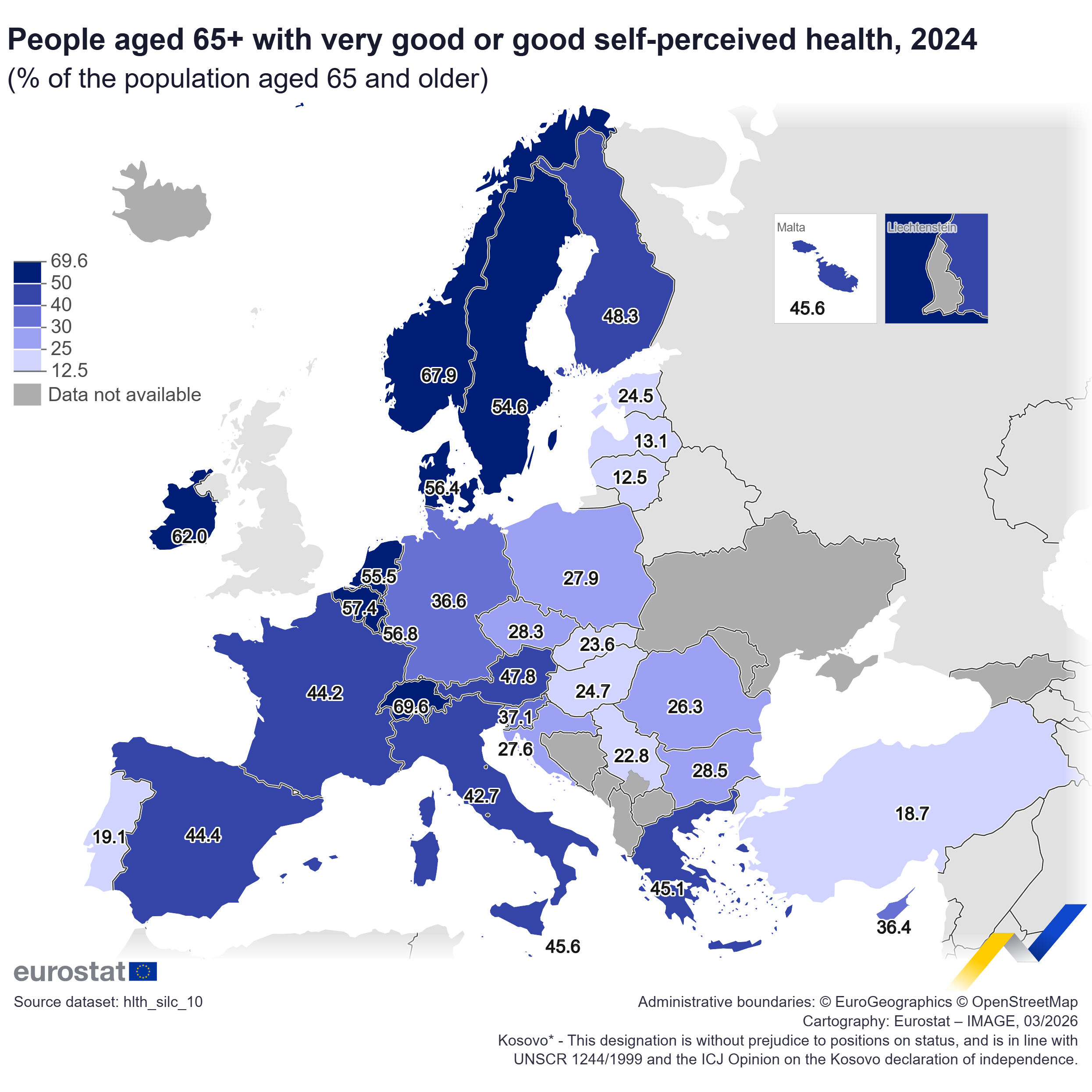
The European statistics agency, Eurostat, took the opportunity to release similar statistics (though for 2024) covering the rest of the European Union, and they make it clear that despite the positive trend, in Latvia people still rate their health less highly than in most of the rest of the continent.
In 2024, more than two-thirds (68.5%) of the EU population perceived their health as very good or good. On the other hand, 8.5% of people rated their health as bad or very bad, with the remaining 23.0% rating their health as fair.
Up to the age of 65, most people rated their health as very good or good. The share was 91.3% among 16 to 24-year-olds and it gradually declined to 61.1% among those aged 55-64. Finally, 40.0% of people aged 65 and older perceived their health as very good or good.
Among the population aged 65 and over, Ireland had the highest share of people who rated their health as very good or good (62.0%), followed by Belgium (57.4%) and Luxembourg (56.8%).
In contrast, only 12.5% of the older population in Lithuania perceived their health as very good or good, 13.1% in Latvia and 19.1% in Portugal.
Select text and press Ctrl+Enter to send a suggested correction to the editor
Select text and press Report a mistake to send a suggested correction to the editor
Tell us about a mistake