
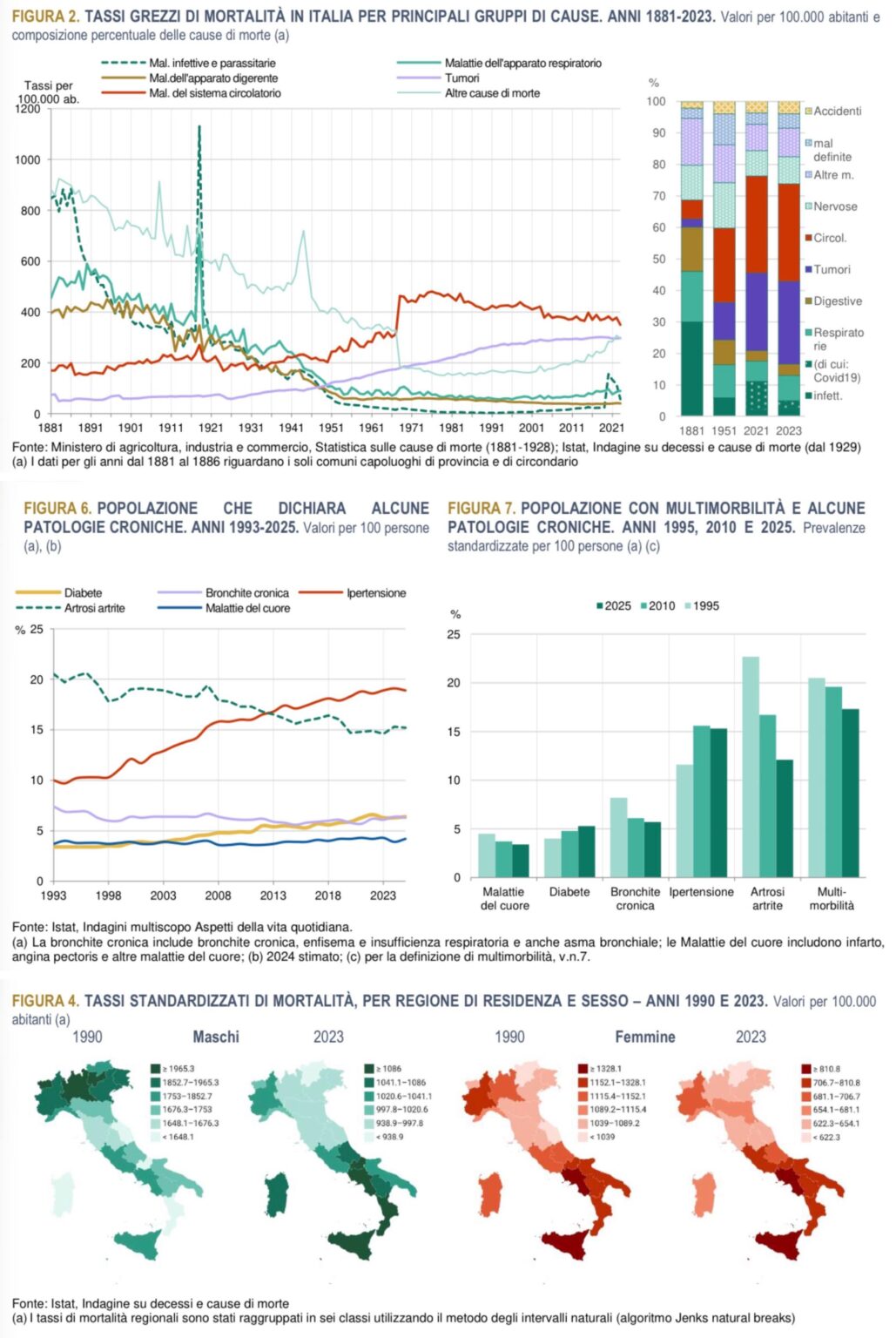
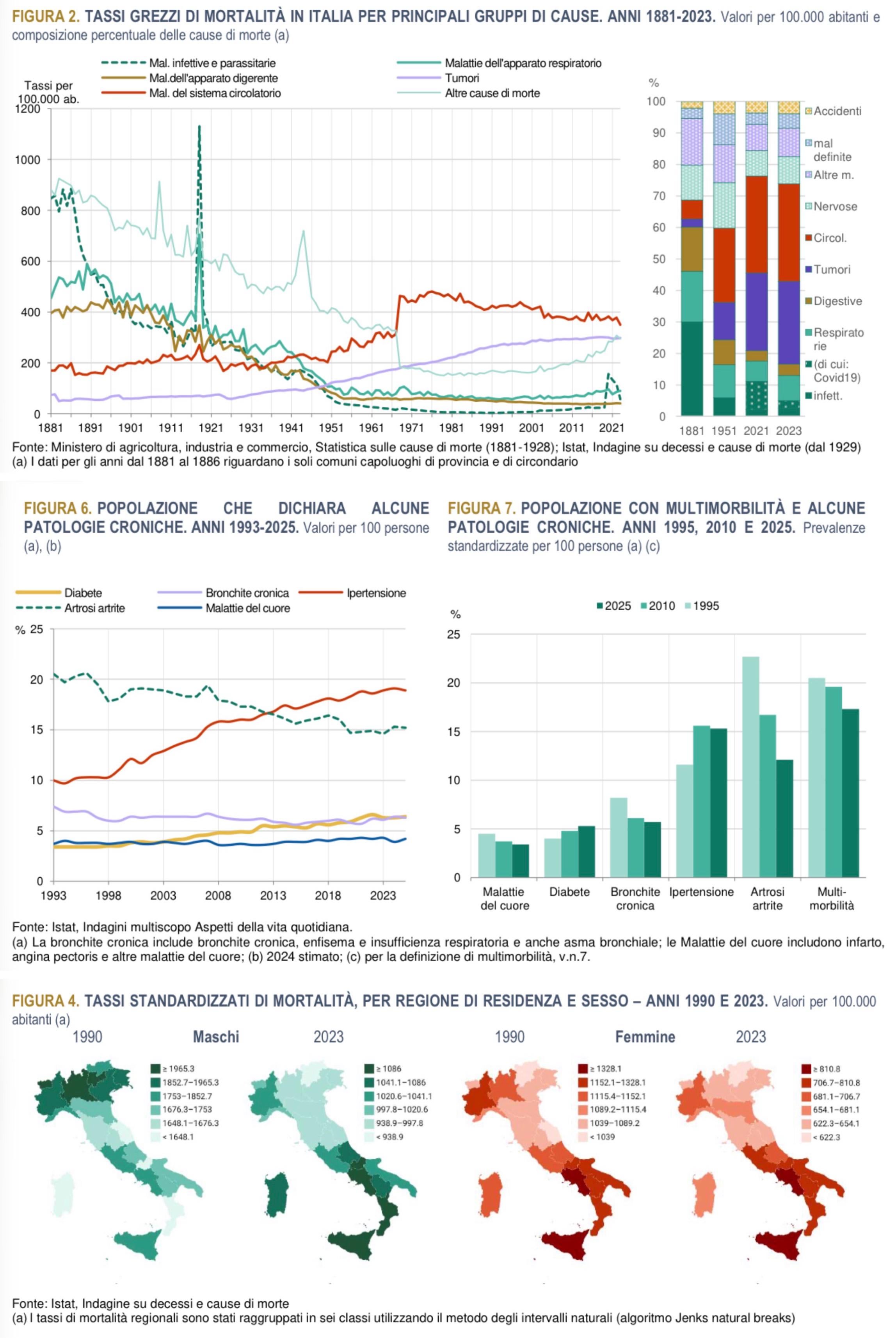
In less than two centuries, Italians have gained 54 years of life
The analysis photographs an Italy in which mortality decreases and life expectancy improves. In just ten years (since 1995), the percentage of the population describing themselves as being in “poor health” has fallen from 8% to 5.5%.with the older groups recording the most significant improvements. Diabetes, obesity and hypertension increase, but smoking habits improve
In Italiato date, the mortality rate is placed at approximately one thousand deaths per 100 thousand inhabitantswith a median age at death of 81.6 years for men and 86.3 for women; there infant mortality it is one of the lowest values in the world: 2.7 per thousand in 2023
Between 1990 and 2023, mortality decreased by 43% among men and by almost 40% among womenrendering geographies masculine and feminine are today superimposable: both show higher levels in the South, with Campania and Sicily clearly distanced from the rest of the country, indicating how survival in Italy is today strongly conditioned by the territory of residence. Mortality is affected more profoundly than territorial differences by social inequalities: among adults at least thirty years old, those with low education have approximately 40% higher mortality than those with high education
In general, despite general aging, the Italian population perceives itself to be in good health. In just ten years (since 1995), the percentage of the population describing themselves as being in “poor health” has fallen from 8% to 5.5%, with older groups recording the most significant improvements.
The causes of death and health threats are also radically changing. If at the beginning of the twentieth century infectious diseases (cholera, tuberculosis, malaria) were responsible for 30% of total deaths and respiratory diseases for another 30%, today they have grown chronic-degenerative diseases: cancers have gone from 2–3% of deaths at the end of the 19th century to 26.3% in 2023e cardiovascular diseases dal 6–8% al 30%becoming the main cause of death since the second half of the twentieth century.
The numbers have increased chronic-degenerative diseases and multimorbidity (more than 2 pathologies in the same person simultaneously), which represent the challenge for “highly aging” countries such as Italy. In 2025, multimorbidity characterized 13 million people, over 39% over 75.
At the same time, the spread of diabetes and obesity, as well as hypertension. In 2025, 6.4% of the population was affected by diabetes (in 1980 it was 2.9%), and 11.6% by obesity (5.9% in 1990), with a greater prevalence in men, less educated and living in the South
https://i.redd.it/a0xhaeatqrtg1.jpeg
Posted by sr_local
6 Comments
eh ma una volta si stava meglio, il neolibbberismo ci ha resi schiavi, ora lavoriamo e non abbiamo tempo libero
La salute è una conseguenza della ricchezza. È la ricchezza che dobbiamo difendere, la crescita economica, senza soldi è un attimo a tornare indietro.
“Ehhh si stava meglio una volta, dannato liberismo era meglio un tempo mio nonno con uno stipendio manteneva 10 figli e sua moglie”
Ma chi ha tradotto “Accidents” con “Accidenti”?
Che è successo poco prima del 1970? C’è un completo scambio tra morti “causa sistema circolatorio” e “altre cause”.
Qualcuno mi saprebbe spiegare perché c’è differenza fra i dati del WHO registrati dal 1950 e questi dati del ministero dell’agricoltura? Ecco il link: [https://ourworldindata.org/grapher/death-rate-from-cardiovascular-diseases-age-group-who-mdb?country=~ITA](https://ourworldindata.org/grapher/death-rate-from-cardiovascular-diseases-age-group-who-mdb?country=~ITA)
https://preview.redd.it/frl650tw0stg1.png?width=3400&format=png&auto=webp&s=5626241dc025095391ef0f93d804237dab48d6b8
Per non parlare del fatto che ad un certo punto c’è un picco positivo nelle morti per malattie del sistema cardiocircolatorio, contemporaneamente ad un picco negativo per quelle segnate come “altre cause”. Sicuramente un cambio nel modo in cui le morti venivano classificate. O questi due dati indicano cose leggermente diverse (una è “malattie cardiovascolari”, mentre l’altra è “malattie del sistema cardiocircolatorio”, magari sono due cose leggermente diverse), Oppure sono la stessa cosa ma sono stati registrati in maniera diversa e tale da evidenziare due fenomeni diversi? (in un caso c’è stato un aumento dal 1930 circa fino agli anni 70, mentre nel secondo diminuisce dal 1950, salvo per gli over 50)
In effetti poi la linea sembra coerente per gli over 85 soprattutto. Secondo voi cosa può voler dire?