
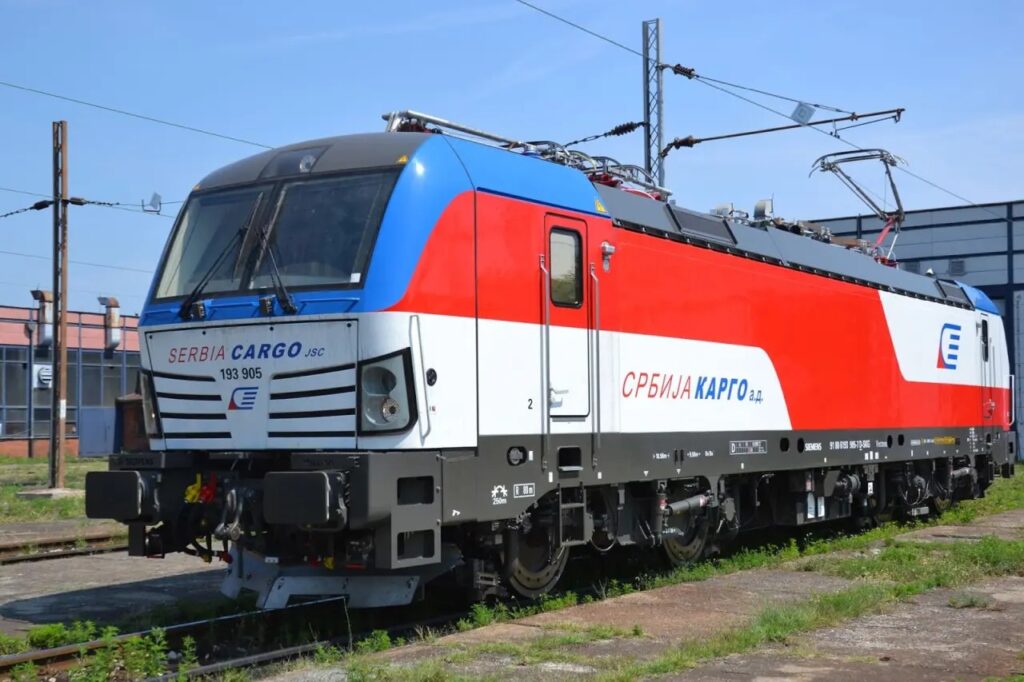
 Serbia Cargo, Rail Cargo Hungary, and ŽRSM Transport have signed a memorandum of understanding (MoU) aimed at strengthening rail freight transport between Europe and the region, with a focus on developing a coordinated transport offering.
According to the Serbian freight operator, the initiative represents an important step toward improving regional and international logistics connectivity, with a central focus on increasing transport capacity on the Budapest–Belgrade route.
Focus on the Budapest–Belgrade axis
The signatories of the memorandum state that they aim for rail freight traffic between the parties involved to reach and even exceed the volumes transported in the first decade of the 2000s.
In this context, the Budapest–Belgrade route is seen as a key corridor for freight flows along the north–south axis in the Balkans. This context is all the more relevant given that the line was recently opened for freight transport as well, at the end of February.
Freight from China to Europe and traffic between European terminals
According to Serbia Cargo, the cooperation focuses on two main directions:The company presents this approach as one that can deliver faster shipments, shorter transit times, lower costs, more efficient logistics processes, and a reduced environmental impact.
- freight transport between China and Europe via existing rail corridors;
- as well as the transport of goods arriving at European ports or departing from them, between terminals on the continent, supplemented by road transport.
In the context of these flows, the port of Piraeus also plays an important role, through which a portion of Chinese cargo enters Europe and then continues inland via North Macedonia and Serbia.
Intermodal transport, digitalization, and border simplification
The signatories of the memorandum state that the common interest is focused on integrating rail transport links between the Western Balkans and Central Europe, simplifying logistics chains, and removing obstacles to cross-border cooperation.
Special emphasis is placed on:
- developing intermodal transport;
- simplifying border and customs procedures;
- introducing common digital solutions in trade and logistics.
Railway operators want a stronger role for rail in the region
The Memorandum defines several concrete directions for future cooperation, including:
- strengthening sustainable rail freight transport and increasing efficiency;
- digital data exchange, including through electronic waybills and real-time tracking;
- coordinating infrastructure development and harmonizing service levels;
- joint promotion and training activities.
developing and promoting intermodal transport, with a focus on containers and semi-trailers;improving technical solutions to increase competitiveness, including in the area of interoperability;expanding intermodal transport in European markets;knowledge transfer and strengthening professional skills;
Share on: 


