
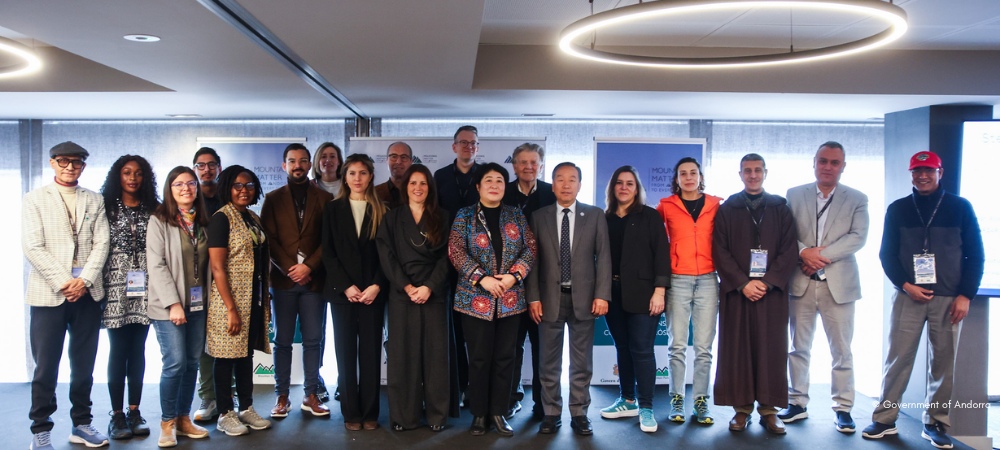
Countries of the Mountain Partnership have adopted the “Andorra Declaration”, setting out a roadmap for the next four years on the final day of the meeting held in the country since Thursday.
The 7th Global Meeting of the Mountain Partnership, held under the theme “Mountains for the Future: Responsible Tourism, Thriving Communities” and hosted in Andorra since Thursday, concluded today with the adoption of the Andorra Declaration, a strategic document that strengthens international commitment to the sustainable development of mountain regions.
The Andorra Declaration is framed within key United Nations multilateral processes and builds on global initiatives such as the Five Years of Action for the Development of Mountain Regions (2023–2027), as well as multiple international efforts related to climate, biodiversity, water and the cryosphere.
Members of the Mountain Partnership recognized the fundamental role of mountains in combating climate change, preserving biodiversity and ensuring food security, as well as their vulnerability to global environmental impacts. In this context, the Declaration emphasizes the need to systematically integrate mountain issues into climate, biodiversity and sustainable development policies at both global and national levels.
It highlights that mountains cover around one quarter of the Earth’s land surface, are home to approximately 1.2 billion people, and serve as centers of cultural diversity and traditional knowledge. They also encompass 25 of the world’s 36 biodiversity hotspots.
The adopted document includes a broad set of commitments, notably:
- Accelerating implementation of the 2030 Agenda, strengthening the contribution of mountain communities to inclusive and resilient sustainable development.
- Enhancing the presence of mountains in national reporting under international conventions and in multilateral processes, including the Paris Agreement and the Kunming-Montreal Global Biodiversity Framework.
- Promoting sustainable and resilient tourism, recognizing it as a key economic driver for many mountain regions.
- Increasing international climate and environmental financing for mountain areas, ensuring it reaches the most vulnerable communities.
- Strengthening research, data collection and scientific cooperation.
- Empowering local communities and vulnerable groups, including women, youth and Indigenous peoples, ensuring their participation in decision-making.
- Fostering sustainable mountain economies based on agroecology, circular bioeconomy and sustainable management of natural resources.
The Declaration also underscores the importance of improving connectivity in mountain areas, reducing the digital divide, and strengthening resilience to natural hazards through early warning systems and adapted infrastructure.
The document further establishes a solid foundation for upcoming major international events, such as the “Bishkek+25” Global Mountain Summit to be held in Kyrgyzstan in 2027, as well as discussions on the post-2030 Sustainable Development Goals agenda.
The Mountain Partnership Secretariat, with the support of the FAO, will be responsible for following up on the commitments adopted, strengthening coordination, visibility and resource mobilization.
This declaration will be widely disseminated and considered a reference document at the many international conferences addressing climate, biodiversity and desertification issues. It will thereby raise Andorra’s international profile, further consolidating its position as a leader in promoting mountain regions on the global stage.