
Control Agencies and the Private Sector
Skopje, North Macedonia, 26-27 March 2026 – Border control and airport security authorities face a complex and evolving landscape where threats are engineered to exploit security gaps. Traditional tools, while necessary, have inherent limitations against sophisticated threats. While targeting uses intelligence and profiling uses statistical risk, neither can answer what a specific individual is doing in real-time during an encounter. Scientific research indicates that untrained detection accuracy is approximately 54%, which is barely better than chance.

The effectiveness of border control is often compromised by natural psychological tendencies. Moreover, at airports, identifying a few suspiciousindividuals within millions of innocent travelers is exceptionally difficult. Therefore, behavioral analysis is essential in modern border security because it addresses sophisticated smuggling and trafficking networks that are specifically designed to exploit the limitations of conventional screening.
Involving both border control agencies and the private sector in behavioral analysis process at borders is a critical component of a comprehensive and coordinated border managementstrategy.
UNODC’s response
In a strategic effort to support North Macedonia in the fight against transnational organized crime, the United Nations Office on Drugs and Crime (UNODC) recently facilitated a specialized two-day training programme in Skopje. Held on 26-27 March 2026, the “Behavioral Analysis in Border Operations” course was designed to equip border law enforcement and airport operator officers with advanced techniques for identifying illicit trafficking at international airports.

The event was organized within the EU-UNODC Joint Action “Promoting rule of law and good governance through targeted border control measures at ports and airports in South-Eastern Europe (2024-2027) – Phase II” funded by the European Union in partnership with the Airport operator TAV Macedonia. The UNODC Passenger and Cargo Control Programme has established productive partnerships with TAV Airports, which was reiterated during a meeting with the airport operator’s management. TAV Airports has been providing infrastructure support and facilitating information sharing with the Airport Control Unit established by the project at Skopje International Airport.
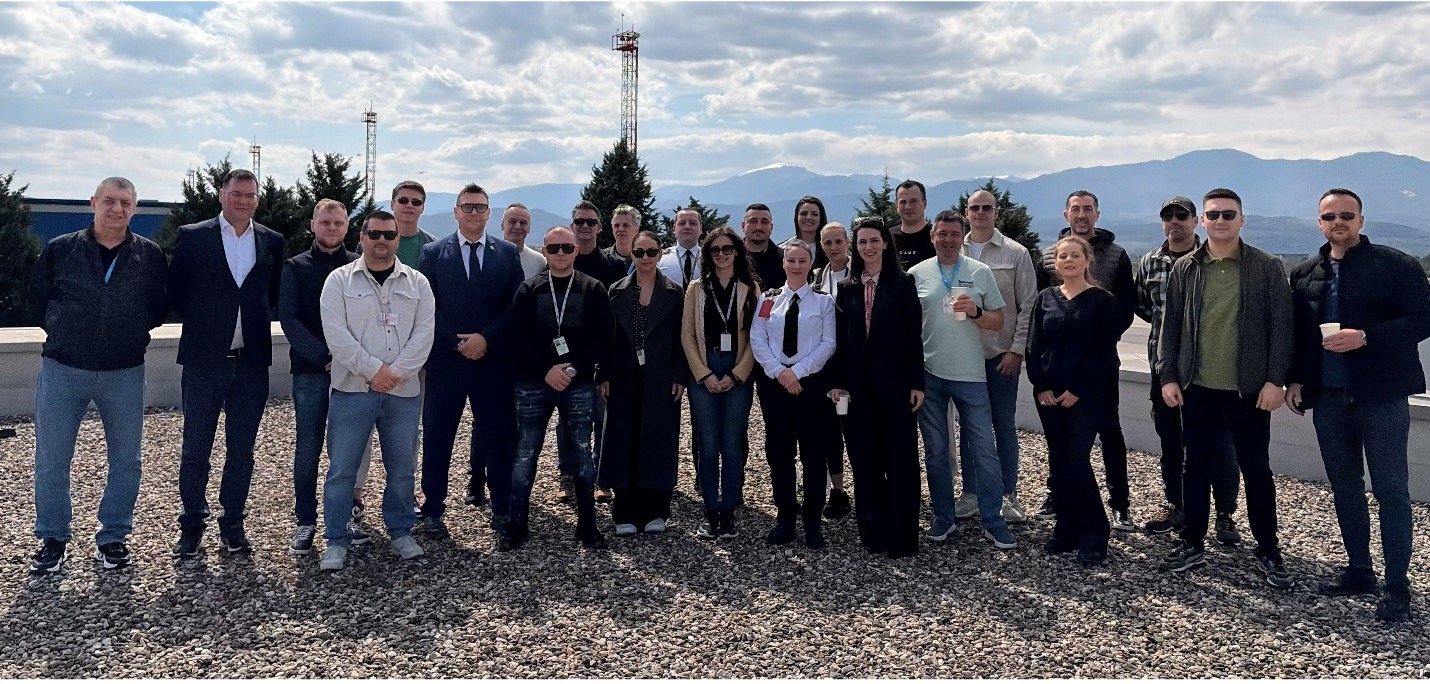
The program brought together 29 Customs and Police officers (11 of whom were women), as well as representatives from the airport operator TAV Airports. In his opening remarks, Mr. Batyr Geldiyev, UNODC Passenger and Cargo Control Programme (PCCP) Regional Coordinator stressed that building trust and improving cooperation between public and private actors is essential to strengthening supply chain security and ensuring that legitimate trade and passengers movements continue to flow efficiently and securely.
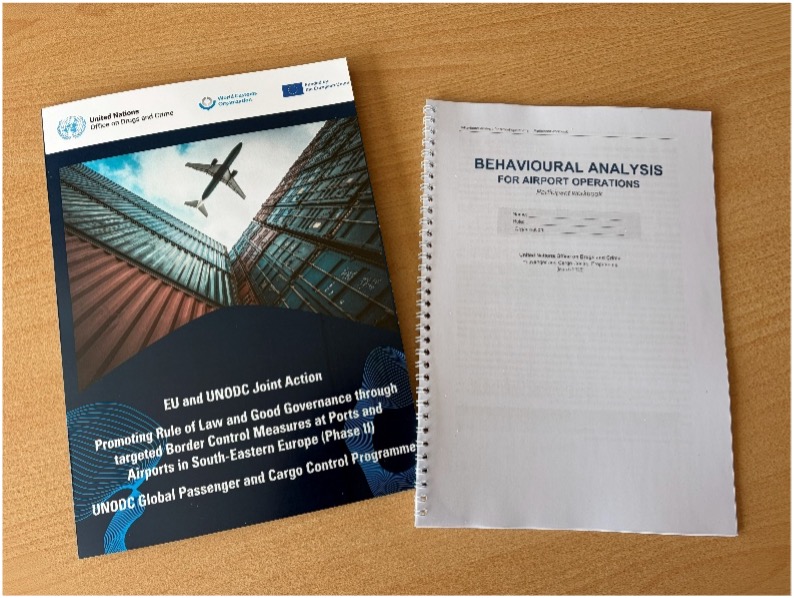 The science of detection and operational tools
Participants explored the scientific foundations of behavioral detection, moving away from instinct toward a systematic craft. The training also focused on tactical engagement techniques, such as the use of strategic silence and temporal narrative testing. These methods allow officers to probe a traveler’s account without activating defensive responses.
Throughout the programme, UNODC emphasized that behavioral analysis must operate within an ethical framework ensuring non-discrimination and human dignity. By grounding assessments in observable conduct rather than protected characteristics, beneficiary agencies in North Macedonia are better positioned to provide effective, professional, and fair border management.
*****
The EU-UNODC Joint Action is implemented by the UNODC Passenger and Cargo Programme (PCCP) in close cooperation with UNODC Regional Office for South-Eastern Europe (ROSEE) and under the approved framework of the Regional Programme for South-Eastern Europe 2024-2029. The Joint Action is implemented with the financial support of the European Union.