
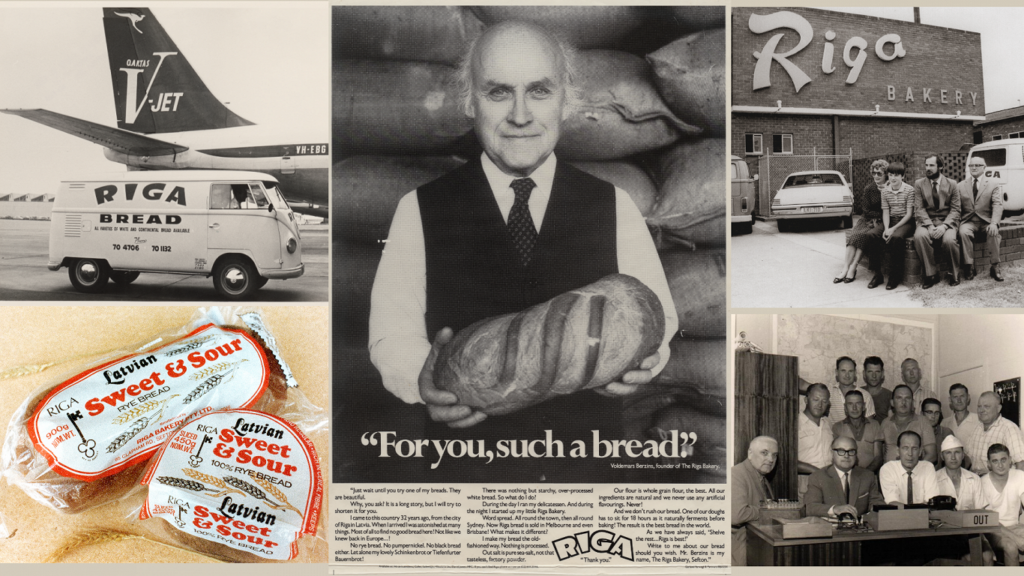
One of the most striking Latvian entrepreneurial success stories overseas was the “Riga Bakery” in Sydney, Australia, founded by Voldemars Bērziņš. From a small shop in post-war Australia, the company grew into one of the most prominent niche bread producers in the country. The bakery not only popularized the name of the Latvian capital in Australia, but also introduced Latvian bread traditions to a wider audience, supplying the east coast of Australia and exporting products as far as Singapore and Hong Kong.
Voldemārs Bērziņš was born in 1917 in Dnipropetrovsk, Ukraine, where his family were refugees during World War I. After the war, the family returned to Latvia.
Voldemārs finished elementary school in Riga, later studied at several trade schools and worked at the store of the consumer association “Konzums” and other stores in Riga as a salesperson, warehouse manager, and sales department manager.
In 1944, Voldemārs became the head of the Jelgava branch of the consumer association “Turība”, and in October of the same year he married Dzintra Argali in the Ārlava church.
Soon after, both were forced to become refugees again. The young couple ended up in Germany and spent several years in the Esslingen refugee camp.
The Bērziņš family emigrated to Australia in 1949. For the first two years, they worked in the Bathurst immigrant camp, but after their work contract ended in 1951, they moved to the Sydney suburb of Bankstown. In those years, it was relatively easy to acquire houses and land in Bankstown, and many newcomers gathered there, including Latvians, Estonians, Lithuanians, Poles, and other nationalities.
Delicatessen and an old bread oven
In 1951, Voldemārs Bērziņš opened a small delicatessen in Bankstown, responding to the desire of surrounding Latvians and other European immigrants for their own “taste of home.” Bērziņš’s store offered a variety of European-style or imported products, such as sausages, cheeses, pickles, cakes, and sweets.
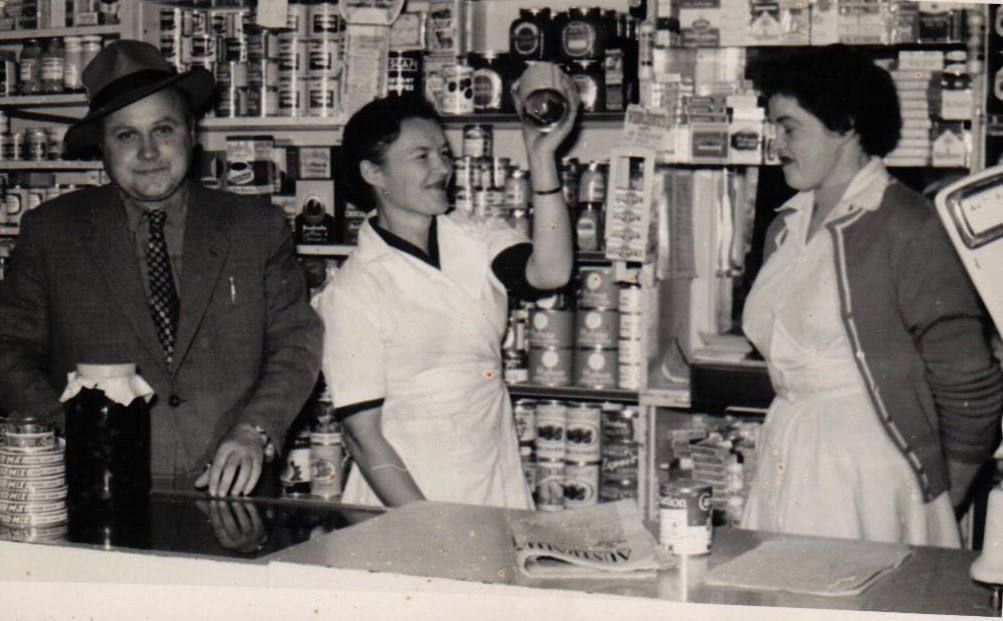
Voldemārs Bērziņš ar maizes ceptuves “Riga Bakery” veikala darbiniecēm Sidnejā, Austrālijā 1968. gadā.
Photo: LNA Latvijas Valsts arhīva foto
The shop also had an old bread oven, and that was the inspiration that prompted Bērziņš to start baking and selling bread. At first, he hired a Latvian baker with an apprentice, who baked black bread and sourdough bread according to Latvian recipes he had brought with him. About 50 loaves were baked per day, enough to satisfy only the needs of the delicatessen itself. Later, this black bread became known as “Riga Black Bread”.
From sea to shining sea
Demand for Bērziņš’ bread grew rapidly, and soon Australians began buying it, too. In 1953, a first independent bakery was opened in Bankstown. As the company grew, production was expanded, and by the late 1950s the bakery moved to larger premises in Condell Park.
In the 1960s, Riga Bakery already employed around 50 people. Automated electric ovens were able to bake around 1,000 loaves per hour, and more than 100 different varieties of bread were made.
During this time, the company’s products were distributed not only to delicatessens in Sydney, but also in the surrounding area and further afield in New South Wales: in Newcastle and Wollongong.
Over time, the production spread to all major Australian cities. The wholemeal bread and pumpernickel bread, which remained fresh for longer, also allowed Bērziņš to export – the bread was even sent to Hong Kong, Indonesia, New Guinea, Singapore and Kenya.
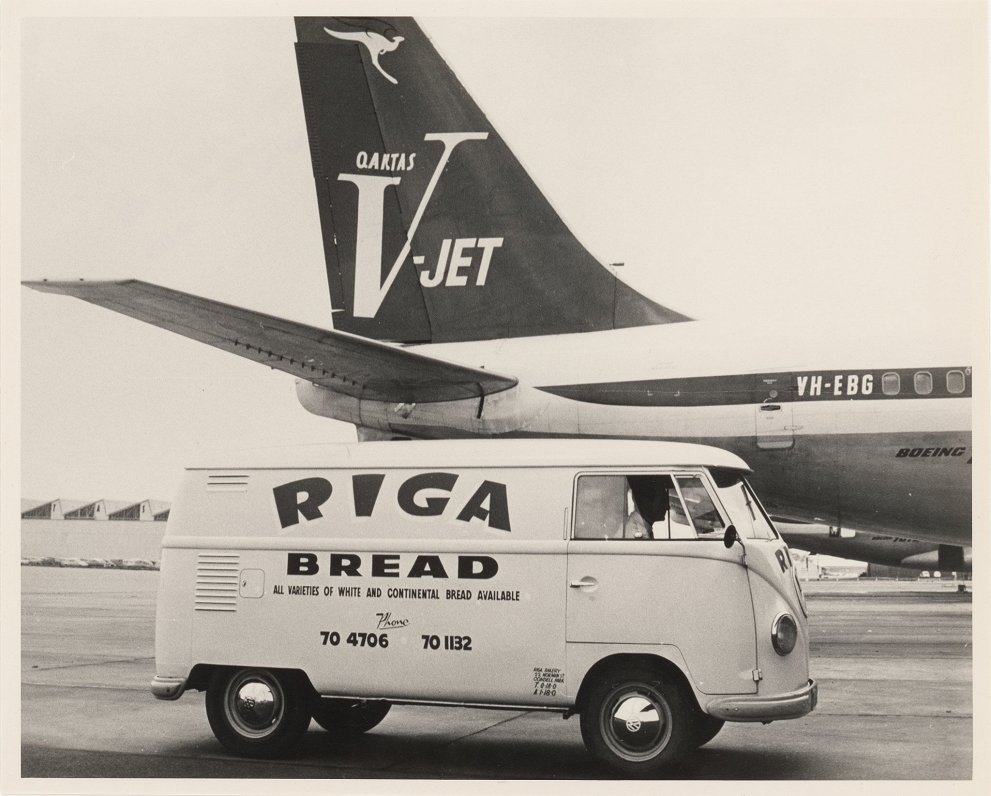
Aviosabiedrības Qantas lidmašīna ar “Riga Bakery” piegādes auto ap 1965. gadu.
Photo: Lejietis. Muzeja “Latvieši pasaulē” krājuma foto
In the 1970s, the company expanded again, moving to new premises in Sefton, and in 1985 a modern bakery was built in Moorebank. Riga Bakery bakeries were also opened in other Australian states – Brisbane in Queensland and the Australian capital, Canberra. Warehouses were established near Gosford and Orange. In 1977, “Riga Bakery” completely switched to bread production, ending the delicatessen phase.
In 1981, the company won Australia’s National Small Business Award . By now the company employed several hundred people and offered up to 500 varieties of bread.
Bread and the Latvian diaspora
The development of Riga Bakery was closely linked to the Latvian community in Australia. From the very beginning, many other Latvians in Australia worked alongside the baker as apprentices – Voldemārs Bērziņš often found room for compatriots in his company.
“Riga Bakery” products served as a kind of ambassador for Latvia. Latvian elements were incorporated into the company’s brand and visual image. The colours of the Latvian flag were used on the bread packaging and delivery vehicles, and later the image of a girl in folk dress also appeared on the sourdough bread packaging.
With the help of advertising on radio and television, Riga Bakery became increasingly recognizable in Australian society. For many Australians, this bread was their first introduction to European, and especially Latvian, bread traditions.
Voldemars’ youngest son Āris Bērziņš says: “Everyone in Sydney had heard the name Riga, and it preached first of all the name of Riga, but also Latvians […]. People got to know where Dad came from, and with that he explained [the fate of Latvia].”
Family business
The whole Voldemars family played an important role in the operation of Riga Bakery. The Bērziņš children were involved in the daily life of the bakery from an early age, especially during school holidays.
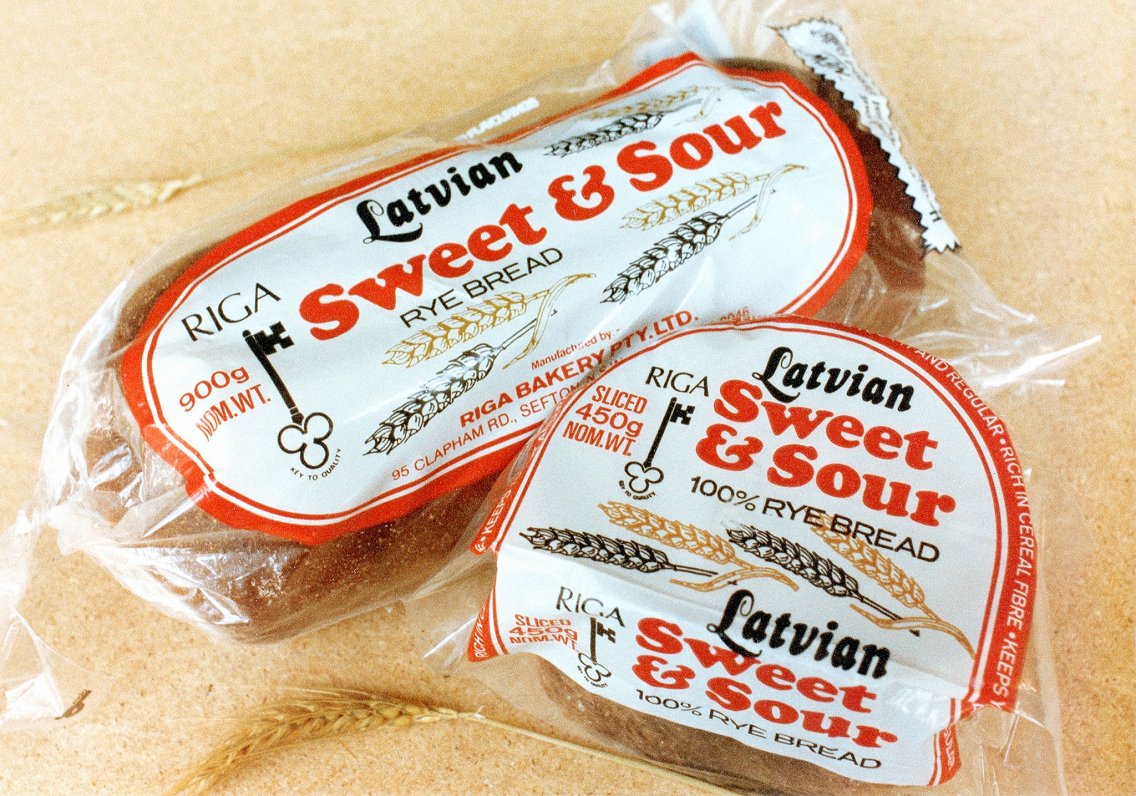
“Riga Bakery” saldskābmaize iepakojumā ap 1980. gadu.
Photo: Dzintra Bērziņa. Muzeja “Latvieši pasaulē” krājuma foto
Āris remembers helping out in the bakery as early as elementary school, starting with kneading dough and baking bread. Later, while in high school, he helped out in the store and with deliveries, and during his studies, he also got involved in the company’s accounting.
“It was a real family business. We all participated wherever we could,” says Āris.
Valdis, the Bērziņš’ eldest son, also started working at the bakery at an early age. After graduating from university in the 1980s, he continued working at the company, becoming a director.
Making bread is a tireless job. Āris remembers his father’s long working hours: Voldemārs often went to the bakery at three in the morning, later returned home for a while, and then went back to work again. In the evenings, his son often went with him to the bakery. “I spent a lot of time at the bakery. There you could meet different people, not only Latvians, but people of all nationalities. I learned from my father how to work with people,” Āris recalls.
Voldemārs Bērziņš sold his bakery in March 1991. Although the decision was influenced by the changing economic situation, Voldemārs’ own belief that the time had come to sell the company was also decisive – the owner was 74 years old at the time. After the change of ownership, the range of products was reduced, and over time, Latvian bread varieties also disappeared from production.
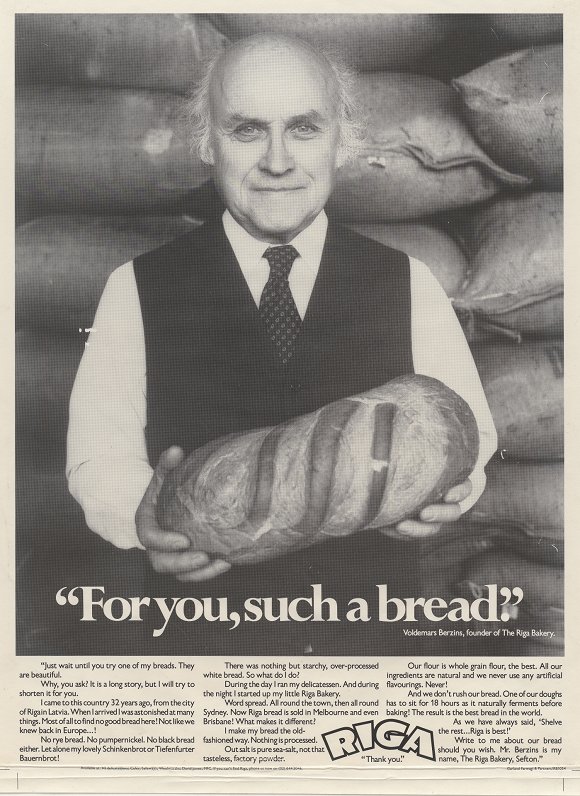
Voldemārs Bērziņš reklamē Rīgas maizi ap 1981. gadu.
Photo: Reklāmas aģentūra Garland and Farwagi
After Latvia regained its independence, Voldemārs returned to his homeland several times, continuing to visit it until 2005. He passed away in February 2010.
The bakery founded by Voldemārs Bērziņš remains an important part of the history of Latvians abroad. For many Latvians, Riga Bakery was a place where they could find something familiar in their new environment, something reminiscent of home. The flavors of home and the memories associated with them continue to live on in Latvian communities around the world.
This article is based on the memories of Voldemars Bērziņš’s sons, Āris and Valdis, periodical publications, and documents from the Latvian National Archives.