

Published on
April 14, 2026
By: Tuhin Sarkar

Image generated with Ai
American Joins United, Delta Air, LATAM, JetBlue, Lufthansa, Air France–KLM, Qatar Airways and more airlines entering private jet market. Ultra luxury premium charter flight service surges. Global shift accelerates. Travel And Tour World urges you to read full update now.
Play News Now
TTW Audio Brief
American joins United, Delta Air, LATAM, JetBlue, Lufthansa, Air France–KLM, Qatar Airways and more airlines entering private jet market rapidly. Therefore, ultra luxury premium charter flight service expands fast. Moreover, American joins United, Delta Air, LATAM, JetBlue, Lufthansa, Air France–KLM, Qatar Airways and more airlines entering private jet market aggressively.
Demand rises. Wealth grows. Airlines act. Partnerships form. Cabins upgrade. Charter flight service becomes seamless. Consequently, ultra luxury premium charter flight service dominates global aviation. Travel And Tour World urges readers to explore how American joins United, Delta Air, LATAM, JetBlue, Lufthansa, Air France–KLM, Qatar Airways transforming private jet market globally.
American Airlines joins Delta in private jet war. American Airlines TLC Jet deal drives loyalty points boom. Premium travel changes fast. Now private jet meets airline rewards. Moreover, American Airlines joins Delta again in private jet war as TLC Jet expands.
Therefore, loyalty points boom grows bigger. However, premium travel shifts sharply. Meanwhile, American Airlines TLC Jet deal repeats impact. Consequently, private jet loyalty points boom transforms travel. Additionally, American Airlines joins Delta again.
Advertisement
Advertisement
Hence, private jet war expands. Travel And Tour World urges readers strongly. Read full story now. Understand how premium travel changes globally. Discover what happens next.
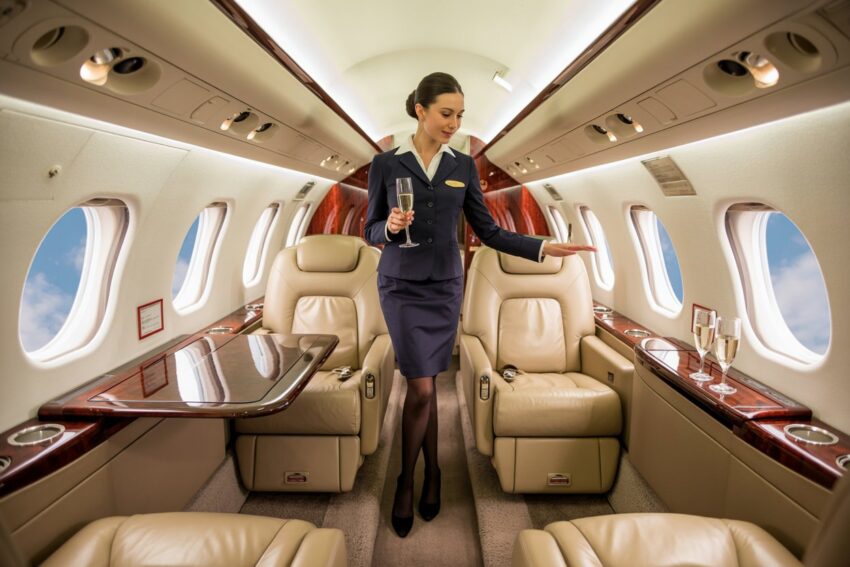
Image generated with Ai
What Does American Airlines’ TLC Jet Partnership Really Mean for Premium Travellers?
American Airlines has taken a decisive step into private aviation through its agreement with TLC Jet, signalling a strategic pivot towards high-value travellers seeking flexibility and exclusivity. The partnership allows members of the AAdvantage programme to earn miles and Loyalty Points when flying privately, effectively merging commercial and private aviation ecosystems.
This move reflects a broader industry trend where airlines aim to capture premium travellers who frequently alternate between scheduled flights and private charters. The integration offers a seamless reward structure, ensuring that high spenders remain within the airline’s ecosystem. By enabling points accumulation on private jet expenditure, American Airlines is effectively redefining what loyalty means in modern aviation.
For travellers, this means enhanced flexibility, higher status accumulation, and access to premium benefits across both private and commercial travel segments.
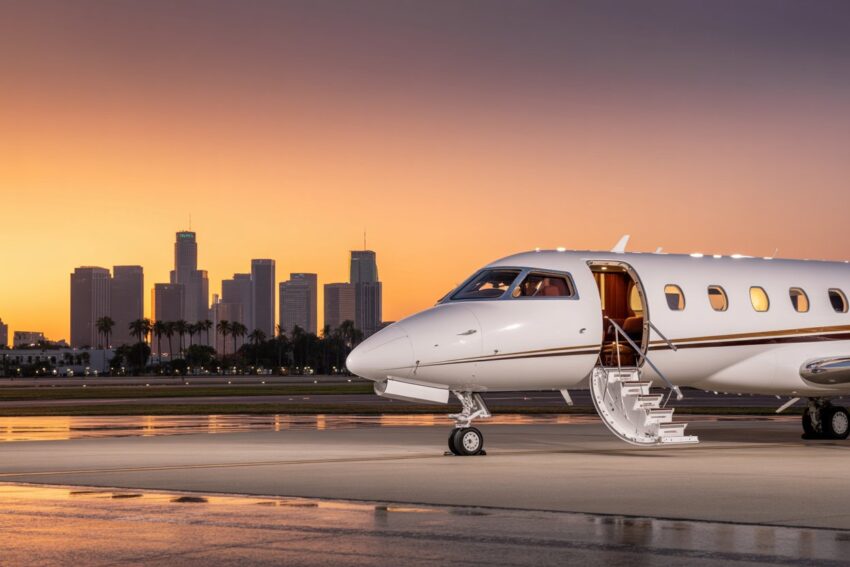
Image generated with Ai
What Role Does Delta Air Lines Play in Private Aviation Expansion?
Delta Air Lines has taken an indirect but influential role in the private aviation sector through strategic investments and partnerships. Its historical association with private jet companies reflects a model focused on integration rather than full-scale ownership.
Delta’s strategy centres on offering premium travel experiences and linking corporate clients with private aviation solutions. This allows the airline to capture high-end demand while maintaining operational efficiency. The approach demonstrates how airlines can extend their brand into private aviation without the risks associated with fleet management, thereby enhancing customer loyalty and strengthening their premium travel positioning.
How Is United Airlines Competing Without Direct Private Jets?
United Airlines is redefining competition by introducing private jet-style experiences within its commercial fleet rather than entering the market directly. By redesigning regional aircraft with fewer seats and enhanced comfort, United offers a semi-private travel experience at a lower cost. This strategy appeals to premium passengers who seek exclusivity but may not require full private jet services.
It represents an innovative approach where airlines bridge the gap between business class and private aviation. United’s model highlights how product innovation can serve as a competitive tool, enabling airlines to capture luxury demand without traditional private jet operations.
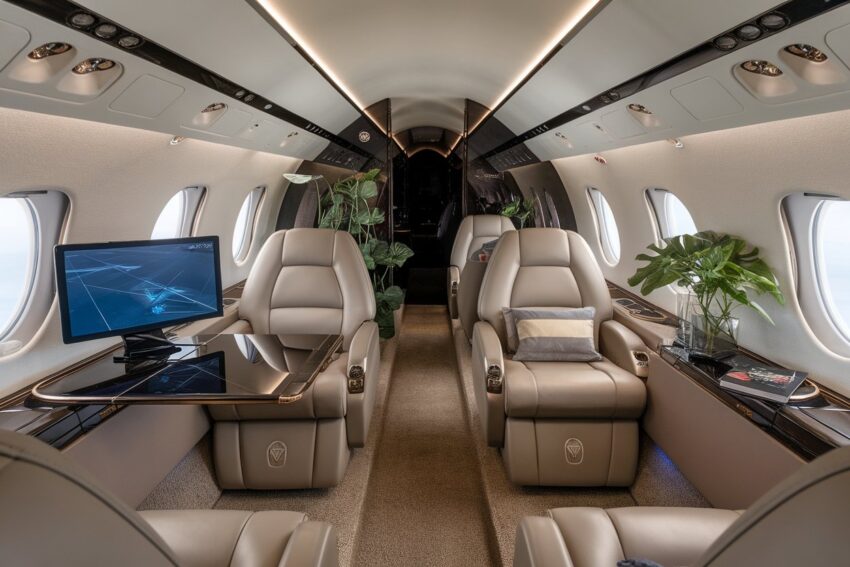
Image generated with Ai
Why Is Qatar Airways Leading with a Full Private Jet Division?
Qatar Airways stands out with its dedicated private jet arm, offering one of the most advanced business aviation services globally. Its private aviation division operates a fleet of high-end jets designed for ultra-long-haul luxury travel.
This model allows Qatar Airways to fully control the customer experience, from booking to onboard service. The airline targets ultra-high-net-worth individuals, government officials, and corporate leaders. By integrating private aviation into its core business, Qatar Airways strengthens its position as a global luxury aviation leader. This strategy reflects the Middle Eastern carriers’ emphasis on premium service excellence and innovation.
How Is Lufthansa Expanding Its Private Aviation Ecosystem?
Lufthansa has developed a structured approach to private aviation through its business jet services and aviation technology expertise. The airline leverages its engineering and maintenance capabilities to support private jet operations while offering charter services to corporate clients.
This integrated ecosystem allows Lufthansa to maintain quality control and generate additional revenue streams. Its focus on corporate travel aligns with Europe’s strong demand for business aviation. Lufthansa’s strategy demonstrates how legacy carriers can use existing infrastructure to build a robust private aviation presence, ensuring long-term growth and resilience in a competitive market.

Image generated with Ai
Why Is the Loyalty Points Boom Becoming Central to Airline Strategy?
The expansion of loyalty programmes into private aviation is not accidental but deeply strategic. American Airlines’ AAdvantage programme now extends its reach into high-value private charter spending, where each dollar spent translates directly into miles and points.
This creates a powerful incentive for affluent travellers and corporate clients to consolidate their travel expenditure within a single ecosystem. Loyalty Points now serve as a currency that bridges multiple travel modes, reinforcing customer retention. The ability to earn status through private jet usage accelerates progression to elite tiers such as Executive Platinum, which offers extensive privileges.
Moreover, loyalty programmes have become significant revenue generators for airlines, often contributing billions through partnerships and credit card integrations. By linking private aviation to loyalty rewards, American Airlines is tapping into a lucrative segment that was previously fragmented and underutilised.

Image generated with Ai
How Does the American Airlines and TLC Jet Model Compare with Delta’s Approach?
American Airlines is not entering this space in isolation. Delta Air Lines has already established a strong foothold through its association with Wheels Up, controlling a substantial share of the private aviation interface among US carriers.
Delta’s earlier investments, including a significant financial injection into Wheels Up, demonstrate a long-term commitment to integrating private aviation with its commercial network. American Airlines’ partnership with TLC Jet mirrors this strategy but adopts a slightly different approach by focusing on loyalty integration rather than ownership stakes.
This competitive dynamic signals an emerging battleground in aviation where airlines are no longer confined to traditional operations. Instead, they are building hybrid ecosystems that combine scheduled services, private jets, and loyalty incentives. The result is an intensified rivalry aimed at capturing the most profitable segment of travellers.
What Benefits Do High-End Travellers Gain from This Integration?
The partnership delivers tangible benefits to high-end travellers, particularly those who value efficiency, flexibility, and rewards optimisation. Clients flying with TLC Jet can now earn miles and Loyalty Points at a one-to-one ratio per dollar spent, significantly accelerating status accumulation.
This integration allows travellers to leverage private jet spending to unlock benefits such as lounge access, priority boarding, and enhanced earning rates across the Oneworld alliance. Additionally, accumulated miles can be redeemed for flights, hotel stays, and even luxury merchandise, creating a comprehensive rewards ecosystem.
For corporate travellers, this model offers an opportunity to maximise returns on travel expenditure, converting operational costs into valuable loyalty assets. It also simplifies travel planning by aligning private and commercial travel under a unified framework, reducing fragmentation and enhancing convenience.

Image generated with Ai
How Are Emirates and Other Luxury Carriers Positioning Themselves?
Luxury-focused airlines like Emirates are targeting the ultra-exclusive segment of private aviation with specialised charter services. These offerings are designed for elite travellers, including royalty and billionaires, who demand unparalleled comfort and privacy.
Emirates’ strategy emphasises exclusivity rather than scale, ensuring a premium experience that aligns with its brand identity. Other carriers in the Middle East are adopting similar approaches, focusing on high-value clients rather than mass adoption. This positioning reinforces the region’s dominance in luxury aviation and sets new benchmarks for service quality and innovation in the private jet market.
Is This Partnership a Sign of a Larger Shift in the Aviation Industry?
The collaboration between American Airlines and TLC Jet is indicative of a broader structural transformation within the aviation industry. Airlines are increasingly moving towards ecosystem-based models that integrate multiple travel services into a single value proposition.
This shift is driven by changing consumer expectations, where travellers demand personalised, seamless experiences across different modes of transport. The traditional boundaries between commercial airlines and private aviation are gradually dissolving, giving rise to hybrid travel solutions.
Furthermore, the emphasis on premium experiences reflects the industry’s focus on high-margin segments. As operational costs rise and competition intensifies, airlines are prioritising revenue streams that offer greater profitability. Private aviation partnerships represent a strategic response to these challenges, enabling airlines to diversify and strengthen their market position.

Image generated with Ai
What Role Does the Oneworld Alliance Play in Expanding This Strategy?
The integration of private aviation rewards into the AAdvantage programme extends beyond American Airlines itself, leveraging the global reach of the Oneworld alliance. Members can redeem miles across partner airlines, including international carriers, enhancing the value proposition of the programme.
This connectivity ensures that benefits earned through private jet travel can be utilised globally, providing flexibility and convenience for international travellers. It also strengthens the alliance’s competitive position by offering a differentiated loyalty experience compared to rival networks.
Additionally, the presence of private aviation initiatives within other alliance members further amplifies the impact of this strategy. By aligning these offerings, the alliance can create a cohesive premium travel ecosystem that spans multiple regions and services, reinforcing customer loyalty on a global scale.
The cause is clear. Demand for exclusivity, speed and privacy is rising worldwide. High-net-worth travellers want seamless journeys. Airlines respond fast. The answer is strategic expansion into private jet market through ultra luxury premium charter flight service. American joins United, Delta Air, LATAM, JetBlue, Lufthansa, Air France–KLM, Qatar Airways to capture this demand. The reason lies in higher margins, stronger loyalty and diversified revenue streams. Therefore, airlines entering private jet market is not temporary. It is structural change. This shift will redefine aviation. It will merge commercial scale with private exclusivity across global travel networks.
Image generated with Ai
Could This Move Reshape the Future of Premium Travel Globally?
The entry of American Airlines into the private aviation space through TLC Jet has the potential to reshape the future of premium travel. By integrating loyalty rewards with private jet usage, the airline is setting a precedent for how travel ecosystems can evolve.
This model is likely to influence other carriers, prompting them to explore similar partnerships or develop in-house capabilities. As competition intensifies, travellers can expect more innovative offerings that combine convenience, exclusivity, and rewards.
In the long term, the convergence of private and commercial aviation could lead to a more fluid travel experience, where customers seamlessly transition between different modes based on their needs. This transformation will redefine the concept of premium travel, making it more accessible and integrated than ever before.
Advertisement
Advertisement
