
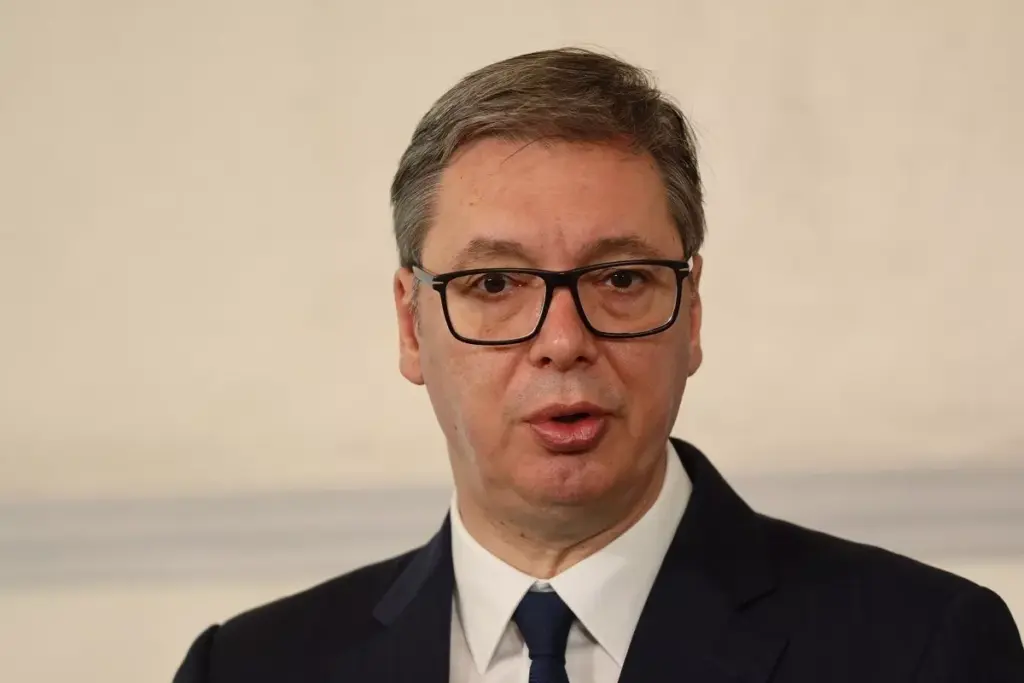
Serbian President Aleksandar Vučić has called for the creation of specialized military units equipped with attack drones, as the country moves to modernize its armed forces and transition away from outdated Soviet-era technology, Reuters reports.
Speaking after meeting senior military commanders in Belgrade, Vučić, who serves as the army’s supreme commander, said he had proposed forming units with long-range strike drones as well as loitering munitions capable of hovering over target areas before engaging.
“In addition to the increased production of drones, which I expect to explode this year … we will significantly devote ourselves to the … digitisation of our army,” he said.
“I think that in this regard we will be one of the armies with the most pronounced interoperability and the greatest capabilities, not only in our region, but also wider than that,” he added.
Serbia, which maintains a military force of around 22,500 personnel, has allocated 3.3% of its GDP to defense spending in 2026 as part of a broader modernization push. The country has already procured advanced military equipment from Europe, Israel, and China, reflecting its effort to adapt its defense strategy to contemporary warfare.
Belgrade maintains a position of military neutrality, balancing cooperation with NATO and aspirations to join the European Union alongside close ties with Russia and China.
The rearmament drive has drawn criticism from neighboring countries including Croatia, Bosnia and Herzegovina, and Kosovo, which view the buildup as a potential threat to regional stability—an assertion Serbia denies.
Vučić’s remarks come shortly after the announcement of a joint Serbian-Israeli drone manufacturing facility. In recent years, Serbia has also acquired Israel’s PULS artillery systems and Hermes drones produced by Elbit Systems for $335 million, as well as long-range missiles, drones, and electronic warfare equipment worth approximately $1.6 billion.
Additional purchases include cargo aircraft and helicopters from Airbus, Chinese missile and drone systems, and Rafale fighter jets manufactured by Dassault Aviation, valued at 2.7 billion euros ($3.18 billion), intended to replace the country’s aging MiG-29 fleet.
By Vafa Guliyeva