
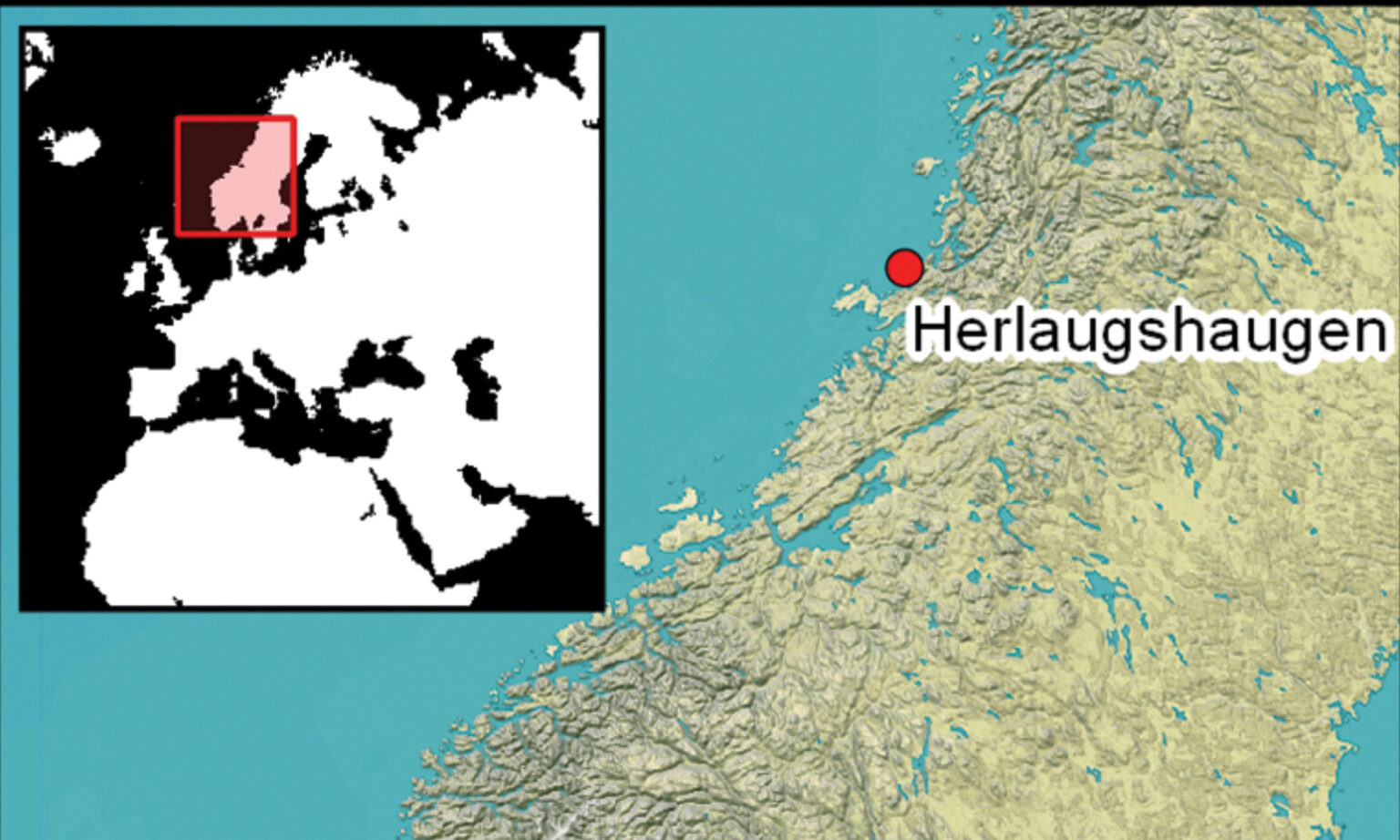
Archaeologists have confirmed that a huge burial mound on Norway’s coast hid a ship grave built around AD 700.
That result pushes a Norwegian burial custom deeper into the past and tightens its link to North Sea traditions.
Burial mounds and ships

Inside Herlaugshaugen, a 200-foot mound on Leka off central Norway’s coast, iron fasteners and wood gave the answer.
Reading those remains, Geir Grønnesby at the Norwegian University of Science and Technology (NTNU) showed the mound once held a ship.
Earlier digging had torn through the center, so the team found a disturbed pattern rather than a clean hull outline.
That mattered because even damaged evidence can reset a timeline when the objects belong to a vessel built for sea travel.
What the nails showed
The strongest clues were clinker nails, iron fasteners that lock overlapping planks together, plus bits of wood still stuck to them.
That combination matters because overlapping planks form a seagoing hull, so these nails point to a ship, not furniture.
Across the trench, 29 rivets appeared, and their size suggested a vessel more than 65 feet long, probably from its midsection.
Even without a full outline, those details narrowed the burial from a long-running suspicion to a specific kind of ship grave.
Dating a burial ship
Age proved just as important as shape once the team sampled the wood and charcoal trapped inside the mound.
Using radiocarbon dating, a way to estimate age from carbon left in old material, they placed the burial near AD 700.
The model suggested the ship was built after AD 670, though missing outer rings kept the final date from locking shut.
That small uncertainty did not erase the main result, which places the burial generations earlier than Norway’s classic Viking ship mounds.
Before the Viking Age
Placed in the Merovingian period, the centuries just before the Viking Age, the mound falls earlier than most Scandinavian ship burials.
Officials place Sutton Hoo’s great ship burial near AD 625 at the burial ground, showing the custom crossed the North Sea.
Herlaugshaugen now sits between that English example and Norway’s later ship graves, filling a gap that had made the timeline look broken.
Instead of appearing abruptly with the Viking Age, monumental ship burial now looks like an older custom shared across regions.
Burial ship further north
Location adds another surprise, because Leka sits far north of the main cluster of famous Norwegian ship burials.
There, an east-west valley route met the coast’s north-south sea lane, putting travelers, cargo, and news in the same narrow corridor.
The authors argue that Leka worked as a node where goods and ideas could move together, not just objects.
That setting helps explain why such a public burial rose beside a harbor rather than in an isolated inland field.
Trade, status, belief
A ship inside a mound did more than carry a dead leader, because the vessel itself signaled status, reach, and ritual meaning.
For people who lived by coasts and straits, boats moved food, trade, and fighters, so they also carried ideas about identity.
Large mounds turned that message into landscape, announcing wealth and authority to anyone arriving by water.
The burial likely joined practical seafaring power to beliefs about the afterlife, even if the exact ritual can no longer be rebuilt.
Legend meets evidence
Stories had wrapped themselves around Herlaugshaugen for centuries before modern archaeologists returned with new tools.
An old saga linked the mound to King Herlaug, and eighteenth-century diggers reported a seated skeleton, sword, animal bones, and metalwork.
Those finds later vanished, and for years the missing objects left scholars arguing over whether the mound had ever held a ship.
NTNU’s new excavation did not recover the lost grave goods, but it finally answered the central question they left behind.
Importance of burial ships
For the team, the burial points to serious shipbuilding skill long before the Viking Age.
“This dating is really exciting because it pushes the whole tradition of ship burials quite far back in time. You don’t build a ship of this size without having a reason for doing so,” Grønnesby said.
His point does not move the start of the Viking Age, but it does push advanced maritime ability deeper into the past.
Why Leka mattered
Names around the harbor hint that Leka was more than a lonely island, because nearby places may mark gatherings, games, and assembly.
That kind of place could pull communities together while also easing conflict, turning arrival by sea into a public act.
Set beside the water, Herlaugshaugen would have been the first landmark greeting visitors from the mainland or farther south.
Seen that way, the mound looked less like a private grave and more like a claim on regional importance.
Wider history revised
Herlaugshaugen now links an English royal ship burial, later Norwegian ship graves, and a northern coastal hub into one longer story.
More excavation may refine the ritual, but the change is clear: Scandinavian ship burial began earlier, farther north, and in denser networks.
The study is published in Antiquity.
—–
Like what you read? Subscribe to our newsletter for engaging articles, exclusive content, and the latest updates.
Check us out on EarthSnap, a free app brought to you by Eric Ralls and Earth.com.
—–