
-
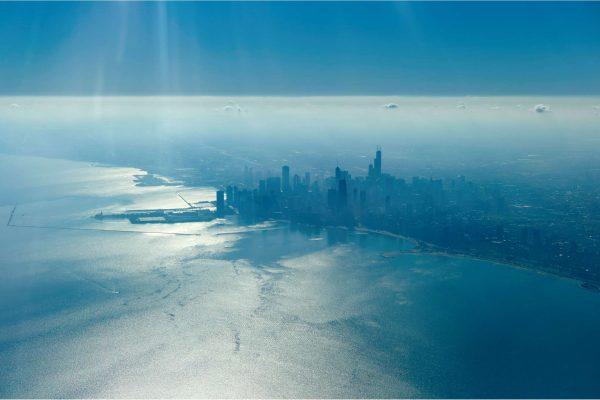
Accelerated sea level rise, driven by global warming, places 12 iconic cities in a race against time to avoid permanent flooding.
-
From Amsterdam to Venice, collapsing ice sheets and coastal erosion threaten to displace millions of people before the end of the decade.
-
Experts warn that current infrastructure may be insufficient against the magnitude of climate change without drastic mitigation measures.
The climate crisis has ceased to be a distant warning, becoming a geographical reality that threatens to redraw the world map in the immediate future. According to the most recent projection models, global warming and polar ice melt are accelerating sea level rise at a rate that puts at least 12 global cities at critical risk by the year 2030. This alarm is not just a response to extreme weather events, but to a gradual and sustained rise in waters that could leave entire neighborhoods and in some cases, entire cities underwater in less than five years if current carbon emission trends are not significantly reversed.
Metropolises in the line of fire
Among the most vulnerable cities are key centers of world culture and economy that share a coastal or low lying geography. Venice, with its historic subsidence, and Amsterdam, protected by a complex dike system, lead the list of European cities struggling to stay afloat; however, the risk is even more acute in regions of Asia and the Americas. Cities such as Bangkok, Jakarta and Ho Chi Minh City face the possibility of daily flooding that would make urban life as we know it unviable, while in the Americas, New Orleans and Miami continue to grapple with infrastructure that seems to be yielding to the constant pressure of the ocean.
A challenge beyond engineering
The plight of these 12 cities is not merely a matter of building higher walls or more efficient drainage systems but represents an unprecedented challenge to human survival and logistics. Saltwater infiltration into freshwater supplies and the erosion of urban foundations are direct consequences already being observed, suggesting that by 2030 many of these areas could be declared uninhabitable. The climate warning emphasizes that the time for theoretical planning has passed, giving way to an era of forced adaptation where the relocation of entire populations is beginning to be considered an inevitable solution in the face of the advancing sea.
The urgency of a coordinated global response
What makes this projection particularly alarming is the proximity of 2026 as a turning point for implementing effective mitigation policies before reaching the 2030 threshold. Experts emphasize that the salvation of these cities depends on a coordinated global effort to drastically reduce global warming, as the fate of these 12 metropolises is an early indicator of what could happen to hundreds of other coastal communities. Ultimately, the fight to keep these cities above sea level is a fight to preserve the history, economy and homes of millions of citizens who today view the horizon with a mixture of hope and fear.
Global cities at critical risk of submersion by 2030