
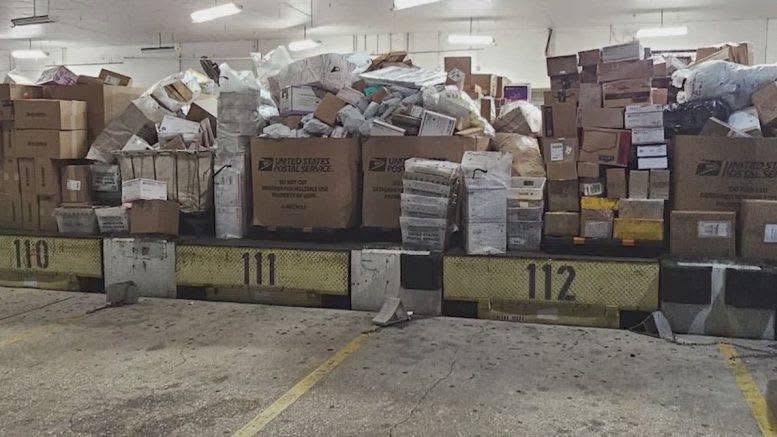
Taken from fb*
Customs chaos without any reason and responsibility, which costs citizens time and nerves
In the last few months, the Government’s decision to reduce the threshold for mandatory taxation and customs clearance of all postal shipments from platforms such as AliExpress and Temu has caused serious problems in the daily functioning of postal traffic. Instead of the expected effect of better control and increased budget revenues, the measure in practice led to significant stoppages, delays and general chaos in the system.
A large number of citizens have faced situations where their shipments are held at customs for weeks and even more than a month. In my case, several shipments were held for 35-40 days, although in the end neither tax nor duty was collected for them. This raises a serious question about the efficiency and seriousness of the process itself. If the shipments are not subject to additional charges, why are they being held up so long in the first place?
Employees of the postal services also do not hide their displeasure. Although they are the first line of contact with citizens, they are put in the unenviable position of justifying delays on the grounds that it is a government decision over which they have no influence. It is obvious that there is a serious gap between the adoption of policies and the real capacity for their implementation, both in terms of space, and in terms of human resources and organization.
The biggest problem is that such laws were not preceded by serious preparation and analysis of the consequences. Instead of gradual introduction or pilot projects, sudden changes that directly affect the everyday life of citizens have been approached. At a time when online shopping is becoming more and more common, especially due to availability and lower prices, this kind of administrative disorganization and unpreparedness creates an unnecessary burden and frustration for citizens.
What is particularly worrying is the recurrence of such situations. Instead of drawing lessons from previous experiences with similar laws (for example, the Law on Public Hygiene, which is practically not implemented at all), institutions often make decisions that look good on paper, but are difficult to apply in practice. A lack of strategic planning, coordination and investment in infrastructure results in a system that functions under constant pressure or does not function at all.
In the end, the price of such policies is paid by the citizens through lost time, nervousness and broken trust in the institutions. If the goal is really to improve the system, it is necessary that decision-making be accompanied by a real analysis of needs and capacities, as well as a clear plan for their efficient application. Otherwise, such measures will continue to create more problems than solutions.
https://i.redd.it/qcwumdymdivg1.jpeg
Posted by Ikaradza
3 Comments
cudi se kaj mi se narackite
Мизерере.
Плаќаме искористени куртони да држат позиции, нема никогаш да одговараат за нивната штета