
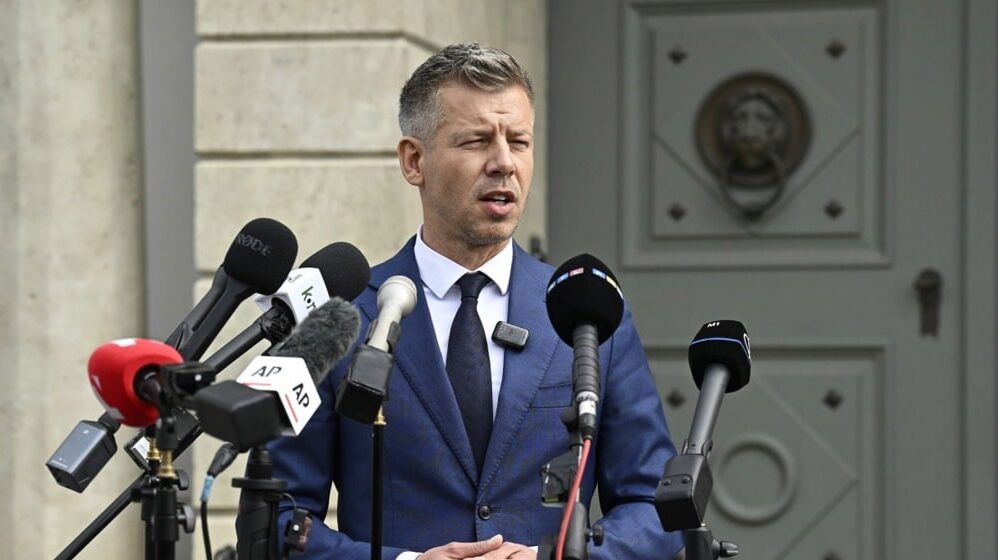
The seismic shift in Hungary has put Slovak PM Robert Fico in a tighter corner than ever. The decisive victory of Magyar will put an abrupt end to the long alliance with Orban that Fico had relied on in his EU battles over Ukraine, sanctions and close relations with Vladimir Putin. While Fico struck a conciliatory tone – promising “intensive cooperation” and continuity – his position has fundamentally weakened. For years, Orban acted as both shield and spear: blocking EU decisions and absorbing political pressure. Fico could echo criticism without standing alone. Now, that cover is gone. And unlike Orban, Fico lacks the capacity to replace him. Hungarian analyst Miklos Haraszti argues Slovakia’s proportional system, coalition politics, and freer media environment make it far harder to dominate public opinion or systematically obstruct Brussels. In short, Fico can be loud – but not decisive. That matters because key EU decisions loom, including long-term support for Ukraine. Without Hungary’s veto threats, any resistance from Slovakia will be more visible – and more isolated. At the same time, Moscow may test whether Bratislava can become a new partner inside the EU. But expectations are likely low: Slovakia lacks Hungary’s weight, and Fico lacks Orban’s institutional grip. Magyar has signalled continued cooperation with Bratislava – but with conditions, particularly on sensitive issues like the historical Benes Decrees and minority rights. That introduces a new source of friction into Slovak-Hungarian relations, replacing ideological alignment with transactional diplomacy. Domestically, reactions underline the divide. The government stresses stability and partnership; the opposition frames Orban’s defeat as a warning for Fico. Even within the coalition, voices differ on whether relations will improve or deteriorate.
Over in Poland, congratulating Magyar on his victory, PM Donald Tusk signalled both relief and intent. “Everyone feared there was a trend of authoritarian, corrupt regimes. No – that is not the case. First Warsaw, then Bucharest, Chisinau, and now Budapest. I’m glad this part of Europe is showing we are not condemned to corrupt and authoritarian governments, because Viktor Orban’s government has unfortunately become one,” he said during a press conference in Seoul. Magyar, for his part, promised that Warsaw would be the destination of his first foreign visit. Behind the choreography of congratulations, however, early contacts between Tusk and Magyar – which began during the campaign – point to something more concrete. Poland and Hungary followed a similar path into democratic backsliding; now, as Hungary attempts a reversal, Magyar finds himself where Tusk was not long ago – an experience that could prove instructive for Budapest. The overlap is also material. Talks have reportedly focused on unblocking EU funds frozen over rule-of-law disputes, which under Orban had turned Hungary into a frequent spoiler in Brussels. For Warsaw, a more cooperative Budapest means fewer vetoes; for Hungary, it offers a route back into constrained financial flows. Energy adds another layer: both countries share exposure to the same regional vulnerabilities and are looking to stabilise prices and diversify supply. Coordination in the Council of the EU – shaping or dismantling blocking minorities – is part of the calculus as well. But where Tusk struck a cordial tone, Polish President Karol Nawrocki opted for formality, writing on X: “I wish to extend my congratulations on your victory… The high turnout and the result you achieved give you and the TISZA movement a strong social mandate.” Yet the message landed awkwardly. During the campaign, Nawrocki travelled to Hungary in a show of support for Orban – a move widely seen as a political misstep, both domestically and abroad. It cut against his earlier reluctance to engage with Budapest over Orban’s ties to Moscow, and raised eyebrows about external pressure, including from allies of Donald Trump.
The fallout from Hungary’s election is already reshaping one of the most politically charged disputes between Warsaw and Budapest: the fate of PiS politicians Zbigniew Ziobro and Marcin Romanowski – who fled the country last year and were granted asylum by Orban. Magyar moved quickly to signal a break with his predecessor’s approach, saying the two men “will not stay long” in Hungary and warning that the country would not serve as a refuge for internationally wanted individuals. The remark, half-jokingly framed with advice not to “buy furniture”, carried a clear political message: the Orban-era protection that allowed both men to seek asylum is unlikely to survive the transition. In Warsaw, the response has been to accelerate parallel legal and political tracks. MPs from the ruling coalition have moved to initiate proceedings before the State Tribunal against Ziobro, a step backed by senior figures including Deputy Speaker Wlodzimierz Czarzasty. The process, if it advances, would formalise political accountability alongside ongoing prosecutorial cases linked to the Justice Fund. At the same time, Justice Minister Waldemar Zurek has formally contacted Hungarian authorities, signalling that Warsaw expects cooperation from the incoming government. Legal experts caution, however, that the decisive move now lies with Budapest: extradition will depend not on political declarations, but on court procedures and the willingness of Hungarian institutions to act.