
Apr 17, 2026
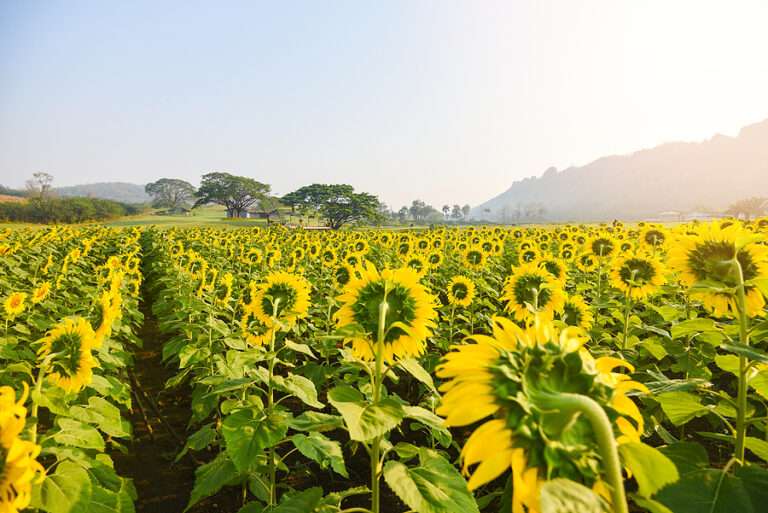
According to the EU Commission’s latest forecast, the EU-27 is expecting a sunflower seed harvest of 9.6 million tonnes in 2026.
This would be up approximately 1.2 million tonnes year-on-year and represent the largest harvest in three years. The expectation is mainly based on an approximately 5 per cent expansion in EU sunflower area. In particular, in Romania, France and Bulgaria, sunflower seed output is expected to increase significantly.
Romania is seen to strengthen its position as the largest EU producer. The country’s harvest is expected to reach 2.1 million tonnes in 2026, representing an 18 per cent rise over 2025. The main factor driving the increase is a slight expansion in production area to 1.2 million hectares. Climbing to second place among the EU’s largest producers, France is expected to harvest 1.9 million tonnes, roughly 33 per cent more year-on-year.
According to research by Agrarmarkt Informations-Gesellschaft , other EU member states are also likely to see significant harvest increases, including Hungary, Bulgaria, Spain, and Greece. For Germany, the EU Commission projects an increase in output of approximately 32,000 tonnes to 175,000 tonnes.
This would set a new record high. The crop area is estimated at 77,000 hectares, up from 62,000 hectares in the past year.
Compared with the major producers of sunflower seed, Germany continues to play a relatively minor role in the EU. However, the upward revision of the crop forecast reflects farmers’ growing interest in diversifying crop rotation, especially by including an additional summer crop.

This would be up approximately 1.2 million tonnes year-on-year and represent the largest harvest in three years. The expectation is mainly based on an approximately 5 per cent expansion in EU sunflower area. In particular, in Romania, France… [Read More]
New figures from Eurostat’s SHARES database show that the share of renewable energy in EU road and rail transport actually decreased from… [Read More]
The partnership marks one of the first applications of HVO in China’s internet data center (IDC) sector and showcases a… [Read More]
As the world’s second‑largest producer of palm oil, Malaysia currently applies a B10 biodiesel mandate for the transport… [Read More]
According to the Ministry of Commerce, the decision is designed to safeguard national supply and stabilise prices as consumption of biodiesel blends increases across the country.
Officials explained that the geopolitical… [Read More]
The updated agreement provides a long-term framework that supports the scalable growth of Carinata to be used as a non-food intermediate crop biofuel feedstock.
Nufarm… [Read More]
The project delivers upgraded on‑site facilities designed to increase jet fuel capacity and improve the resilience of supply to London’s… [Read More]
European ethanol biorefineries producing food, feed, fuel and… [Read More]
The European Commission signed two of its largest trade agreements in history, with Mercosur and India.
The US White House continues to weaponise tariffs, making little distinction between (former) allies and strategic competitors.
Meanwhile, China and several other countries are introducing… [Read More]