
 6 min read
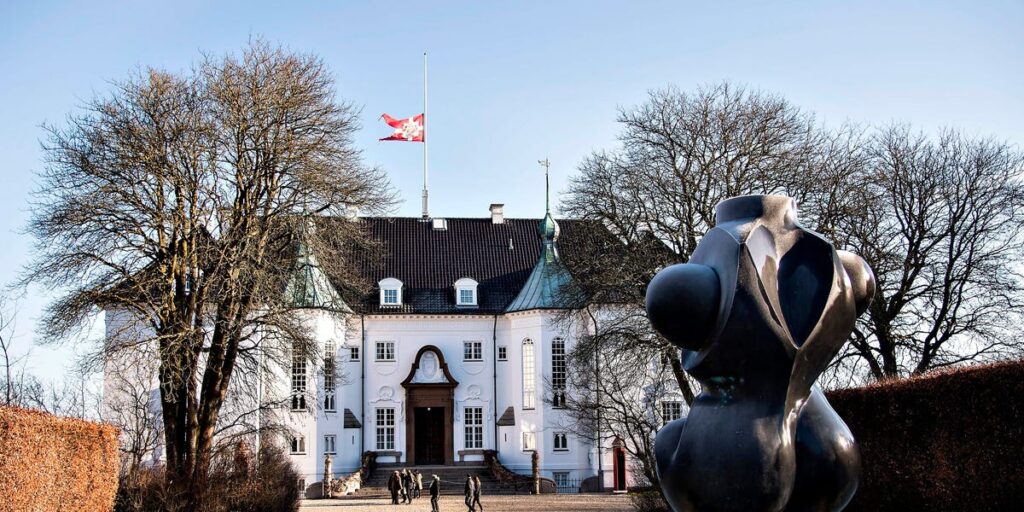
Above: Marselisborg Palace in Aarhus, Denmark.
Denmark’s monarchy is among the oldest in the world, stretching back to 935. The current king, Frederik X, ascended the throne in January 2024 following the surprise abdication of his mother, Queen Margrethe II. At the end of 2023, after more than 53 years as the country’s head of state, she announced on live TV that she would relinquish her titles. The queen was the first Danish monarch to voluntarily step down in nearly 900 years.
Frederik and his wife, Queen Mary, inherited not just the crown, but also the use of an array of lavishly appointed homes around the country, from the main Amalienborg complex in the heart of Copenhagen to Fredensborg Palace on the scenic shores of Lake Esrum.
Below, ELLE Decor breaks down the Danish royal family’s property portfolio.
Amalienborg
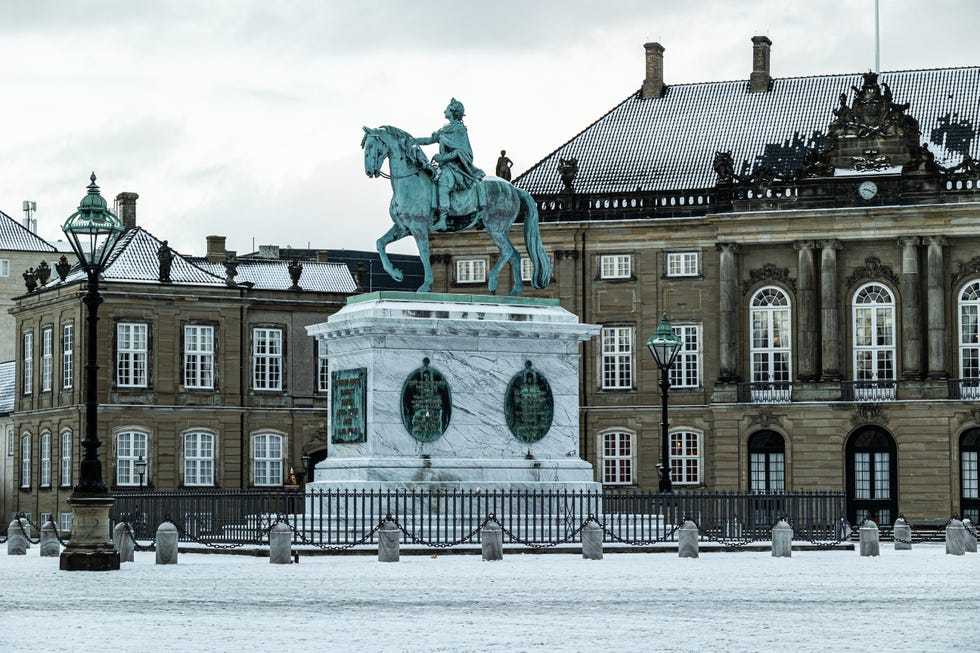
The equestrian statue of King Frederick V of Denmark in Amalienborg Palace Square in Copenhagen.
In the middle of Denmark’s design-forward capital of Copenhagen is Amalienborg, the official residence of the royal family and the heart of the monarchy. It’s not a single palace, but rather four distinct structures each named after a former king. The complex dates to 1750 and was built at the request of King Frederik V to mark the 300th anniversary of the House of Oldenburg taking power. Featuring Rococo interiors, identical Classical manors line an octagonal courtyard, with an equestrian statue of Frederik at its center. The royals officially moved here in 1794, after nearby Christiansborg Palace burned down.
Each of the palaces was originally built to house one noble family, and many Danish monarchs have indeed called Amalienborg home, including the current King Frederik X, who grew up in Frederik VIII Palace. The ground floor of Christian VIII Palace, meanwhile, was transformed into the Amalienborg Museum in 1994 and includes preserved reception rooms and bedchambers, as well as a dazzling collection of Fabergé objects. If you’re planning a visit, be sure to stop by the palace right at noon to witness the daily changing of the guards.
Christiansborg Palace
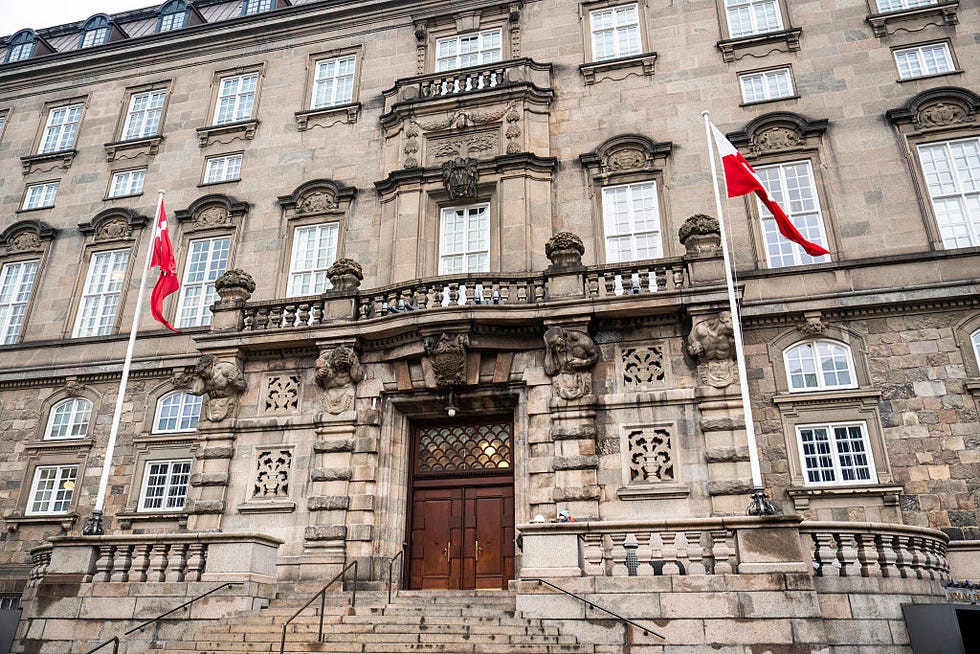
Christiansborg Palace in Copenhagen.
Completed in 1928 on Slotsholmen island in central Copenhagen, the Neo-baroque Christiansborg Palace of today serves as the seat of the Danish government, home to the country’s parliament, prime minister, and Supreme Court. The current building is actually the third structure by the same name to occupy the site. The first one was a grand Baroque residence commissioned by King Christian VI in 1733 and completed in 1745. The royal family previously lived there, but relocated to Amalienborg after a fire ravaged the structure in the late 18th century.
Leading architect C.F. Hansen designed the rebuilt palace in a neoclassical architectural style, with the work completed in 1828. When the nation adopted the Danish Constitution in 1849, King Frederik VII gave the two houses of parliament use of Christiansborg’s royal apartments. But that structure also burned down in its own fire in 1882, and had to be reconstructed to what it looks like today.
Now, the royal family uses the granite-sheathed palace—crafted by architect Thorvald Jørgensen—for state dinners, receptions, and official ceremonies.
Fredensborg Palace
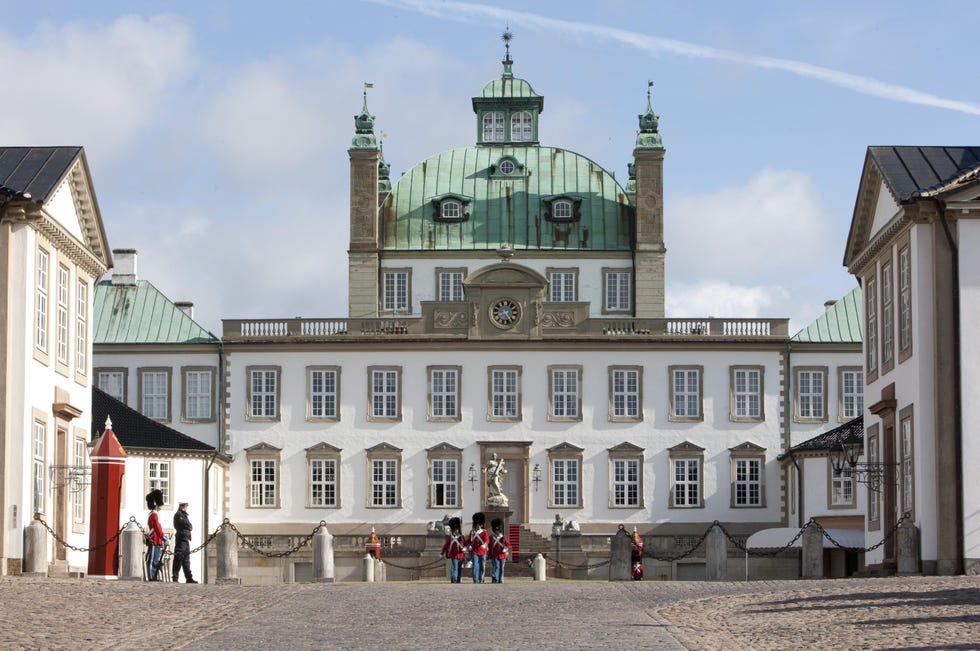
Fredensborg Palace on the morning of Prince Henrik’s 75th birthday in 2009.
Fredensborg Palace is a summer residence on the shores of Lake Esrum in North Zealand, about an hour’s drive from Copenhagen. It dates to the 1720s and originated as a hunting lodge for King Frederik IV. Later monarchs rebuilt and expanded the Baroque edifice to its current size, which now includes an attached residential wing called the Chancellery House, a chapel, an orangery, and some 300 acres of manicured gardens.
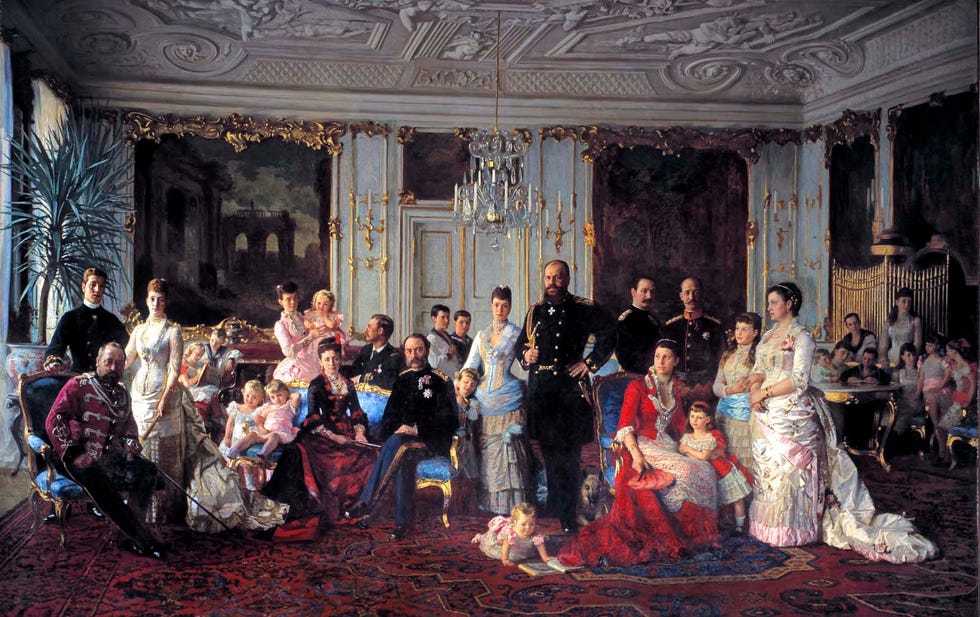
A circa-1885 painting by Laurits Tuxen of Christian IX of Denmark with his large family of European royalty gathered in the garden hall at Fredensborg Palace.
Today’s royal family makes great use of the estate. For instance, Queen Margrethe II was known to spend six months of the year here and hold lavish birthday celebrations on the grounds. King Frederik X and Queen Mary, meanwhile, announced last year that they were moving out of Amalienborg Palace for good, in favor of Chancellery House and its Régence-style interiors. The couple—who share four children and two Australian border collies—lived here from 2004 until 2010 as Amalienborg underwent renovations.
Marselisborg Palace
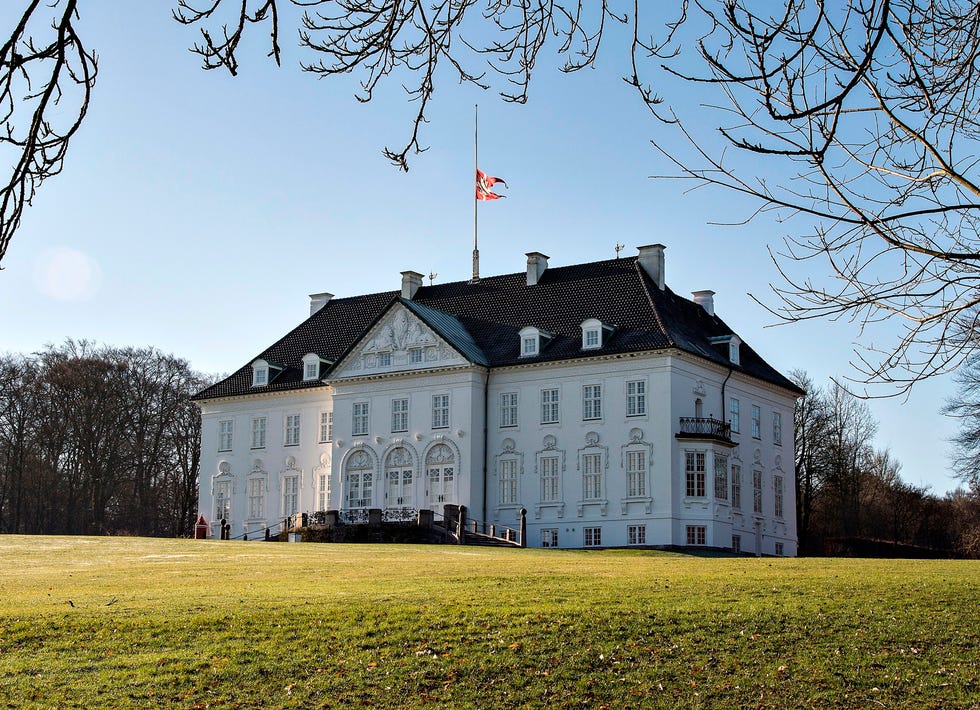
Marselisborg Palace in Aarhus, Denmark.
Located on the outskirts of Aarhus, Denmark’s second-largest city, Marselisborg Palace is one of the few privately owned estates within the Danish royal family’s property portfolio (most others are owned by the state). Overlooking Aarhus Bay, the Neo-baroque castle was built in the early 20th century as a summer retreat for Crown Prince Christian and Princess Alexandrine. It was considered a gift from the public after their 1897 engagement. Designed by Hack Kampmann, its romantic facade includes maritime motifs, onion domes, and a black tile roof with copper details.
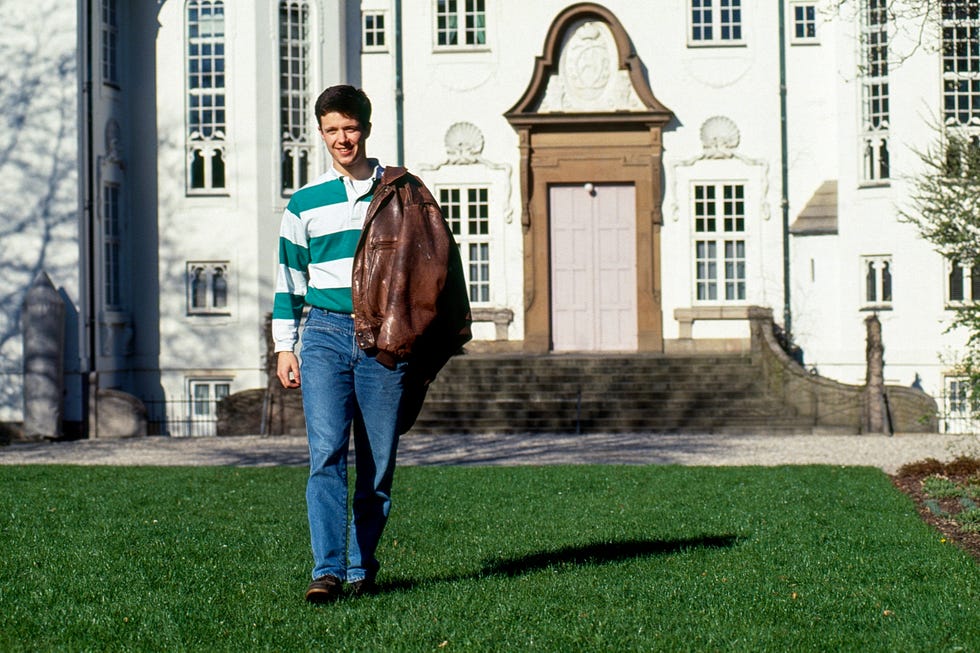
Crown Prince Frederik of Denmark poses in Front of Marselisborg Palace in 1991.
In 1967, King Frederik IX gifted his daughter and heir, Princess Margrethe, use of the property. The endowment coincided with her marriage to Prince Henrik, and the couple then took the money the Danish public gave them as a wedding present and put it towards renovating the aging estate. After ascending the throne in 1972, Queen Margrethe used the 32-acre compound as a seasonal getaway and the setting for various family celebrations up until her abdication. In March 2026, over a year after stepping down, she officially transferred the home to King Frederik, per the Copenhagen Post, as a gift valued at approximately $233,000 (1.5 million Danish kroner).
Gråsten Palace
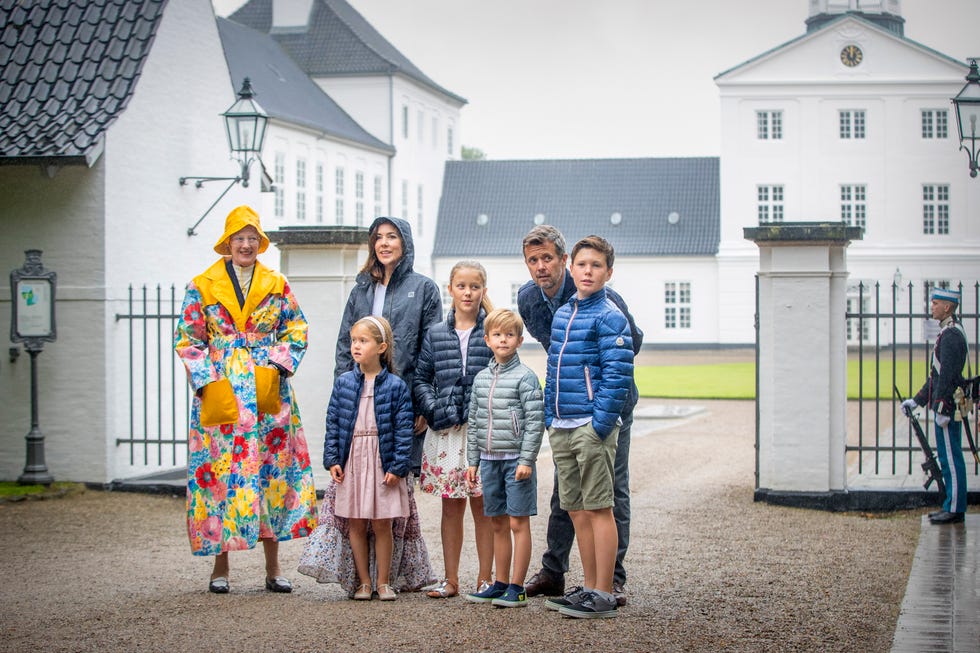
Queen Margrethe, Crown Prince Frederik, Crown Princess Mary, Prince Christian, Princess Isabella, Prince Vincent, and Princess Josephine attend the Ringsted horse ceremony at Gråsten Palace during their summer vacation in July 2017.
The second—and less popular—summer retreat of the Danish royals is Gråsten Palace. It came under the royal umbrella in 1935, when the state handed over control to Frederik IX and Queen Ingrid as a wedding gift. Located in the Jutland region of southern Denmark, near the German border, the compound features a main palace that was originally a 16th-century hunting lodge for a noble family. The home has undergone various rebuilding and expansion projects over the centuries. It now features a main block from the 1840s plus sprawling public gardens and a fresco-adorned church.
After Queen Ingrid’s death in 2000, the estate went to Queen Margrethe, who would spend several weeks a year on the grounds. She also set the precedent of using the property’s bucolic setting as a backdrop for family photo shoots. Earlier this year, Queen Mary offered a glimpse of the estate blanketed in snow.
The Hermitage
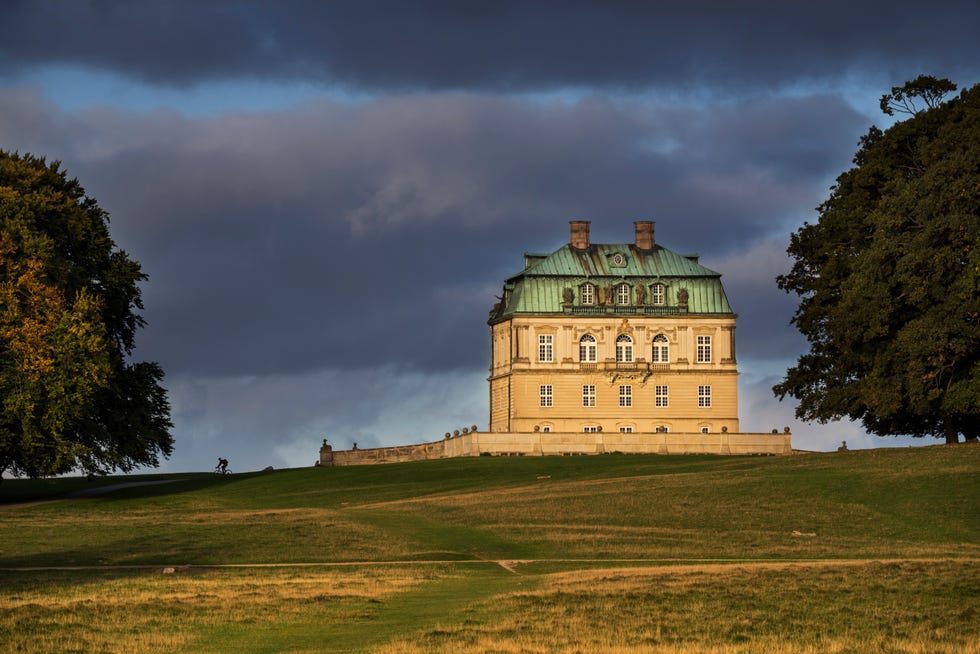
The Hermitage, an 18th century royal hunting lodge in Baroque style.
Long used by Danish nobility for game hunting and official banquets, the sprawling Dyrehaven (which translates to “deer park”) is located just north of Copenhagen and became a UNESCO World Heritage Site in 2015. At the center of the protected landscape—home to some 2,000 deer—is the Hermitage Hunting Lodge, a Baroque confection built for King Christian VI in 1738 by royal court architect Lauritz de Thurah and later updated by Ferdinand Meldahl.
Perched on a hill with views of the Øresund, which separates Denmark from Sweden, the estate features lavish touches like wallpaper made of gold, silver, and silk as well as marble accents. Between 2009 and 2013, the landmark underwent a total restoration both inside and out. It continues to host the annual Hubertus Hunting Session and is open to the public from spring through fall.
Sorgenfri Palace
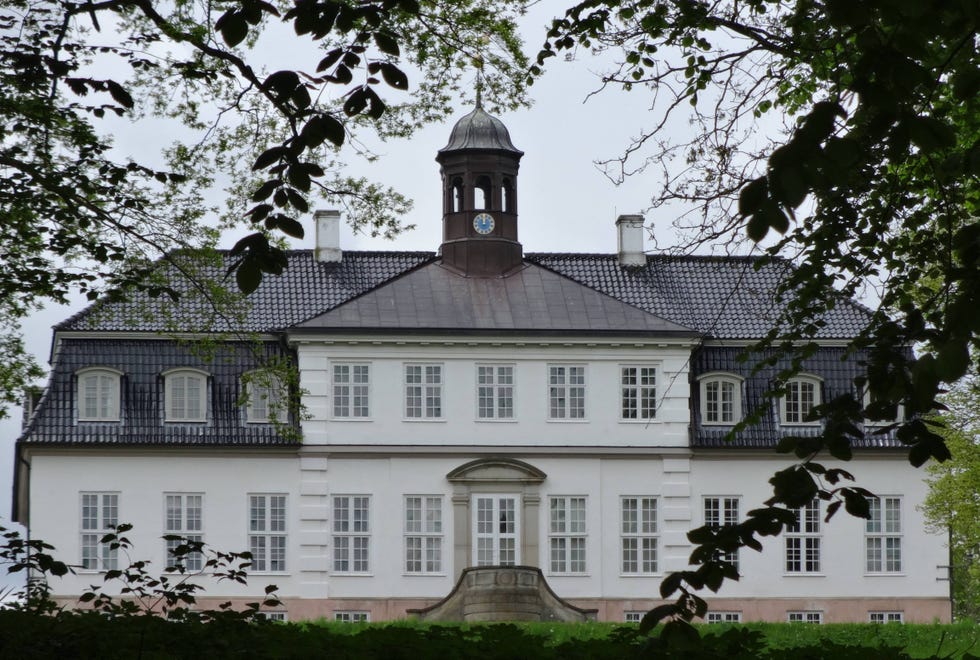
Sorgenfri Palace in Lyngby-Tårbæk.
On the outskirts of Copenhagen, in an area called Lyngby-Taarbæk, Sorgenfri Palace dates to the mid-1700s and has long housed various members of the royal family. Originally designed by Francois Dieussart, the residence was later demolished and rebuilt by architect Lauritz de Thurah. During his reign in the mid-19th century, King Frederik VII transferred ownership to the state, which continued permitting the royal family to use the facility as a residence. It was apparently King Christian X and Queen Alexandrine’s preferred summer retreat after they got married in 1898—and both of their children (Princes Frederik and Knud) were born there. Princess Caroline-Mathilde also lived in the castle until her death in 1995.
Château de Cayx
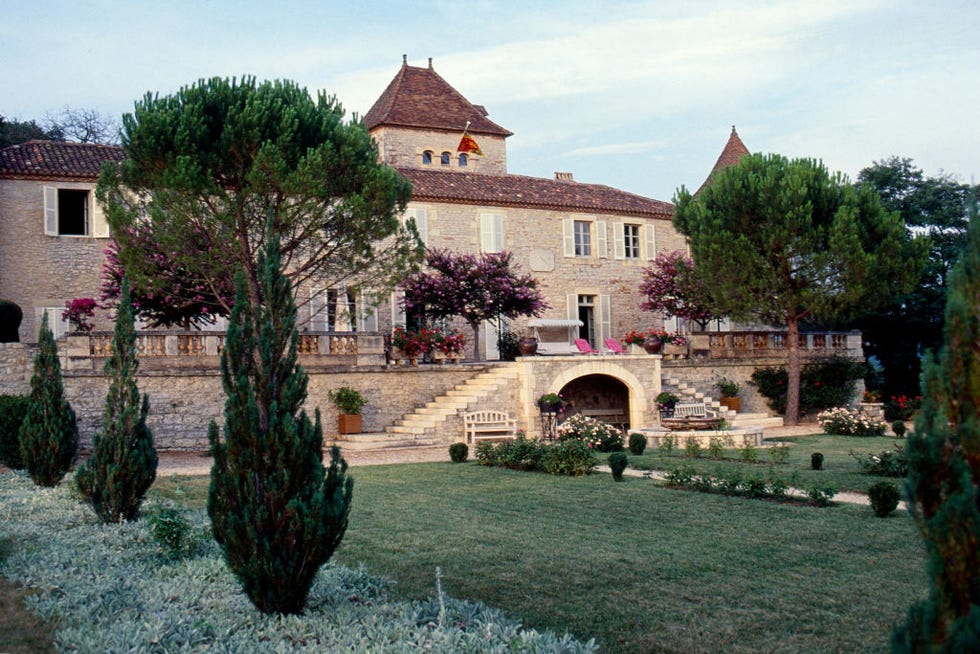
Château de Cayx, owned by the Prince Henrik and Queen Margrethe in Luzech, France.
Two years after ascending the throne in 1972, Queen Margrethe purchased a timeworn château and vineyard in the Occitanie region of southern France, just ten miles from where her husband, Prince Henrik, grew up. The couple spearheaded a total renovation of the 15th-century stone castle and its grounds. It soon became a beloved summer retreat for their family, as well as a working winery specializing in Malbec. In 2014, the family gathered at the property to celebrate Henrik’s 80th birthday, and Margrethe has continued to make visits in the wake of his 2018 death.
HDMY Dannebrog (A540)
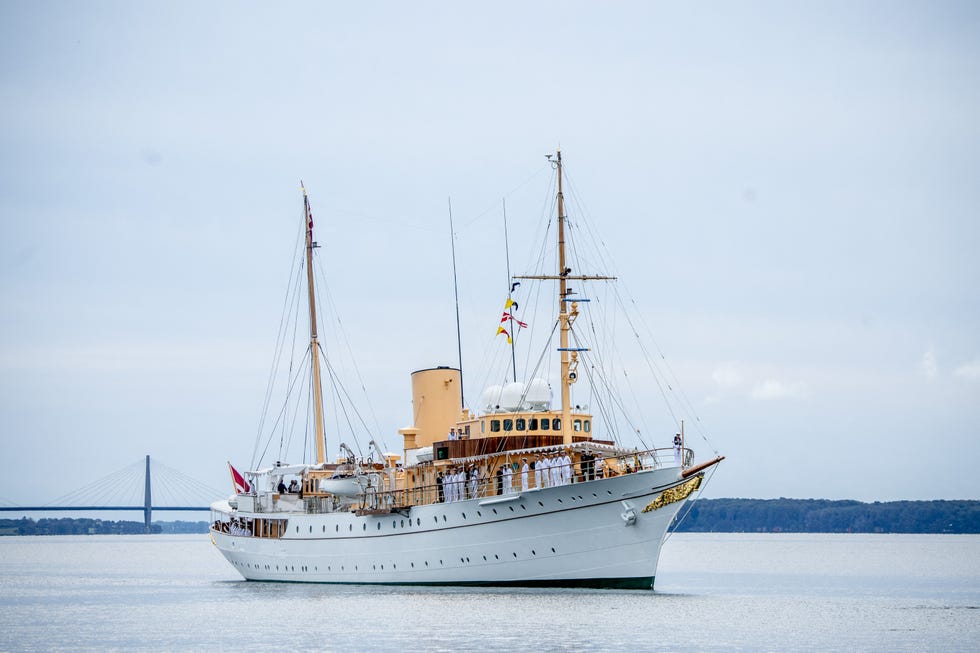
The Royal Yacht Dannebrog during a royal visit to the Vordingborg Municipality, south-eastern Denmark, in 2023.
When seaborne, the family uses their private royal vessel, officially called His Danish Majesty’s Yacht Dannebrog (A540). Launched in Copenhagen in 1931 for Queen Alexandrine, wife of King Christian X, the 273-foot superyacht features two masts and a steam funnel. The royals continue to use the ship, which is manned by 36 seamen from the Danish Navy, for official visits and summer cruises.

Geoffrey Montes is an associate editor at ELLE Decor with a serious love for all things real estate and design. Before that, he worked at Architectural Digest, Galerie, and Preservation magazines, covering everything from jaw-dropping listings to world-famous architects and design events like Salone del Mobile and Homo Faber.