
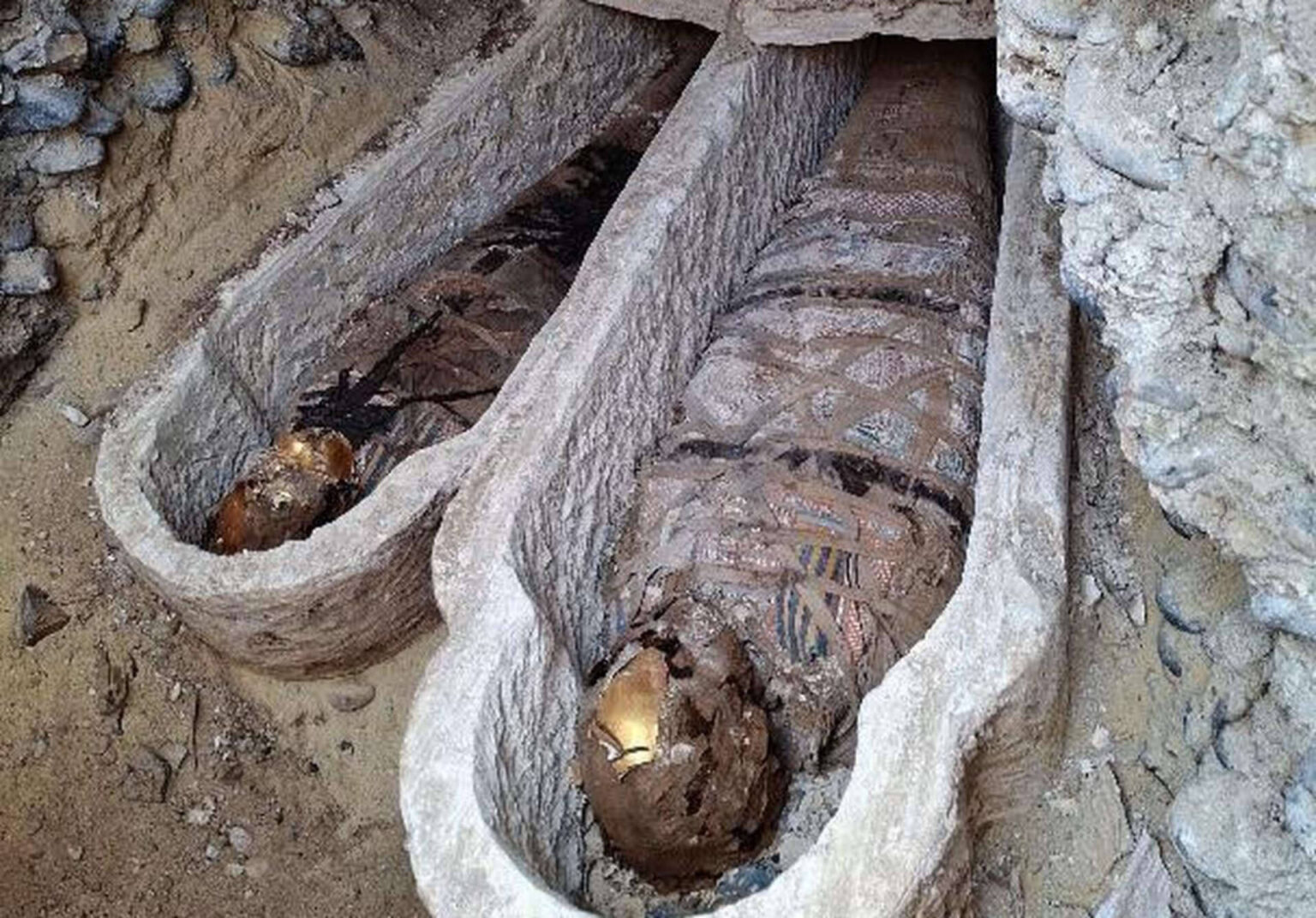
A remarkable archaeological discovery in Egypt is shedding new light on the cultural links between the ancient Greek world and Egypt, after researchers uncovered a mummy containing a papyrus fragment from Iliad.
The find was made at Al-Bahnasa, the site of the ancient city of Oxyrhynchus, long recognised as one of the most significant sources of Greek and Roman-era papyri. The excavation, conducted around 190 kilometres south of Cairo, forms part of a joint Spanish-Egyptian mission involving the University of Barcelona and the Institut del Pròxim Orient Antic.
Researchers focused on an extensive Roman-period necropolis, where they uncovered a subterranean burial chamber known as “Tomb 65”. Despite signs of ancient looting, the site preserved valuable material offering insight into burial practices of the time.
Archaeologists identified several mummies wrapped in elaborate textiles featuring geometric designs and vivid colours that have survived for centuries. Nearby were wooden sarcophagi decorated with painted details, along with a small collection of artefacts, including thin sheets of gold and a copper object, all linked to ritual practices of the Greco-Roman period.
However, the most significant discovery was the papyrus found inside one of the mummies. The text contains verses from Book II of the Iliad, specifically the famous “Catalogue of Ships,” which lists the Greek forces that took part in the Trojan War. The presence of such a literary work within a funerary context suggests not only the spread of Greek education but also a deeper cultural integration between Greek and Egyptian traditions during the Hellenistic and Roman eras.
Mission leaders say the find reinforces Oxyrhynchus’ reputation as a major intellectual and cultural centre, where Greek texts were not only copied but also embedded in everyday and religious life. The inclusion of a Homeric passage in a burial setting may relate to symbolic themes of journey, memory, or even heroic transition into the afterlife.
Egyptian officials and researchers note that the discovery adds a new dimension to the understanding of burial customs of the period, highlighting the coexistence of Egyptian and Greek elements within a shared cultural framework.
As excavations continue, experts believe the site may yield further discoveries that will deepen understanding of cultural exchange in the ancient world. The mummy containing the Homeric papyrus already stands as one of the most striking examples of this interaction, confirming that the influence of Greek thought extended far beyond the borders of the ancient Greek world.