
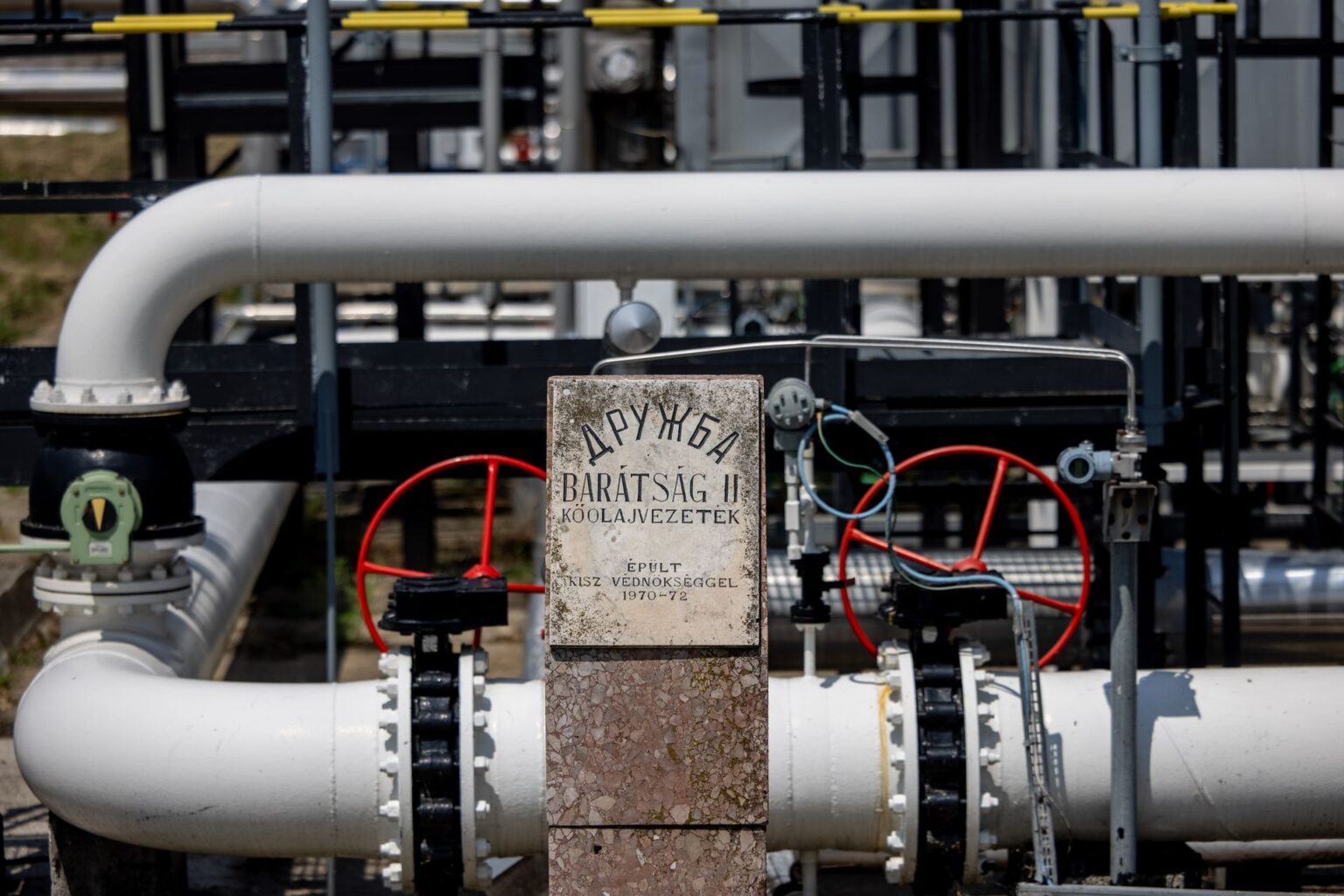
Bratislava and Budapest said that Ukraine again started receiving crude via the Druzhba pipeline on April 22, with the first deliveries to Hungary and Slovakia expected by the following day.
The move could clear the way for the EU’s 90-billion-euro ($106-billion) loan to Kyiv, which Budapest blocked over the suspension of transit.
The pipeline, used to funnel Russian crude to Slovakia and Hungary, went offline in late January after being damaged in a Russian attack. Budapest and Bratislava accused Kyiv of deliberately withholding transit.
President Volodymyr Zelensky confirmed on April 21 that the necessary repair work has been completed and the pipeline is ready to resume operations.
Mol, Hungary’s largest energy company, said it was informed by the operator of the Ukrainian section of the pipeline, Ukrtransnafta, that “the receipt of crude oil from Belarus via the Druzhba pipeline system began in Ukraine at noon today.”
This was also confirmed by Slovak Economy Minister Denisa Sakova, who said that deliveries to Slovakia should resume by the morning of April 23.
Ukraine has not yet publicly commented on the resumption of operations. A representative of Naftogaz, the parent company of Ukrtransnafta, declined to comment.
The final step for the 90-billion-euro loan’s disbursment is on the agenda of an EU meeting later on April 22.
The loan is a crucial lifeline for cash-strapped Ukraine amid Russia’s invasion, intended to help cover the country’s financial needs in 2026–2027, with two-thirds allocated to defense and the remainder to budgetary support.
The disbursement is scheduled to begin between late May and early June.
Hungary and Slovakia, both landlocked, were the only EU members still receiving Russian crude via the pipeline’s southern branch before the disruption. The route accounts for roughly 86–92% of Hungary’s oil imports and nearly all of Slovakia’s supply.
The Hungarian energy company Mol has already submitted requests for first transit volumes, to be equally distributed between Hungary and Slovakia, Reuters reported, citing an undisclosed source.
Outgoing Hungarian Prime Minister Viktor Orban, who was seen as the EU’s most Kremlin-friendly leader, centered his reelection campaign on accusations that Ukraine engaged in “energy blackmail.”
In a letter to European Council President Antonio Costa on April 20, Orban said that Hungary is ready to lift the veto on the loan “without delay” once the transit resumes.
Slovak Foreign Minister Juraj Blanar said that Bratislava is also ready to approve the 20th package of sanctions against Russia, which has been blocked due to the dispute, but “only once Russian oil arrives in Slovakia via the Druzhba pipeline.”