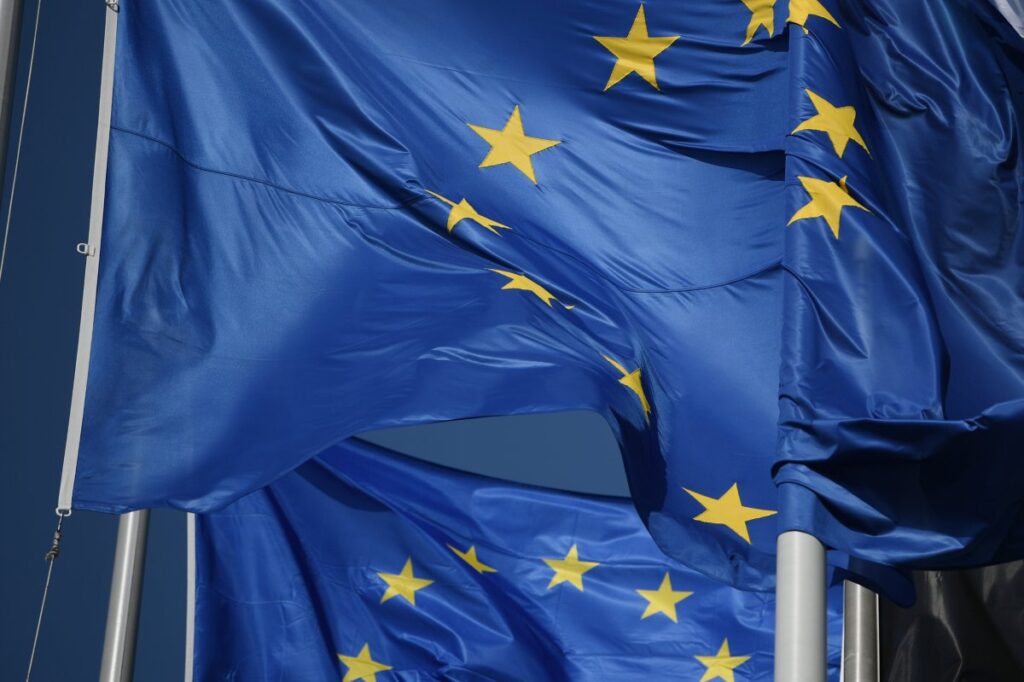
European Union ambassadors unanimously backed a long-delayed $106 billion loan to help Ukraine keep defending itself when they met in Brussels on Wednesday, along with a 20th package of sanction on Russia. File photo by Patrick Seeger/EPA-EFE
April 22 (UPI) — European Union ambassadors meeting in Brussels on Wednesday backed a long-delayed $106 billion loan to Ukraine and a 20th economic sanctions package on Russia.
The breakthrough came a day after Ukraine announced its damaged Druzhba pipeline, through which Russia supplies oil to Hungary and Slovakia, was ready to begin pumping again.
Leaders of the 27-member-country bloc will sign off on the measures at an informal summit in Cyprus on Thursday.
The financial package, which Ukraine badly needs to stay afloat and continue fending off invading Russian forces, was agreed in December but was held up after outgoing Hungarian Prime Minister Viktor Orban said he would withhold his backing while the pipeline remained out of action.
Orban held Kyiv responsible even though the pipeline was damaged in a Russian attack. The sides traded blackmail allegations, with Hungary accusing Ukraine of stalling repair work in a conspiracy with Brussels and the Hungarian opposition to “create supply disruptions” to push up fuel prices in Hungary ahead of elections.
Kyiv confirmed Wednesday that the pipeline was up and running again for the first time in almost three months since the line was shut off Jan. 27.
Slovak Economy Minister Denisa Sakova said she had been told by Ukrainian energy operator Ukrtransnaft that pressurising of the pipeline had commenced and that crude oil would start arriving in Slovakia on Thursday.
Oil was also expected to begin flowing into Hungary by Thursday, at the latest.
Speaking Tuesday night ahead of the meeting in Brussels, Ukrainian President Volodymyr Zelensky said he had discussed the loan issue with European Commission President Ursula von der Leyen and European Council head, Antonio Costa, who represents the 27 member states.
“There can be no grounds for blocking it anymore. The EU asked Ukraine to repair the Druzhba oil pipeline, which had been destroyed by Russia. We have repaired it. We hope the EU will also deliver on the agreed commitments,” he said.
Ukraine urgently needs the money to bolster its disintegrating public finances and replenish air defenses and military equipment.
The impasse was unlocked by Orban’s ouster after 16 years in power in a general election on April 12 with Prime Minister-elect Peter Magyar saying he would drop Hungary’s opposition to the measures as soon as he took office in May.
The olive branch from Budapest prompted Zelensky to announce the pipeline would be open again by the end of April which in turn saw Orban, who remains Hungary’s leader during the transition, soften his position saying he would drop his veto of the loan.
Hungary was able to block the loan because, like most actions by the bloc, EU rules required the unanimous approval of all 27 member-states, even though it managed to negotiate a carve-out back when the deal was agreed in December under which it has no financial liability for the loan.
The Czech Republic and Slovakia negotiated the same deal in exchange for giving their consent for the loan under which the EU will provide interest-free cash advances this year and in 2027, funded by borrowing in the capital markets that will be backed by its long-term budget.
Kyiv is only required to repay the loan in the unlikely eventuality that Russia ever ends up paying war reparations to Ukraine for the damage and destruction it has wreaked on the country during the war.