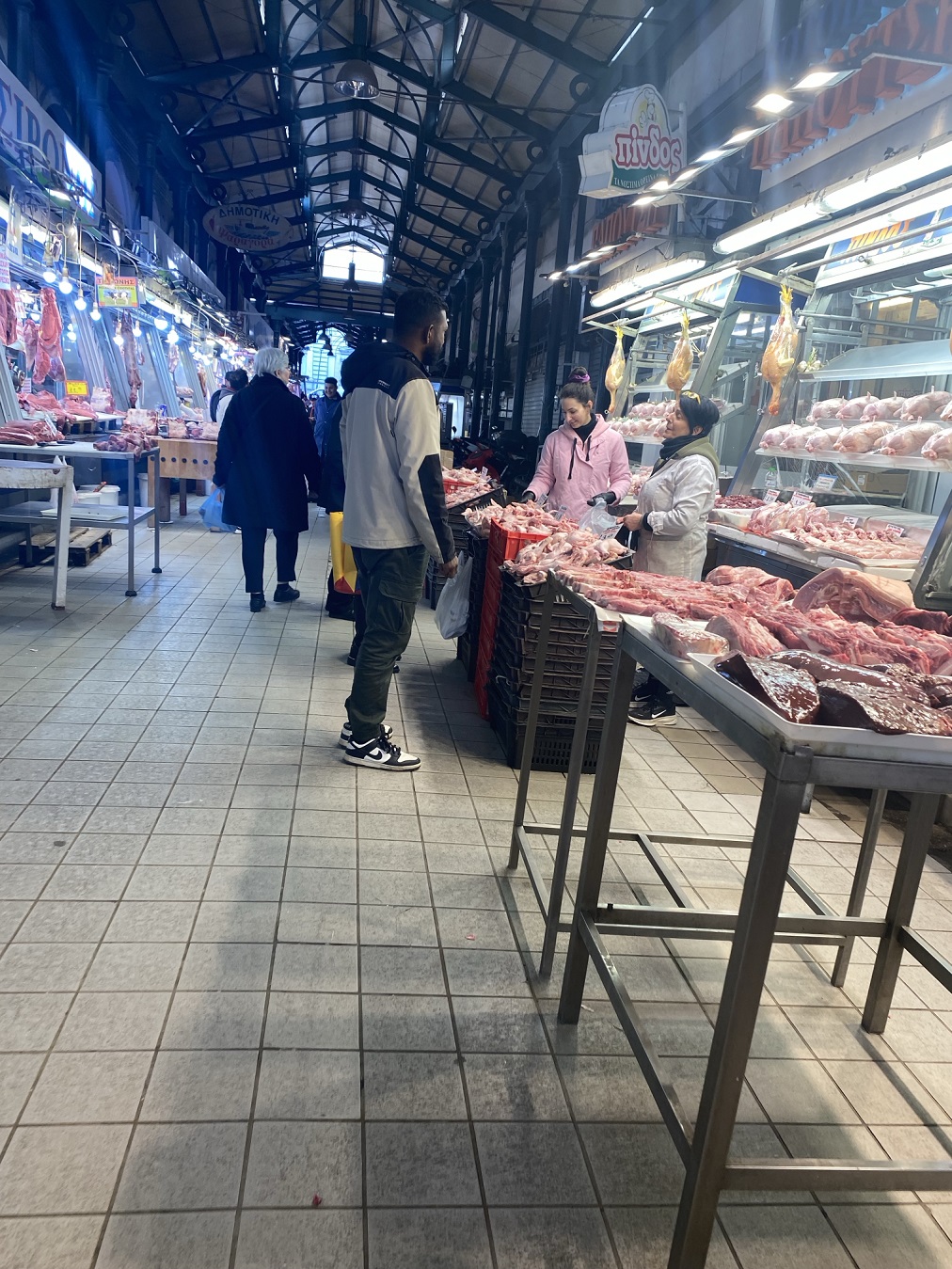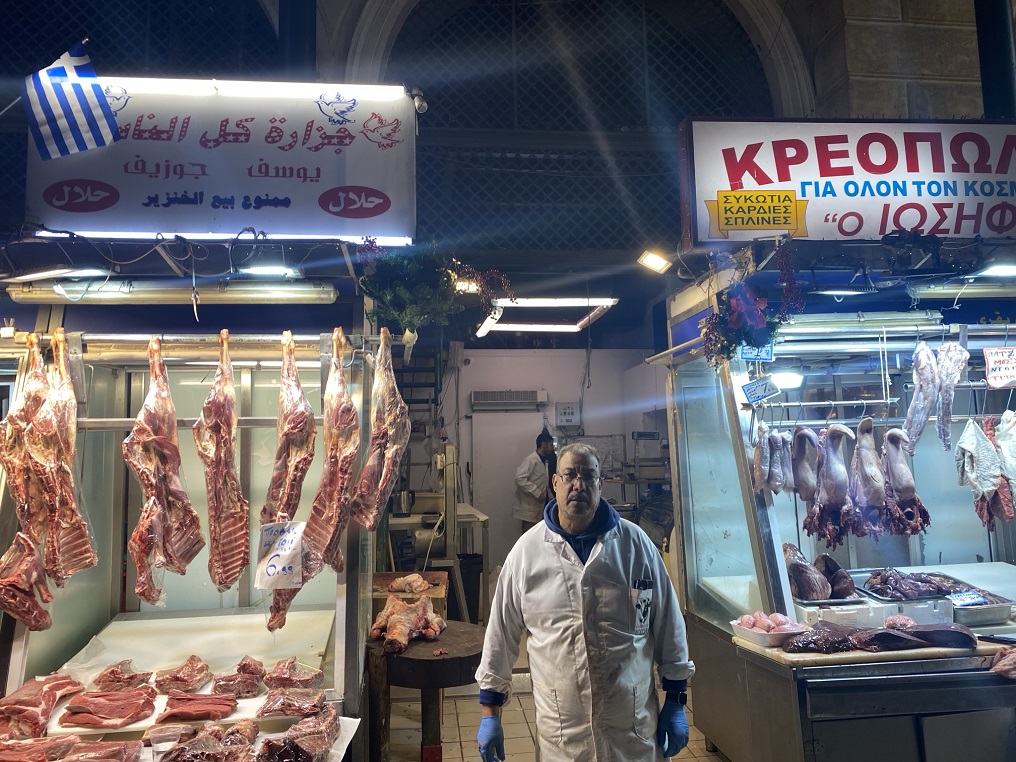
Amidst the vibrant chaos of the historic Central Market of Athens, where the scent of Mediterranean spices mingles with the melodic shouts of vendors, a glowing sign in Arabic catches the eye.
It serves as a cultural bridge across the Mediterranean, reading simply: “The Butcher For Everyone.”
Behind this counter stands Youssef Mansour Basta—known to locals and expats as Youssef Joseph al-Asiuty.
He didn’t just bring his butchery with him from his hometown of Assiut – he also brought a sense of trustworthiness that has made him one of the oldest and most respected Egyptian meat merchants in the Greek capital.
From ground zero to local legend
Al-Asiuty’s journey wasn’t paved with gold.
He arrived in Greece in 1994 as a 26-year-old with nothing but boundless ambition. “I arrived knowing absolutely nothing about butchery,” he recalls with pride. “I started from scratch as an assistant, learning both the language and the craft from the Greeks, who welcomed us with incredible generosity. By 2005, I had mastered the trade and opened my own shop.”
Thirty-one years later, he is a Greek citizen – since 2011 – and a proud father of two daughters—one studying commerce and the other in high school.
He has achieved the success he once only dreamed of.
A matter of trust and faith
In the corner of his shop, professional certifications and health permits from the Greek Ministry of Agriculture and the Food Safety Authority are proudly displayed. But for Youssef, the most important credential is the unwavering trust of his customers.
Deeply rooted in his Egyptian values, al-Asiuty made a conscious choice from day one: no pork in his shop.
“My Muslim brothers in the diaspora suggested it,” he explains.
“They needed a guaranteed, reliable source for meat. We are ambassadors for Egypt here, and mutual respect is what makes us role models.”
Navigating global challenges
Al-Asiuty is a keen observer of the global market. He notes that while meat in Greece was once cheaper than vegetables, climate change and the Russia-Ukraine conflict have sent fodder prices skyrocketing, forcing many European farms to close.
Yet he breaks down the economics with a pro’s insight: “With a kilo of meat at roughly six euros and a daily wage starting at €45, prices here remain manageable compared to income.”
Despite his success, he offers a candid piece of advice to the youth in Egypt: “I do not encourage illegal migration. Greece isn’t what it used to be. Starting a project back home in Egypt might be far better than taking an uncalculated risk abroad.”
The science behind the blade
Inside the shop, your eyes aren’t just drawn to the fresh cuts; they linger on a wall covered in diplomas from the School of Meat Professions and health inspection certificates.
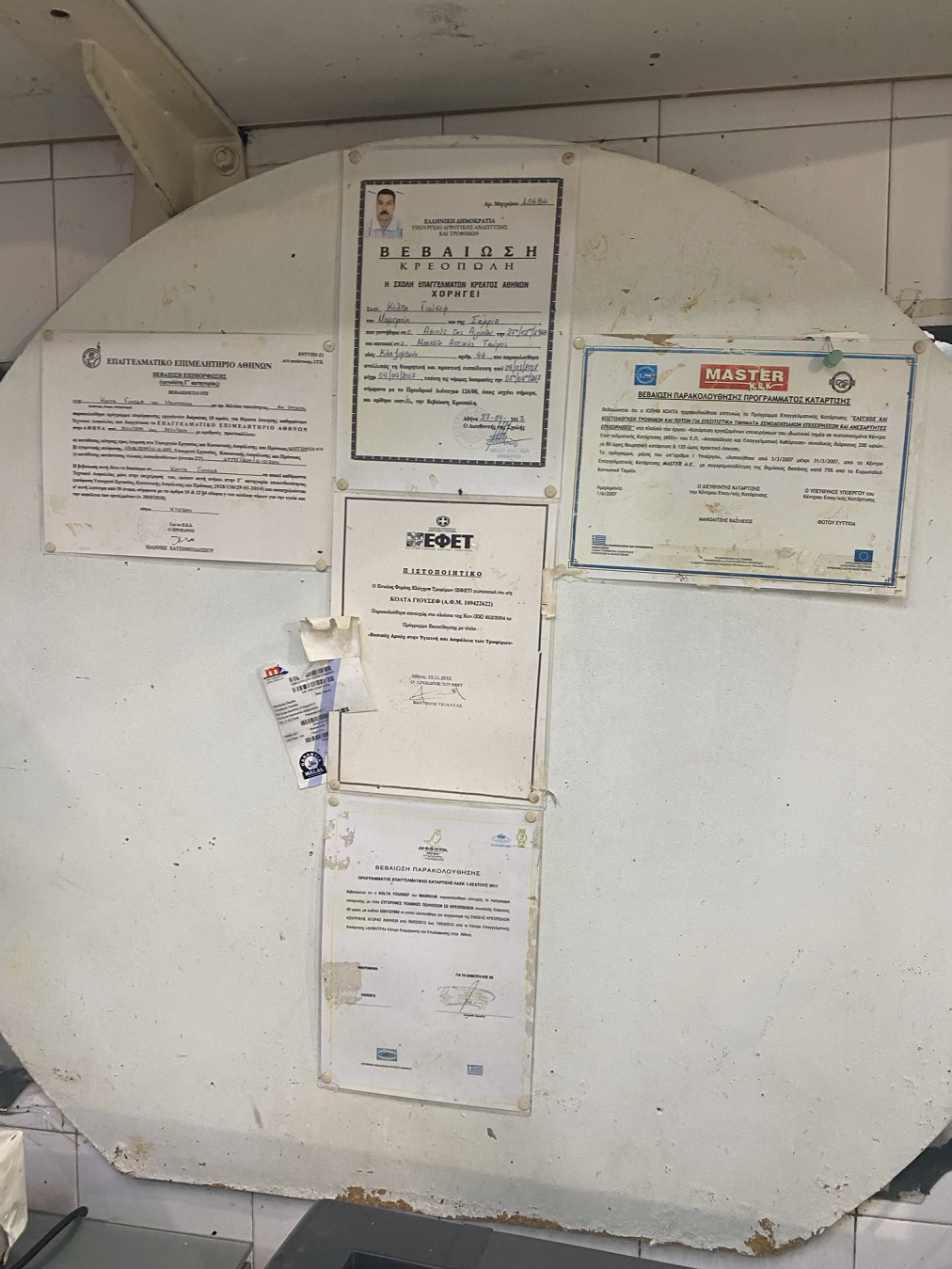
These aren’t just decorations—they are a contract of trust between al-Asiuty, the Greek state, and his clientele.
Every cut of meat involves a deep understanding of anatomy, sterilization, and a history of professional discipline.
When customers leave the shop, they carry away more than just quality meat.
They take with them a quintessential Egyptian success story—one that began with a language barrier and ended with market leadership. It is a story that proves Egyptians can plant the seeds of integrity in any soil, even in the ancient land of the Greeks.