
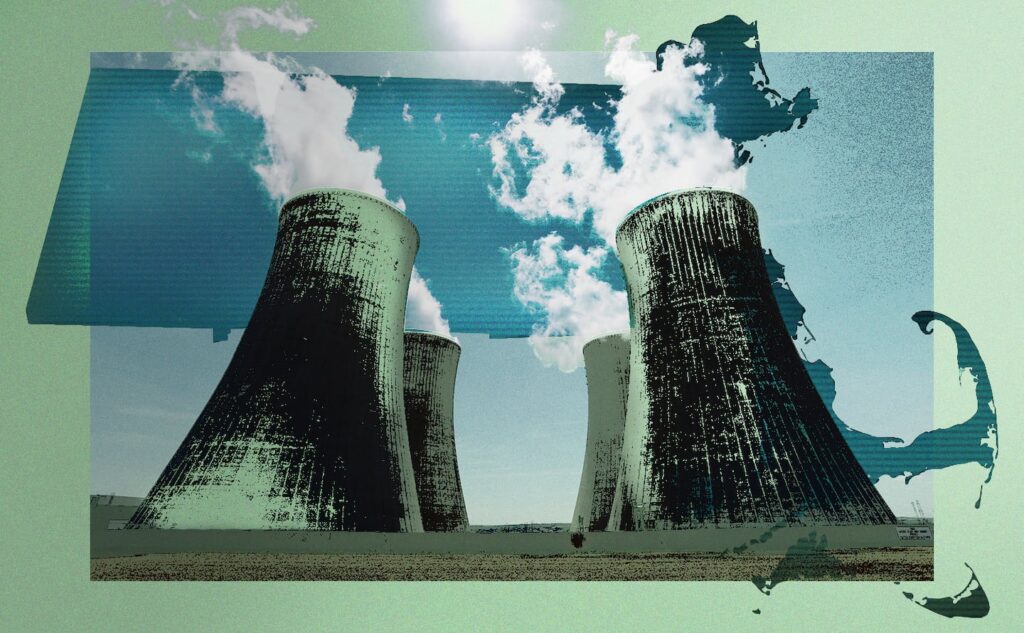
“Nuclear needs to be part of the solution,” Healey said.
For many, that thought evokes deep fears about its catastrophic potential and the invisible yet devastating threat of radiation. In 1977, more than 1,000 protesters were arrested while opposing the construction of Seabrook Station in New Hampshire, the last nuclear power plant built in the region. Overcoming those long-held concerns won’t be easy.
Yet to a growing group of climate and energy experts, expanding nuclear power is one of the few viable options for meeting New England’s electricity needs while also cutting emissions. Nuclear plants in New Hampshire and Connecticut already generate about a quarter of the region’s power supply. The next wave of nuclear technology, these experts say, will be safer than older reactors and, one day, could also be cheaper.
 A van was used as mobile headquarters by the Clamshell Alliance, an antinuclear organization, to protest the construction of Seabrook Station in Seabrook, N.H., in 1977.Ted Dully/Globe Staff
 Demonstrators protested the Pilgrim Nuclear Power Station in 1979.Bob Dean/Globe Staff
This wouldn’t be the first time that a nuclear renaissance has been promised and never emerged. But supporters say this moment is different.
Critics say so, too.
“We have been working hard to get people to recognize this is really happening,” said Deb Katz, a longtime antinuclear activist in Massachusetts. “We have been working on this so that people wake up and realize what’s at stake.”
Nuclear energy’s uneasy past
What remains of Massachusetts’ last operating nuclear power plant sits on the shore of the Atlantic, about 5 miles from Plymouth Rock. Behind a chain link fence and signs warning of armed guards, radioactive waste is entombed in towering, 20-foot casks made of concrete and steel that contain its dangers.
For decades, Pilgrim Nuclear Power Station was an economic engine for Plymouth, employing hundreds of people. But it was also the source of frequent protests, and a steady undercurrent of fear. Officials distributed potassium iodide — radiation pills — for residents to take in case of a nuclear meltdown. One longtime realtor recalled prospective home buyers taking a hard pass on properties. I do not want to live near that plant, said more than one.
Pilgrim, once rated one of the three least safe nuclear facilities in the United States, permanently shut down in 2019, its operators citing rising costs and poor market conditions. But the anxiety of living near its waste indefinitely hasn’t dissipated. The company that owns the plant is still pushing to dump more than 800,000 gallons of waste water into Cape Cod Bay.
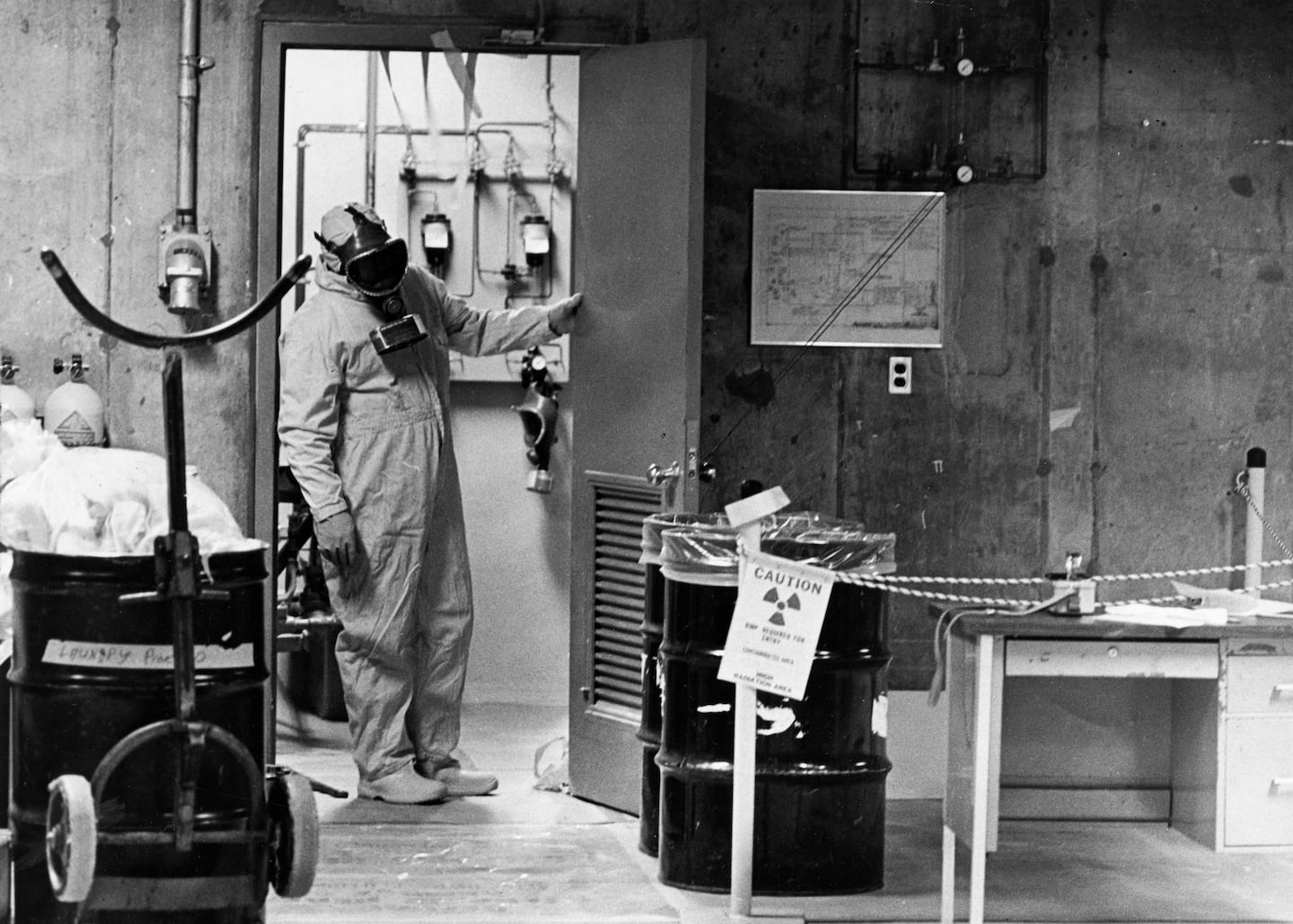 A worker was suited up to work in a radiation area of Plymouth’s Pilgrim Nuclear Power Station in 1975.Joe Dennehy/Globe Staff
Some worry the plant is vulnerable to attack. On a recent afternoon, Diane Turco, a 72-year-old antinuclear activist, pulled over on the nearby back road and pointed through half-dead trees at the casks, their vents visible above the fence.
“If I had a good arm, I could throw a baseball into the vent,” she said. She worries a bad actor could somehow find a way to release deadly radioactivity from the casks into the air.
Holtec, the company that owns Pilgrim, said the plant is secure.
Concerns like those linger over New England, which is home to two active nuclear plants and five closed ones. Some residents can’t shake fears about safety and the challenges of storing nuclear waste because memories of disasters loom large.
The partial meltdown of a reactor at Three Mile Island in 1979 — the worst accident in US history — significantly slowed nuclear development across the country. It’s one of the reasons Massachusetts still makes it all but impossible to build a nuclear power plant. New plants can’t be constructed here unless a majority of voters approve and a permanent disposal site for radioactive waste in the United States is established. (There has never been such a site.)
The meltdown at Chernobyl, on April 26, 1986, the most catastrophic disaster in nuclear history, remains an enduring symbol. In the days and years after a reactor exploded, hundreds of thousands of people were forced from their homes. Today, the surrounding towns are still almost completely abandoned.
The death toll is highly contested. A 2008 United Nations report concluded that about 30 staff and emergency workers died within months from acute radiation exposure, and researchers found a significant increase in thyroid cancer among people who were exposed as children.
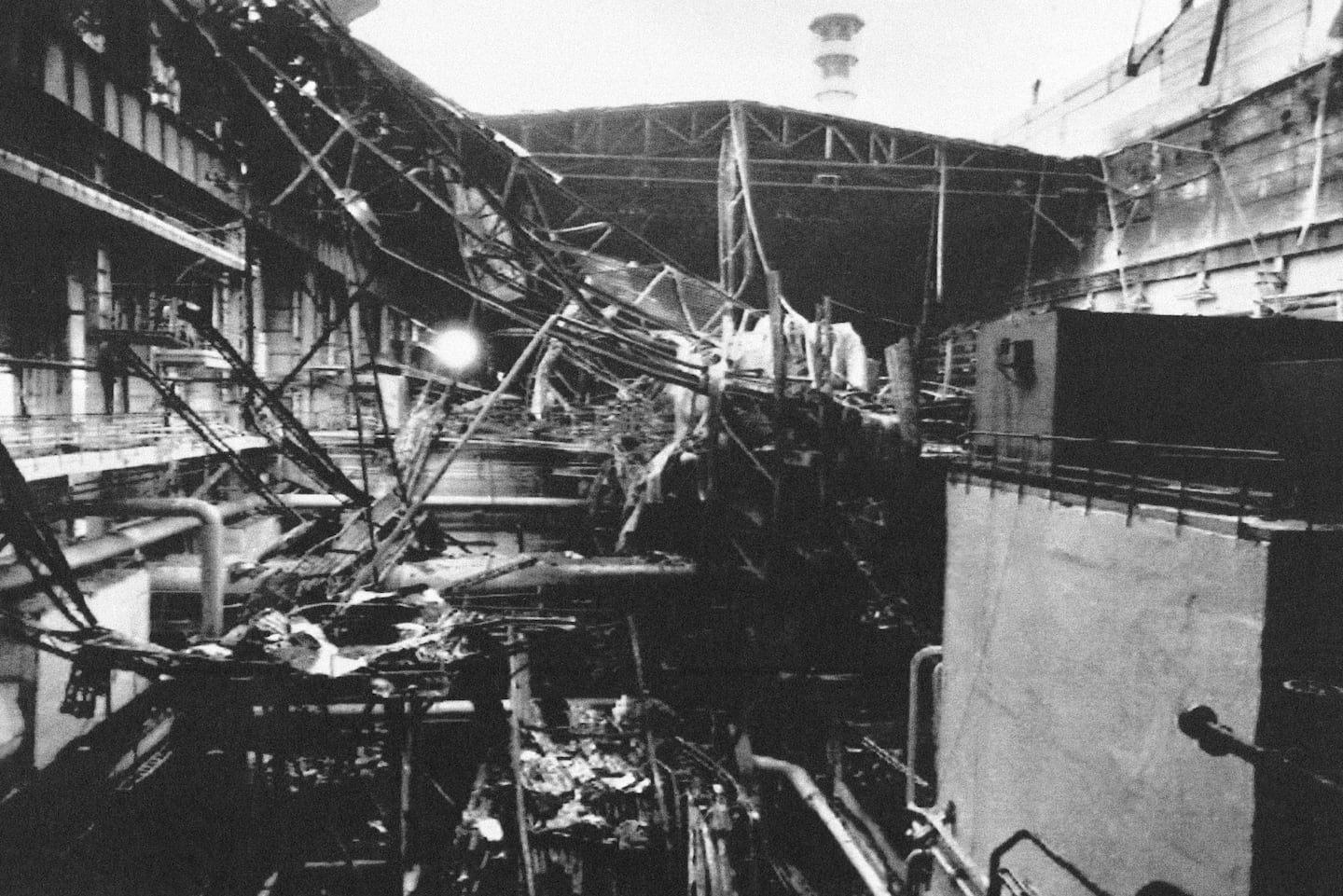 Remains of the collapsed roof at the Chernobyl nuclear plant in Ukraine in 1991.Efrem Lukatsky/Associated Press
But Kate Brown, an MIT history of science professor who authored a book on the consequences of Chernobyl, argues that the loss of life is likely far greater than the UN count. In Ukraine alone, she said, the government compensated about 35,000 women whose spouses were determined to have died from related health issues.
“Drastically underestimating the impact of Chernobyl has kept this nuclear dream alive,” Brown said.
Many nuclear energy experts, including federal regulators, say the risk of an accident today is extremely low, due to more rigorous safety protocols and improved reactor designs.
Federal officials with the Nuclear Regulatory Commission say small releases of radiation from operating plants do not pose a risk to public health, and maintain that storing radioactive waste at decommissioned sites is safe.
Safety concerns may be fading. Polling shows that Americans’ support for nuclear energy has significantly rebounded in recent years: About 6 in 10 now favor building more power plants.
That has come as a shock to people like Turco, a retired special education teacher. A generation ago, antinuclear activists’ arguments were heard at the highest levels of government, and their efforts got results.
Turco said she isn’t giving up, and her message hasn’t changed. But fewer people are listening.

A view along a nature trail in Hampton Falls, N.H., near Seabrook Station on April 17, 2026.
Finn Gomez for The Boston Globe
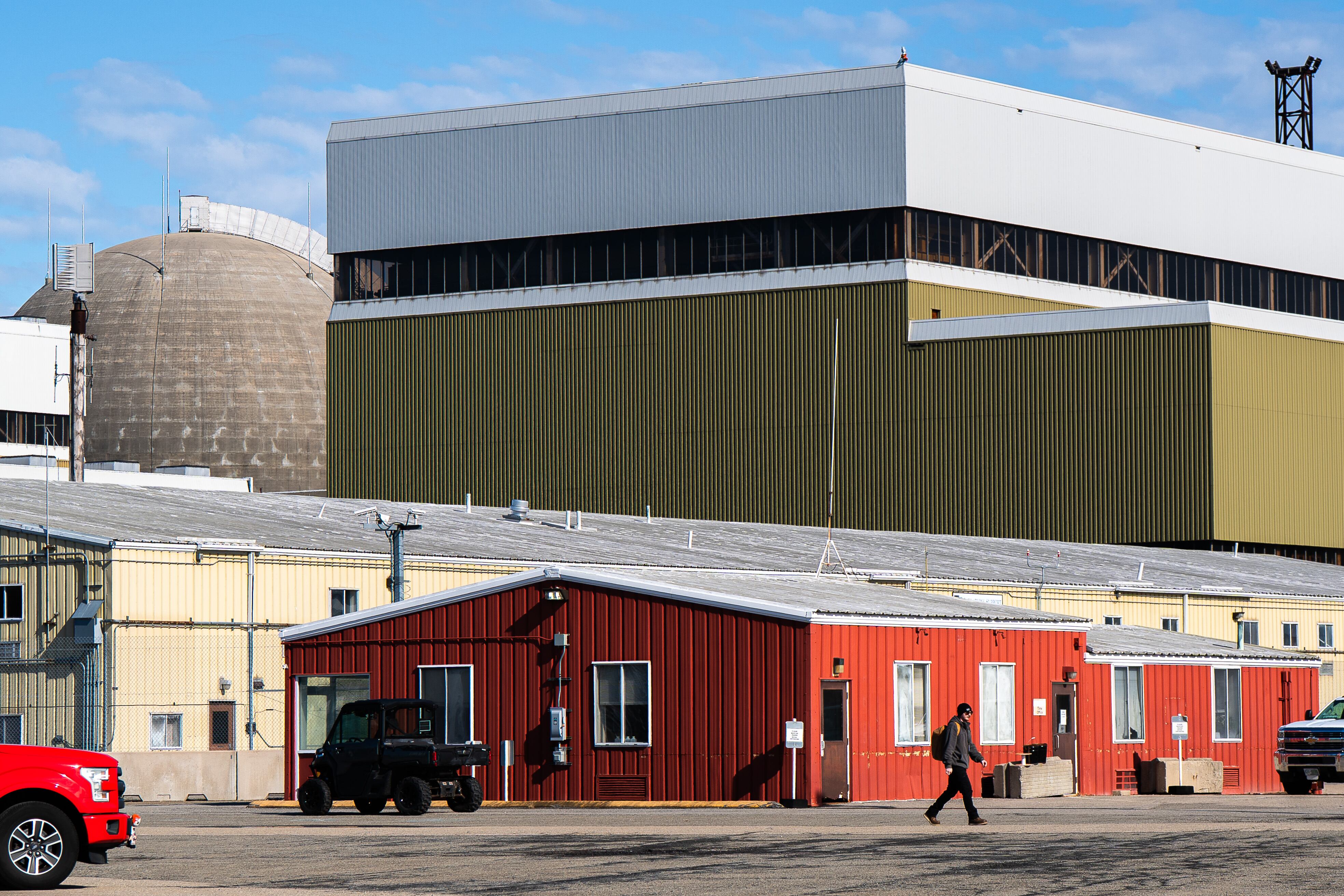
A worker leaves Seabrook Station in Seabrook, N.H., on Apr. 17, 2026.
Finn Gomez for The Boston Globe
The present push for nuclear
From the outside, Maura Healey might seem like one of the last people you’d expect to support nuclear energy.
She grew up on a 40-acre farm in New Hampshire, in the shadow of Seabrook Station, where she learned evacuation routes in case of an accident at the plant. When she was a child, her father welcomed antinuclear protesters to camp on their land.
As attorney general, Healey took a hard line on the industry, pushing for stricter oversight at Pilgrim. And in a public letter in 2015, she castigated federal regulators for failing to develop a long-term solution for storing nuclear waste.
“It is unacceptable,” she wrote.
Now, Healey has emerged as one of the region’s strongest advocates for nuclear energy, and she is laying the groundwork for building new reactors in Massachusetts. In an interview, she said her position on nuclear energy has never actually changed: She has always supported it, as long as there’s community engagement and strong oversight.
As governor, Healey noted, she is reckoning with the challenges of affordability, grid reliability, and climate change. Nuclear energy, she said, could mean not having to prioritize one at the expense of the others.
“I’ll certainly continue to fight for [safety] in anything that’s done,” she said. “But I know we need to seriously explore nuclear.”
And not just explore it, she added. “I support building it.”
The push to bring nuclear power plants back to Massachusetts would once have been inconceivable for a Democratic governor. But the pressures on state leaders are mounting.
All the New England states except New Hampshire have passed emissions reduction targets, though progress has slowed, in part because of the Trump administration. Surging energy costs are straining household budgets. Grid operators expect electricity consumption to only keep rising.
To address those problems, Healey has checked the “all-of-the-above” box for energy sources. She is pushing to lift the moratorium on building nuclear reactors, a measure House Democrats have already approved. And she has tasked a University of Massachusetts professor with developing a state road map for next-generation nuclear fission reactors and for fusion, a developing technology still far from a commercial rollout.
In March, all six New England governors committed to keeping the region’s existing plants online and exploring advanced nuclear technologies for the future.
 Governor Maura Healey said she supports building nuclear plants.Finn Gomez for the Boston Globe
The Trump administration also has nuclear ambitions. President Trump has sought to quadruple the US’s nuclear capacity by 2050 and wants to speed up reactor testing and licensing. He has also overhauled the Nuclear Regulatory Commission, slashing staff and seeking to undermine the independence of the bipartisan group.
There are questions about whether new reactor construction is a wise investment. The last two reactors to come online in the US, at Plant Vogtle in Georgia, were years behind schedule and suffered from cost overruns stretching into the billions of dollars.
Optimists say costs will fall as more plants are built. But since steep construction prices can be passed onto ratepayers, new nuclear developments are no guarantee of lower electric bills.
“It is not a slam-dunk,” said Dan Dolan, president of the New England Power Generators Association, a trade association that is neutral on building nuclear. “If anything, it is extraordinarily risky to consider new nuclear as an answer to overall energy affordability.”
One of the strongest arguments for building nuclear energy is the green one. Unlike fossil fuels, nuclear plants do not emit greenhouse gases while producing electricity. Unlike wind and solar, they can run around the clock, making them a more reliable source of power. Some studies project that technologies like nuclear generally reduce the cost of decarbonizing the grid.
It was findings like this that convinced Armond Cohen, executive director of the Clean Air Task Force, a Boston-based global climate nonprofit.
In the 1980s, Cohen launched his career as a lawyer by opposing the construction of Seabrook Station. But when he learned more about climate change years later, he concluded nuclear was part of the answer. He said his organization was the first mainstream environmental group to endorse the technology around 2010. More have followed.
“I don’t think it’s a silver bullet,” he said. “But it’s a really useful thing to have, and more people are coming around to that view.”
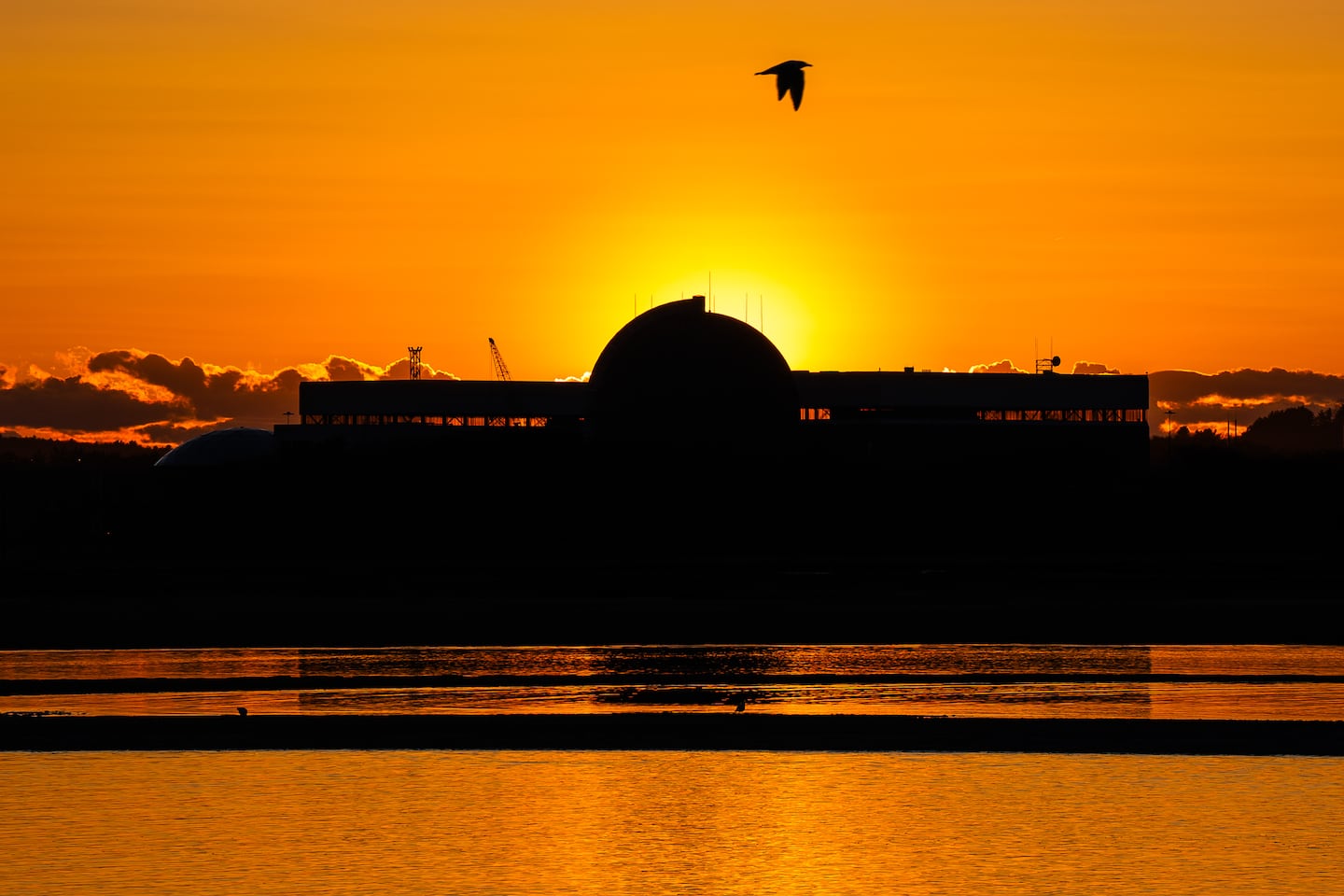 Sunset at Seabrook Station.Finn Gomez for The Boston Globe
Lukas Hardy, 7, of Hampton Falls plays with Seabrook Station as a backdrop. Lukas’s father, Benjamin, said, “I fear for him, I fear for me, and I fear for you,” when asked about the future.
Finn Gomez for The Boston Globe
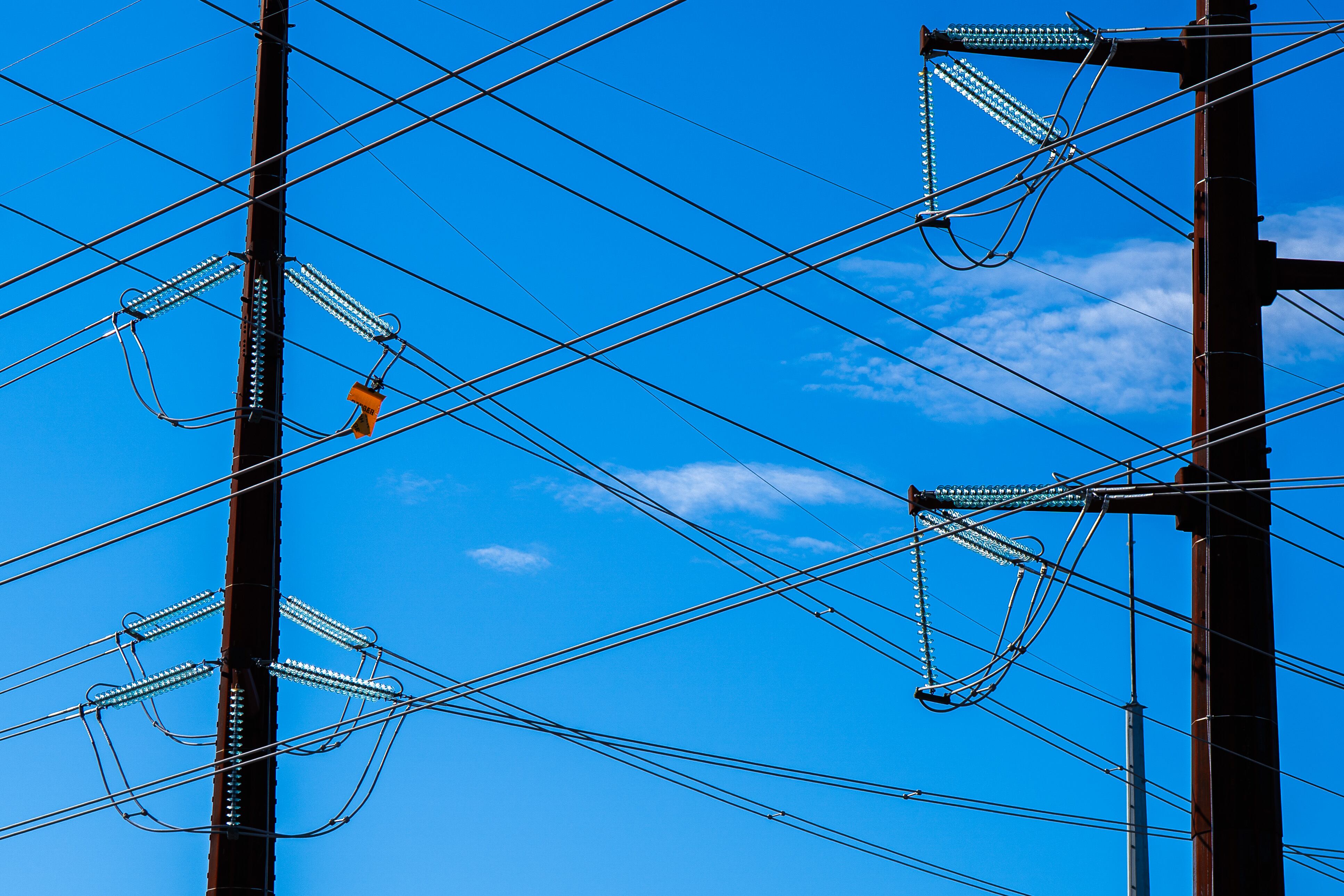
Power lines are seen at Seabrook Station in Seabrook, N.H., on April 17, 2026.
Finn Gomez for The Boston Globe
The future of nuclear power
Inside a cavernous white hall shielded with 8-foot-thick walls, an audacious experiment is underway.
Scientists and engineers at Commonwealth Fusion Systems in Devens, Mass., are racing to be the first in the world to harness fusion, the nuclear reaction that powers the stars.
One morning in April, workers in white lab coats prepared to hoist a powerful electromagnet that will soon surround the heart of the machine.
Unlike in current fission reactors, which create power by splitting atoms, fusion forces atoms together, releasing tremendous amounts of energy that could be captured as heat and converted into electricity.
The technology holds the promise of producing near-limitless clean energy without the risk of meltdowns or long-lived radioactive waste — if it can be done.
Massachusetts is hedging its bets, pushing forward both new fusion energy and advanced reactors that use the established fission reaction. Though they are very different technologies, both face the same daunting questions: Will the technology live up to its promise? Is it cost effective? And can new reactors be built fast enough?
Sukesh Aghara, the University of Massachusetts Lowell professor Healey tapped to plot out the state’s nuclear future, drew a parallel to the recent Artemis II mission. Those astronauts were the first to travel to the Moon in more than 50 years. After decades mostly on pause, nuclear innovation is also reentering a period of rapid progress.
“It’s phenomenal,” he said.
Commonwealth Fusion Systems, founded by a group of MIT scientists, intends to power on the machine by 2027. Their goal is producing more energy from the reaction than is needed to fuel the process. By the early 2030s, the company seeks to bring about 400 megawatts of fusion energy to the grid in Virginia, enough to power 150,000 homes.
There’s a running joke among scientists that fusion energy is 30 years away — and always will be. Commonwealth Fusion Systems disagrees.
“We are closer than most people know,” said Kristen Cullen, the company’s vice president of global policy and public affairs. Still, she acknowledged that it will likely take time for fusion energy to reach a competitive price.
Fission reactors have also made enormous strides, experts say. The approaches vary widely, but advanced reactors seek to improve on the safety, efficiency, and cost of existing plants. There are dozens of demonstration projects underway around the world. Next-generation reactors are already being built in Tennessee and Wyoming.
But Edwin Lyman, the nuclear power safety director at the Union of Concerned Scientists, cautioned that even advanced technology won’t solve “the fundamental problems holding nuclear back.”
“There’s no mythical class of advanced reactors where they’re all uniquely safer, cheaper, or more reliable,” he said.
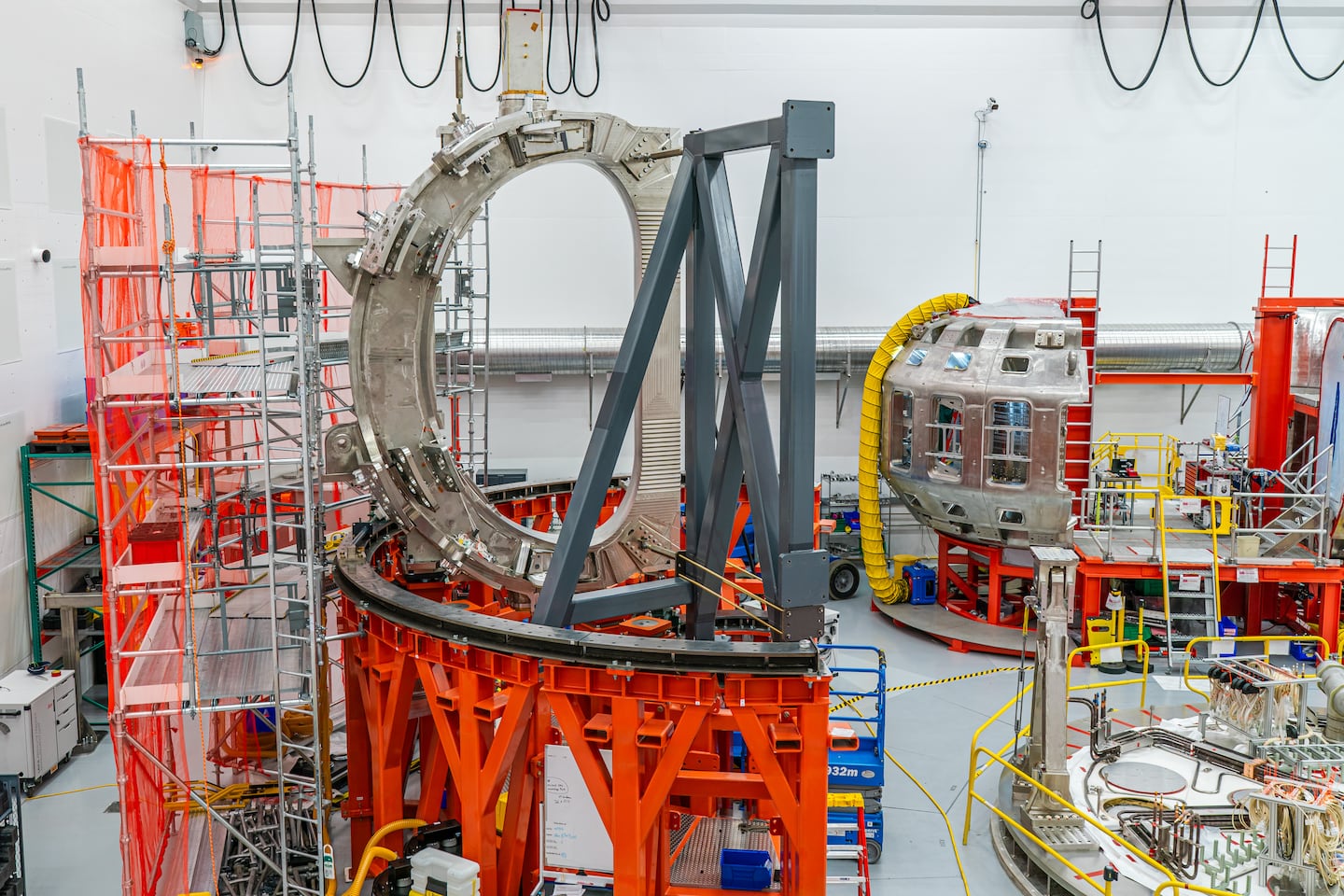 Work continued on a fusion energy machine at Commonwealth Fusion Systems in Devens, Mass.Finn Gomez for the Boston Globe
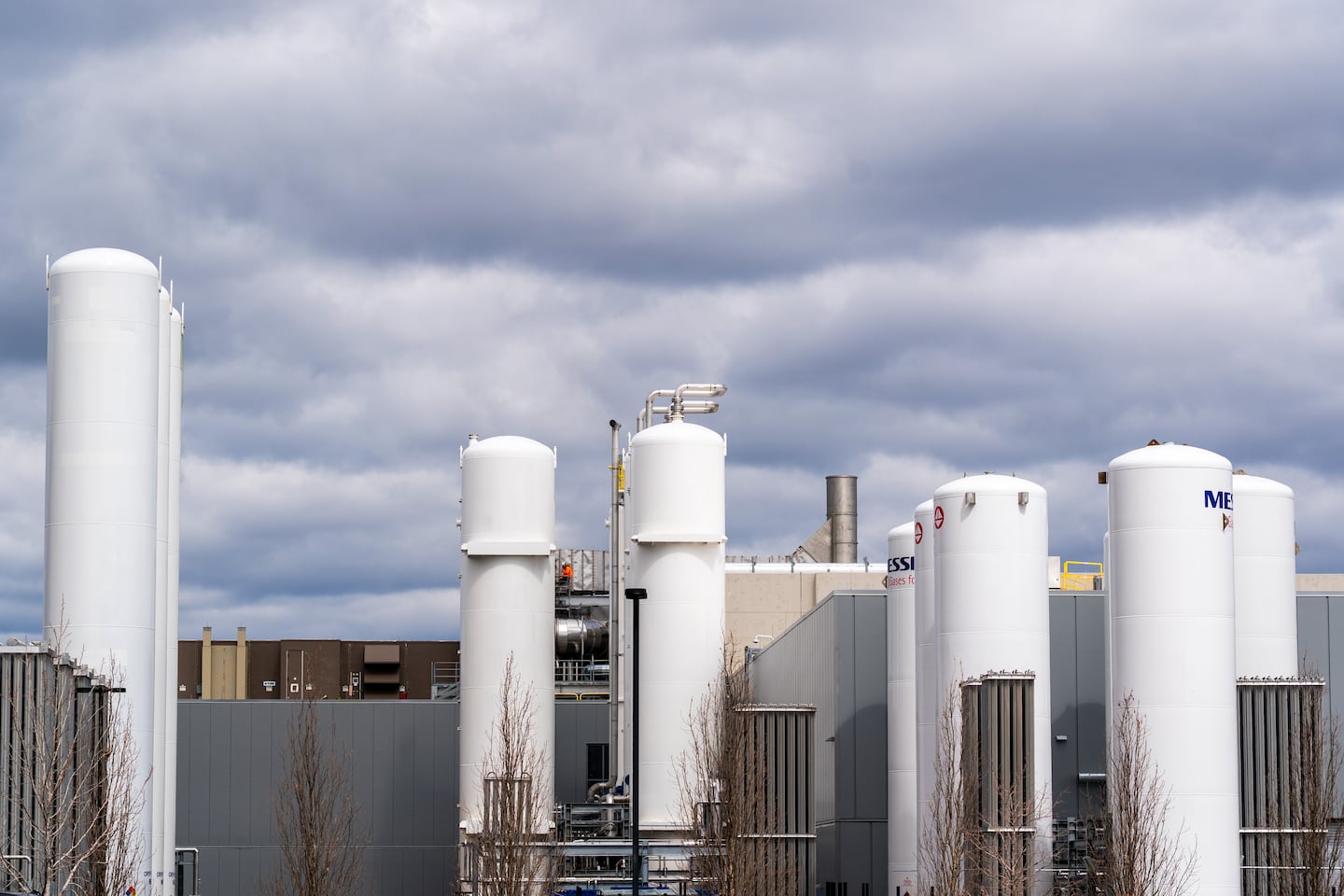 Commonwealth Fusion Systems is building a fusion energy machine at its 60-acre campus in Devens, Mass.Finn Gomez for the Boston Globe
Healey said she understands some residents’ concerns about the prospect of nuclear power plants in their backyards. But the technology has improved, she said. For one thing, there are now safer reactor designs.
“Advanced nuclear today is fundamentally different from what people remember about nuclear plants a generation ago,” she said.
Perhaps the most telling sign of where the technology is heading comes from Plymouth, a town where the history of nuclear energy is still alive.
Some local officials are thinking about putting a new reactor on the site of the old plant. It would be a good use for the land, they say, and could help make up for the high-paying jobs and millions in revenue that were lost when the plant closed.
One tentative supporter is Richard Quintal, a Plymouth selectman for more than two decades. He acknowledges the missteps at the old Pilgrim plant, which he calls “the dinosaur.” But he also knows the technology has improved a lot since then.
“Now,” he said, “the tide’s turning.”
Kate Selig can be reached at kate.selig@globe.com. Follow her on X @kate_selig.