
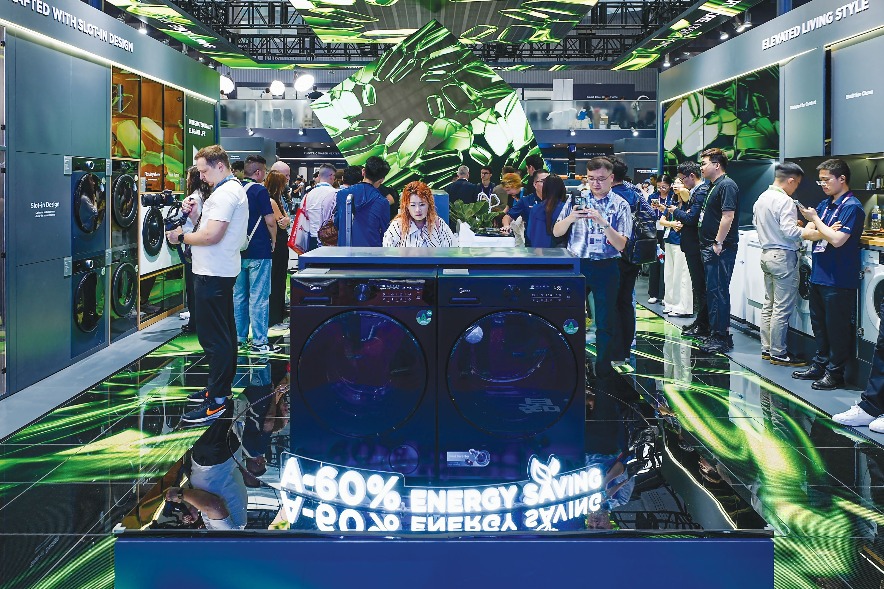
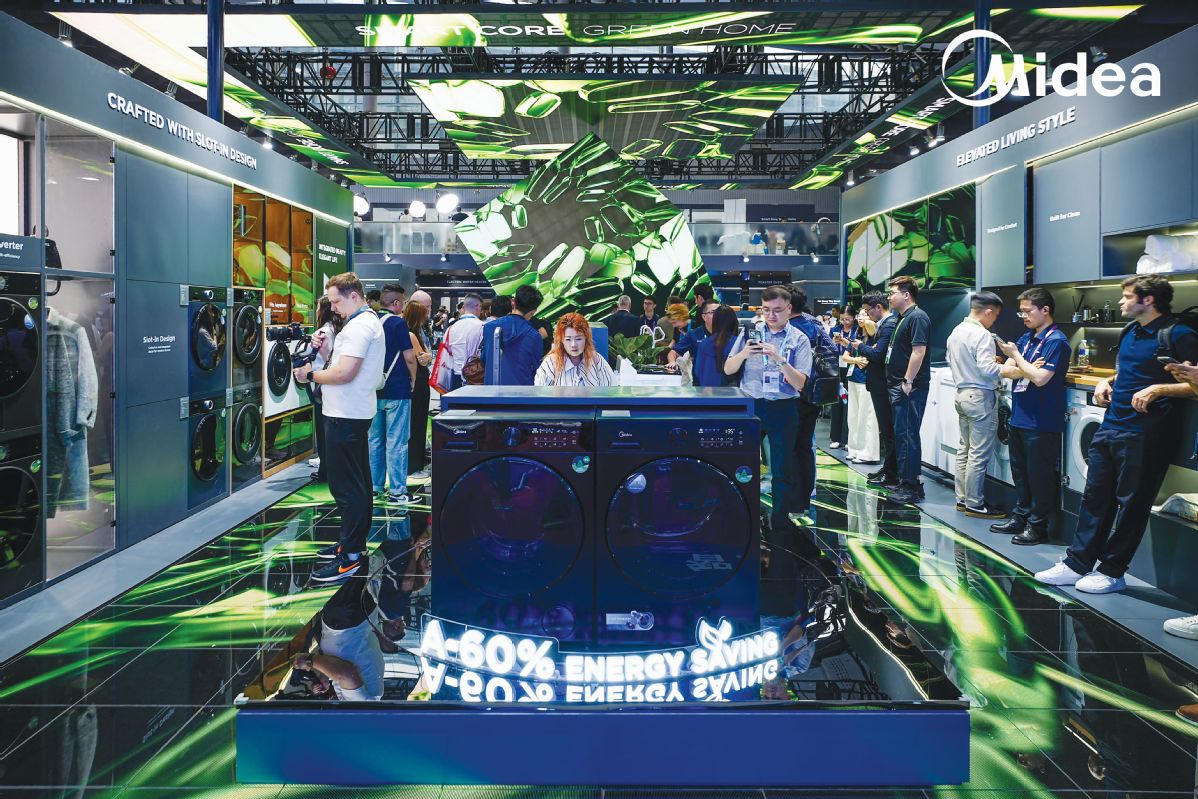
Visitors check out Midea’s products earlier this month at the Canton Fair in the South China city of Guangzhou. [Photo provided to China Daily]
When waves of extreme summer heat swept across Europe last year, Dong Yunjun looked out from his office in Stuttgart, Germany, and saw several portable outdoor air-conditioning units hanging next to the windows of a nearby building.
“It was the moment we knew our products had succeeded,” said Dong, the leader of Midea Europe Research Center”s residential air conditioning team. “And we expect a very good season this year.”
The product he saw was a portable air conditioner called PortaSplit.
Weighing 10 kilograms, its outdoor unit can be mounted outside a window with a bracket without the need for drilling, and the entire process can be done without professional help.
The product was launched in the summer of 2024, with the aim of solving the hassle of installing air conditioners in Germany and many other European countries, where summer temperatures used to be milder and where many homes do not have air conditioning.
As extreme heat continues to spread and break records due to climate change — last June was the hottest on record for Western Europe — more Europeans are looking for cooling solutions.
“After the product launched, searches for ‘Midea’ on Google increased twentyfold in Germany,” said Dong, adding that it also began selling in Denmark, France, Italy, and the Netherlands. This year, the company has launched an even smaller version, called PortaSplit Cool.
“Our strategy in Europe now is to make breakthroughs through innovation, instead of low prices,” said Dong. “Because our brand won’t be remembered if we only follow others.”
The portable AC unit was just one of many home appliances made by Chinese brands that have been gaining popularity across Europe, appreciated not only for value but increasingly for quality and innovation.
A clear sign of this trend was visible at the 2025 Internationale Funkausstellung Berlin, or IFA, Europe’s largest consumer electronics exhibition.
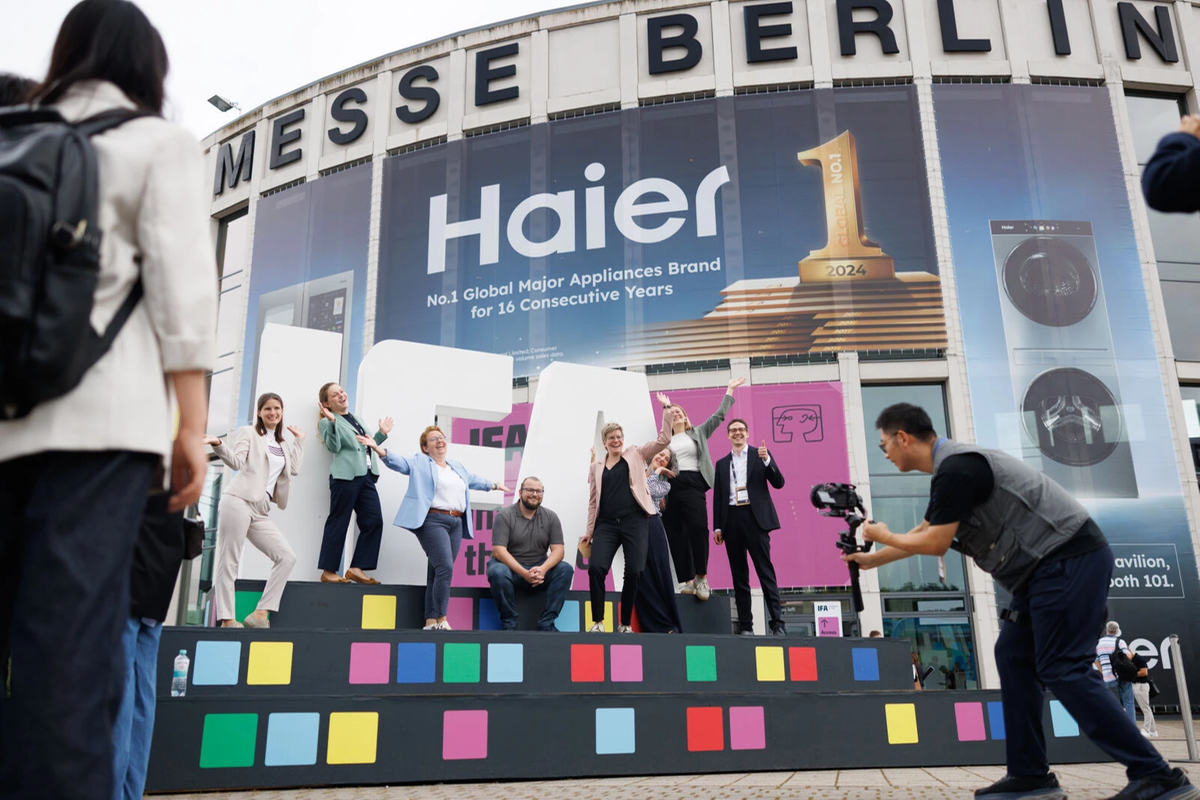
Visitors pose for a photo in Berlin in September at the Internationale Funkausstellung Berlin, or IFA, one of Europe’s oldest and largest consumer electronics exhibitions. [Photo / IFA]
Major Chinese brands displayed prominent advertisements, booked some of the largest exhibit spaces, and showcased a range of innovative products, including AI-powered smart home appliances, new-generation displays, and robotics.
Some 700 Chinese companies participated, which accounted for more than 30 percent of the total number of exhibitors. Observers noted that the IFA has become a key platform for Chinese companies looking to strengthen their presence in Europe and expand international cooperation.
“In the past, most Chinese consumer electronics companies entered international markets as original equipment manufacturers, or OEMs, or by offering cost-effective products. But now they mainly focus on innovation,” said Zhu Keli, director of the China Institute of New Economy.
At the trade show’s highly anticipated Global Product Technology Innovation Awards, Chinese brands, including Midea, Hisense, and TCL, received gold awards alongside companies like Bosch and Siemens.
Oliver Pearce, London-based executive director of iMpact, a consultancy dedicated to helping Chinese enterprises explore overseas markets, described this latest wave of Chinese companies going global as a continuation of a trend that began in the 1990s.
With the trend in the 1990s seeing Chinese companies building roads and dams abroad and acting as OEMs for foreign brands, they were less visible before the 2010s.
Pearce recalled that when he moved to China in 2009, his Chinese friends liked to show off their Samsung or Siemens appliances.
“The average middle-class family in Beijing and Shanghai back then still preferred to buy foreign brands because they believed they were better,” Pearce said.
Chinese brands have evolved over the past decade. While still exporting functional, low-cost products in the 2010s, Chinese companies worked to upgrade their products — and once they had better innovations they focused on overseas markets.
“They’ve learned from the Chinese market and are now capable of exporting products that truly reflect domestic innovations and also resonate with international consumers,” Pearce explained.
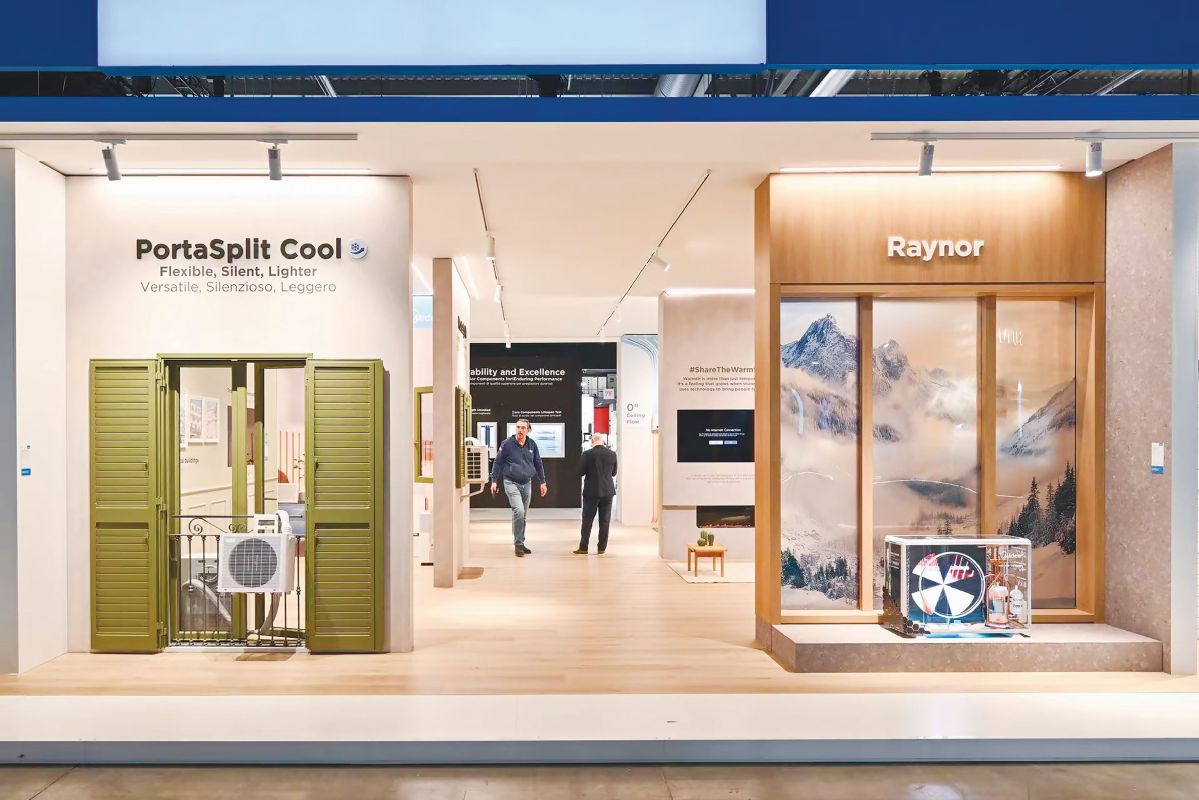
The PortaSplit Cool, a portable air conditioner made by Midea, is seen on display at the MCE 2026 international tradeshow in Milan, Italy in March. [Photo provided to China Daily]
Innovate for local needs
Similar to the big multinationals that built factories and R&D centers in China during the past two decades, many Chinese brands are doing the same in Europe: innovating for local customers.
“Europe is quite diverse, that’s something we always have to tell our headquarters,” said Manuel Seethaler, head of public relations and strategy for Midea Europe Research Center’s residential air conditioning team. “There is no one-size-fits-all solution for European markets.”
The portable air conditioner is the result of in-depth local research, including home visits and surveys, leading to rapid iterative prototyping. Combining German engineering from the Stuttgart R&D center with Italian design from Midea’s design center in Milan, it is a prime example of the “local for local” strategy.
“In China, it is common for households to have split AC units, and it is also true for southern Europe, but in central Europe or Western Europe, it’s not so common, because the summers are not so long, and they’re not that hot,” said Seethaler.
“As the summer here gets hotter, people start to care about air conditioning, but the installation is expensive. In Germany, the installation fee for a single split AC costs roughly 1,500 euros,” he said.
“Then, the next problem is, you’re not always allowed to install the outdoor unit and have to acquire some permissions. That’s where we come into play … We are always looking for very dedicated products for a dedicated region, where we can really solve users’ pain points.”
Time magazine named PortaSplit one of the 300 best inventions in its 2025 list, highlighting innovations that make the world better.
“A portable air conditioner for a warming Europe … making ACs no longer a ‘crazy concept’ across the Atlantic,” it said.
The portable air conditioner was just one of many home appliances that Midea’s Europe Research Center has worked on.
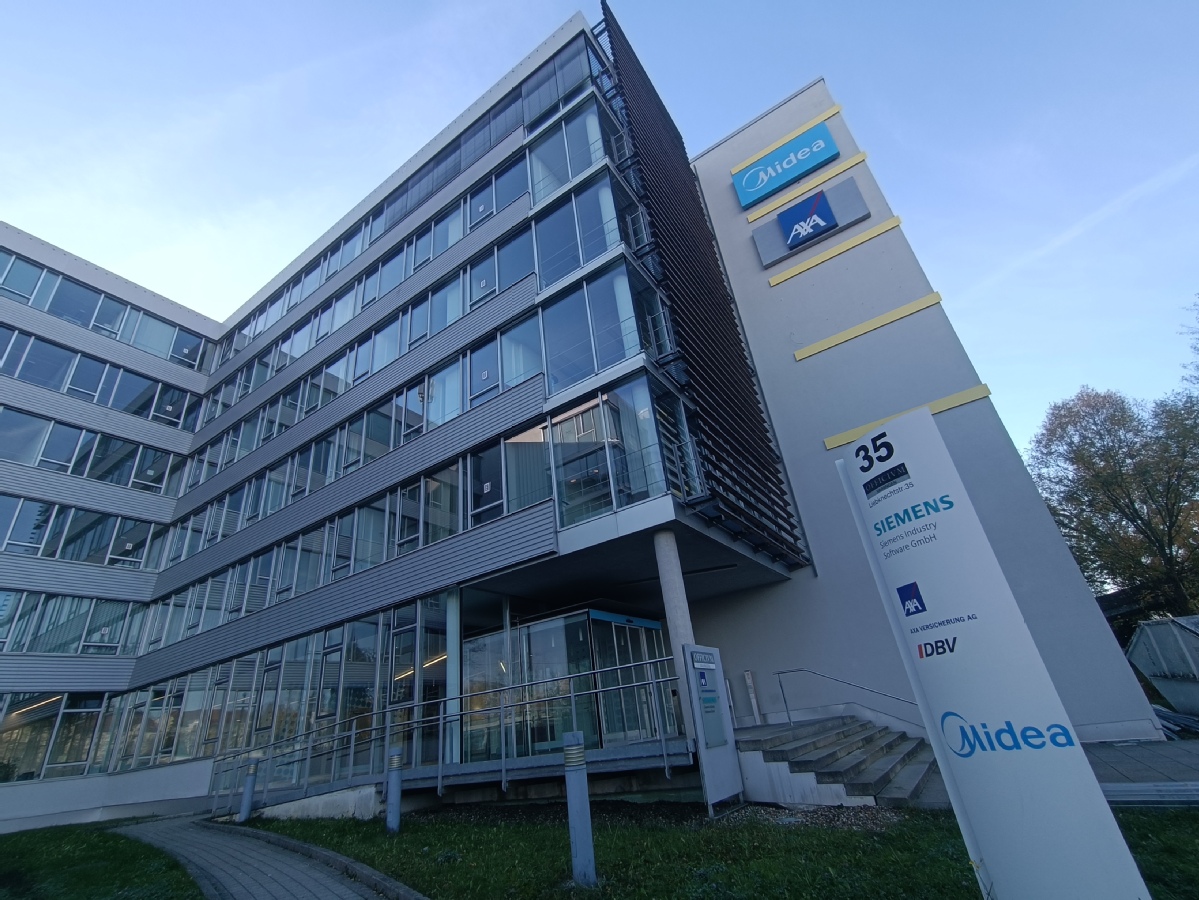
Midea’s Europe Research Center in Stuttgart, Germany. [Xing Yi / China Daily]
Founded in 2019, the center hires experts from different European countries to develop and test products — which include washing machines, ovens, coffee makers, and refrigerators — and make them fit local user habits and preferences.
Innovation is never a one-person job; it comes from collaboration and constant learning, said Chinese and European engineers there.
Stefan Bross is among the engineers from more than a dozen countries that work at the center in Stuttgart. With expertise in environmental engineering, he is working on a new type of heat pump that does not need an outer unit, a feature that especially suits the townhouses of Europe.
“Therefore, you don’t have any restrictions with noise, complaints from the neighbors. This feature is very essential in narrow housing situations where neighbors and sound are always an issue in the European market,” said Bross.
The product Bross has been working on, H-Pack, which is billed as a smart and affordable heat pump solution, has undergone extensive testing and will soon be put on market.
In his daily work, Bross has very frequent communication with colleagues in China, which enables an efficient and rapid prototyping cycle.
“We send our requests back to the team in China. They implement the changes, and we get new prototypes quickly, test them, and share our feedback on what can be improved for the next iteration. Soon we receive the updated prototype,” said Bross. “This is a big difference to traditional German companies, which are often slower in this kind of process.”
Lewis Fu, president of Midea International, said: “As China and Europe relations continue to grow, we are also planning our journey in the European market.”
Through mergers and acquisitions over the years, the group’s subsidiaries now cover 18 countries and have R&D centers and factories in Italy, Portugal, Spain and Turkiye.
“These innovations and elevations in many areas are a great improvement on our competency for the European market,” said Fu. “I think we are ready to be a significant, relevant player in Europe.”
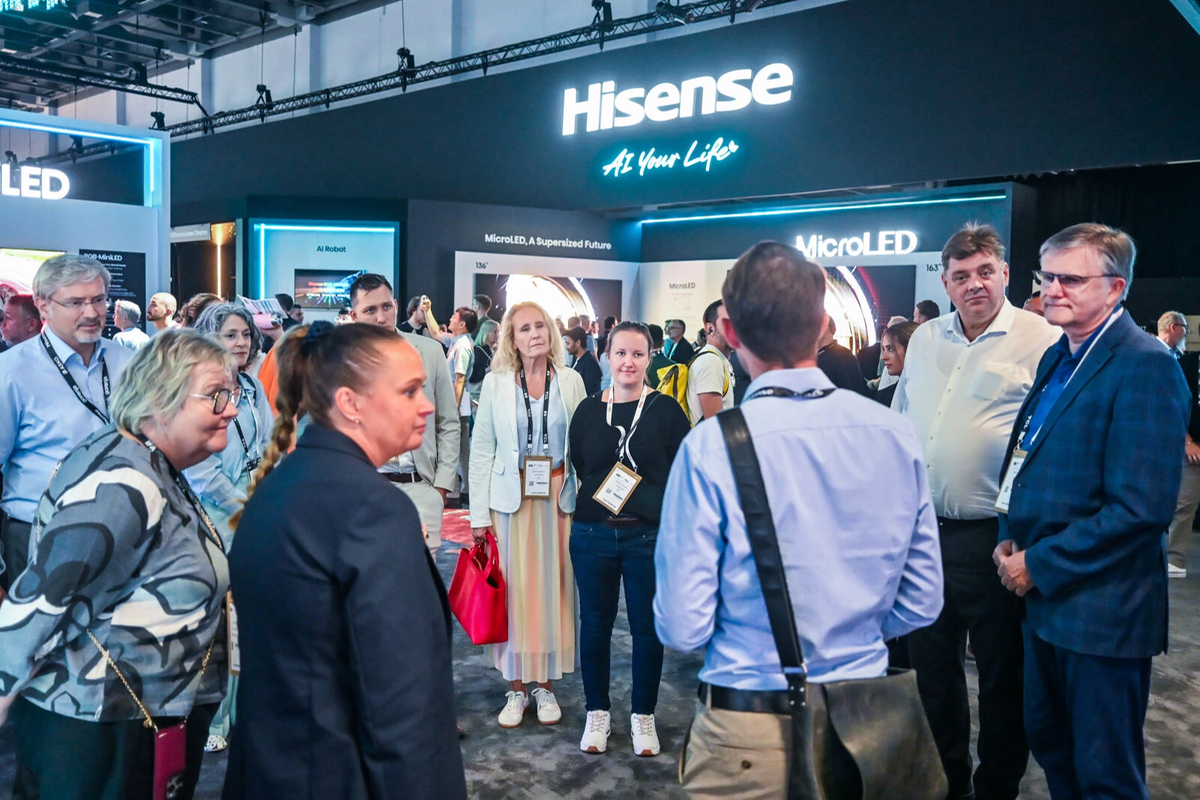
Professionals gather at the Hisense exhibition area at the IFA last year. [Photo / IFA]
Sharing success
Other Chinese home appliance giants have also increased their investment in Europe. Through social responsibility programs, sponsorship of sports events, and sustainability efforts, they are blending in and contributing back to the local society.
The China Chamber of Commerce to the European Union and the Roland Berger consultancy publish an annual report on the development of Chinese enterprises in the EU.
Titled Weathering Challenges, Sharing Success, last year’s report shows that half of Chinese companies expanded investment in 2025. Collectively, they have employed in excess of 260,000 local workers across the EU.
The report found 47 percent of surveyed companies sourced more than half of their total procurement locally, and as many as 87 percent have already launched or are planning to create public welfare initiatives in the EU that contribute to local communities and natural ecosystems.
For example, Hisense invested 45 million euros ($53 million) in a new factory for the production of cutting-edge refrigeration appliances in Valjevo, Serbia, in 2023, which is expected to create 1,000 jobs over the following three years.
The company has also partnered with every UEFA European Championship soccer tournament since 2016, raising its profile among the continent’s large fan-base.
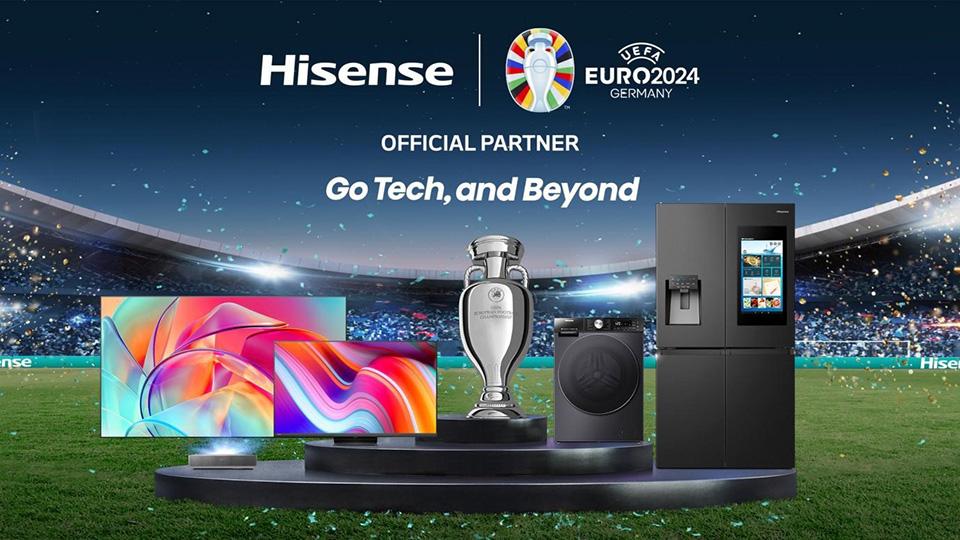
An advertisement of Hisense extends its partnership with UEFA to sponsor EURO 2024. [Photo / Hisense]
Another Chinese home appliance giant, Haier, has a European branch and has announced a significant milestone in its decarbonization journey after sourcing 60 percent of its energy from renewables by 2025. It has also set ambitious targets for 2030 on reducing greenhouse gas emissions.
Denis Depoux, global managing director at Roland Berger, said at the report launch ceremony that, after a first wave of export-fueled success, driven by product superiority, speed, and cost advantage, competitors are catching up, and a deeper understanding of European customers’ preferences is required.
Depoux also urged Chinese companies in Europe to: “Build local customer insights and match the specific Chinese product superiority features with local customer requirements … Local industrial footprint, R&D, marketing is not enough. Local partnerships and potential cross-border M&A will foster more sustainable success.”
And many leading companies are already doing just that.
Since 2024, Chinese consumer electronics company TCL has worked with Denmark’s high-end audio equipment producer Bang & Olufsen in a long-term technical and licensing partnership aimed at bringing premium audio experiences to select TCL products.
Liu Jiandong, chairman of the China Chamber of Commerce to the EU, said: “For Chinese companies, the European market has grown far beyond its initial role as an export destination. It is increasingly regarded as a source of technological innovation, a touchstone for global brands, and a core region for aligning with international standards.”
Looking ahead to the next 50 years, Liu compared China-EU relations to a vessel embarking on a grand voyage.
“EU and Chinese companies will move forward together, using fair and transparent rules as the ballast of economic and trade cooperation,” said Liu. “This will enable the two sides to safeguard the stability and resilience of the global industry and supply chains, and inject greater certainty and stability into the vast ocean of global trade.”
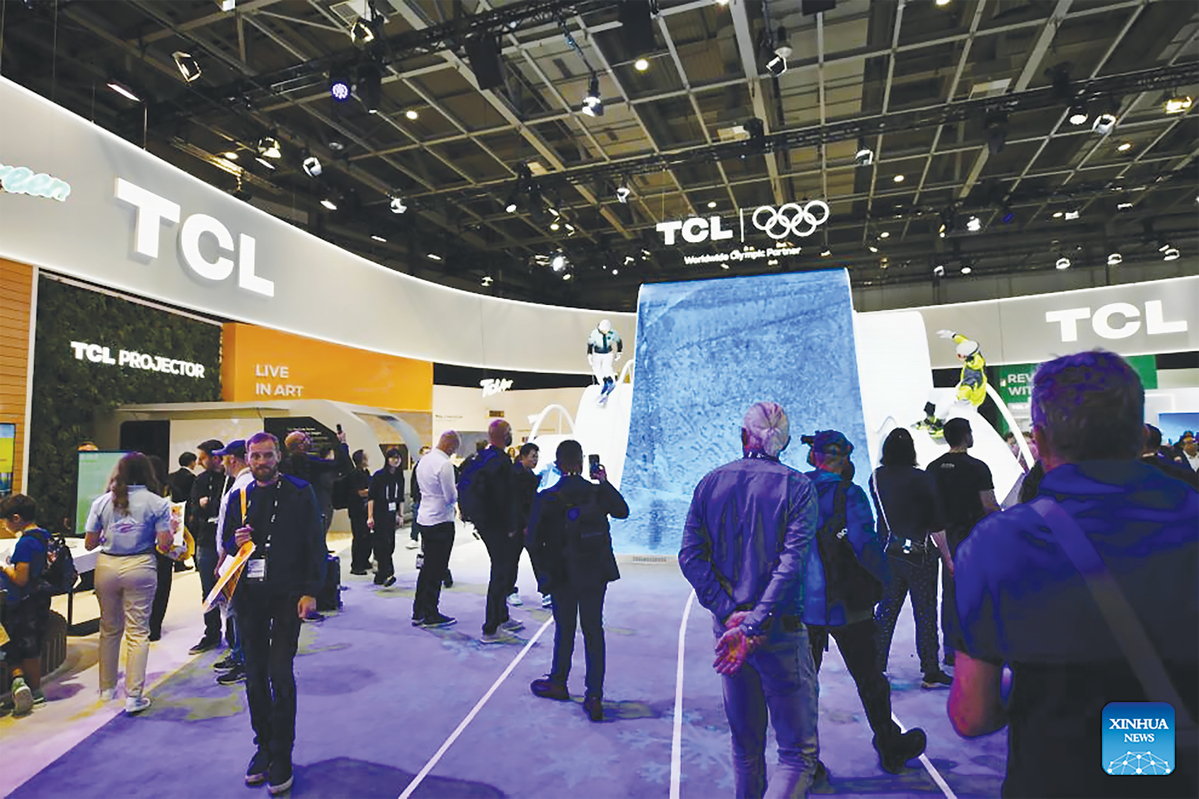
Home appliances brand TCL draws a crowd at the IFA exhibition, which has become a key platform for Chinese companies looking to strengthen their presence in Europe and expand international cooperation. [Photo / Xinhua]
Han Jing contributed to the story.
Click to watch the video of the Shared Journey series:
Chinese appliance maker builds on European partnership