
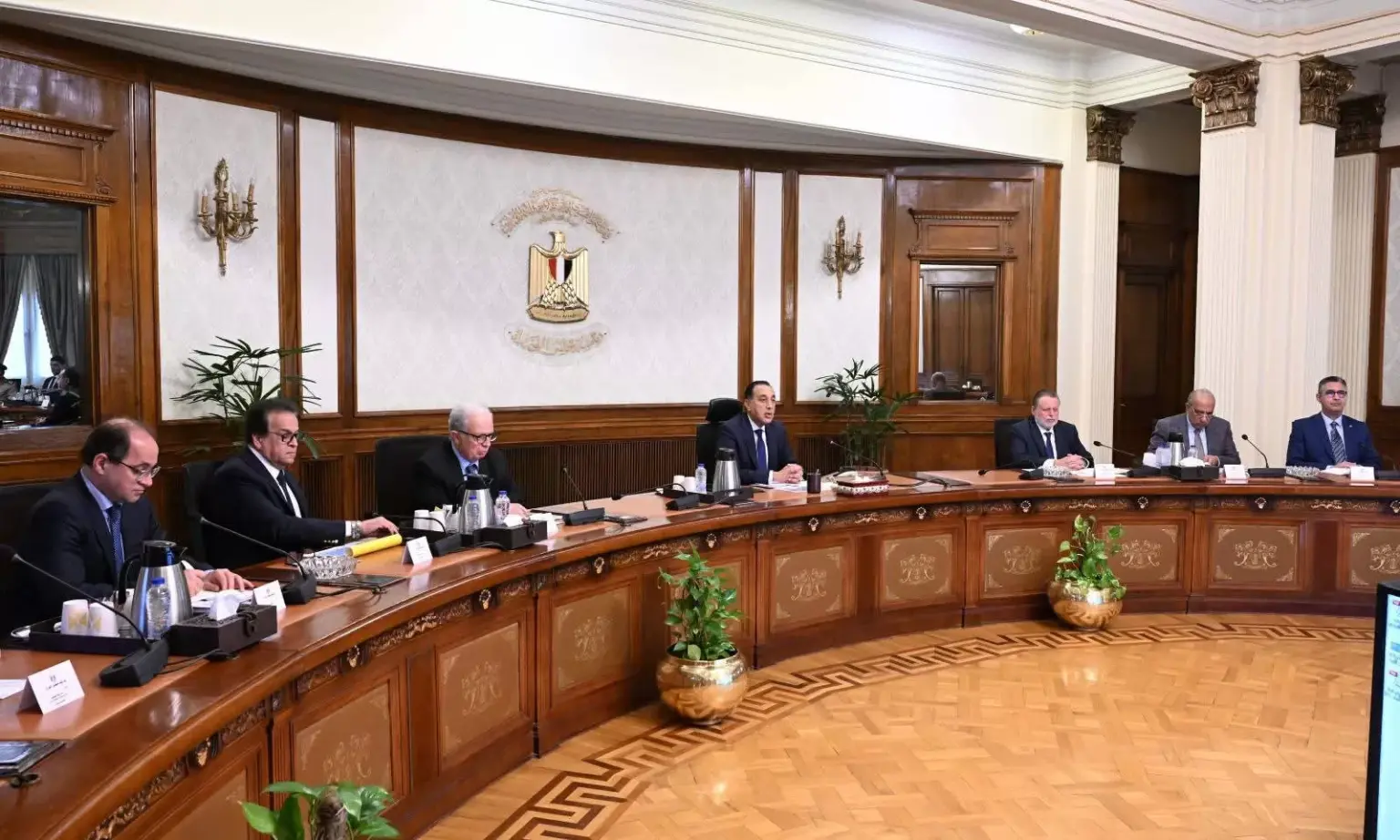
Egypt’s Prime Minister Moustafa Madbouli chaired a meeting of the Central Crisis Management Committee on Sunday to review the latest developments arising from the current crisis and its implications at the domestic, regional and international levels.
During the meeting, the prime minister affirmed that the government is closely monitoring the repercussions of the ongoing crisis, including developments related to military operations involving the United States, Israel and Iran, and their impact on economic conditions globally, regionally and locally.
He noted that all state entities are working in a coordinated manner to address these challenges and to prepare multiple scenarios based on the potential duration and scope of the crisis, said the Cabinet Spokesman Ambassador Mohamed el-Homosani.
He added that the premier emphasised that coordination across government bodies is ongoing to secure strategic reserves of petroleum products and essential commodities, in line with the directives of President Abdel Fattah El Sisi, ensuring the continued availability of goods to meet both consumer and production needs.
He further stressed the importance of maintaining strict market oversight to safeguard stability, prevent manipulation and ensure that goods remain available at appropriate quantities and reasonable prices for citizens.
The prime minister also reviewed progress on measures aimed at rationalising the consumption of petroleum products and electricity, as well as efforts to control government expenditure.
He highlighted the need to promote a culture of responsible consumption in light of the global repercussions of the crisis, noting that such measures would support operational stability across vital sectors.
In this context, Madbouli directed the immediate announcement of an incentive initiative encouraging factories and households to transition to solar energy, underlining that this initiative represents a key government priority.
Minister of Planning and Economic Development Ahmed Rostom presented an overview of the crisis’s impact on economic growth and inflation trends at both the global and domestic levels.
He indicated that projections by the International Monetary Fund suggest global growth will decline to 3.1 per cent in 2026, compared to 3.4 per cent in 2025, while growth in the Middle East and North Africa region is expected to fall to 1.1 per cent in 2026.
He attributed these trends to rising global commodity prices, particularly energy and food, as well as increased investor caution in financial markets.
Minister Rostom also outlined projections concerning global inflation and trade, noting a slowdown in global trade growth from 5.1 per cent in 2025 to 2.8 per cent in 2026.