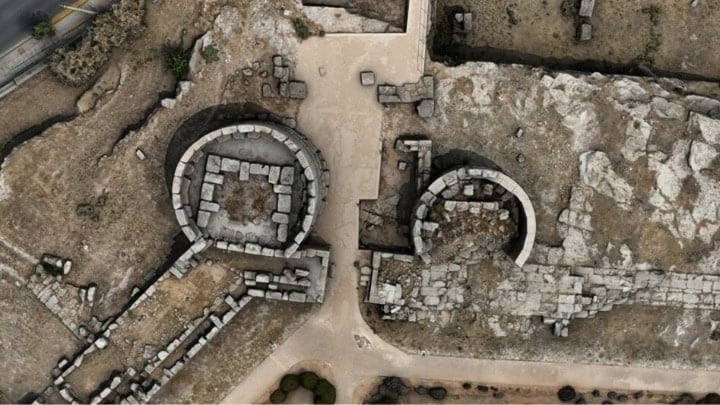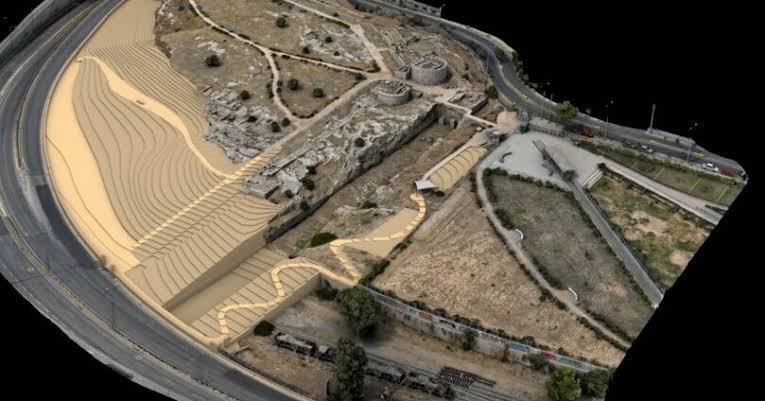
The site, part of the wider Themistoclean Walls of Piraeus, represents one of the most significant examples of ancient Greek defensive architecture. Officials said the project will integrate pathways, entrance facilities, planting schemes, signage, and extended lighting systems to improve both accessibility and visitor experience.
Culture Minister Lina Mendoni stated that the Hetioneia Gate forms a key element of the ancient fortifications protecting the harbour of Piraeus, originally constructed in 411 BC. She said the structure historically controlled access to the ancient port of Kantanos, making it inaccessible to invaders by land.
She added that the site reflects multiple construction phases spanning from the 5th to the 3rd century BC and stands as one of the most impressive archaeological landmarks on the Piraeus coastline.
The expansion builds on earlier restoration work, including a 2013 cultural development agreement and lighting installations completed in 2024. The new intervention aims to restore the surrounding landscape, improve aesthetics, and create a continuous archaeological route.
Officials confirmed that the project will also connect the site with the under-construction National Museum of Underwater Antiquities, forming a unified cultural corridor for visitors.
Archaeologists noted that the site contains remains of circular towers, defensive walls, ancient quarry traces, and additional structures such as the so-called “Aphrodision.” Excavations first began in the late 19th century, with further work in the modern era revealing significant parts of the fortification system.
Authorities said the new development will address long-standing issues, including water damage affecting the ancient stone structures. Engineers will redirect rainwater, restore damaged surfaces, and reorganise scattered architectural elements for improved presentation.
The upgraded site will also feature improved accessibility for people with disabilities, reinforced visitor routes, and enhanced safety infrastructure, ensuring the preservation and public presentation of one of Piraeus’ most important ancient monuments.