
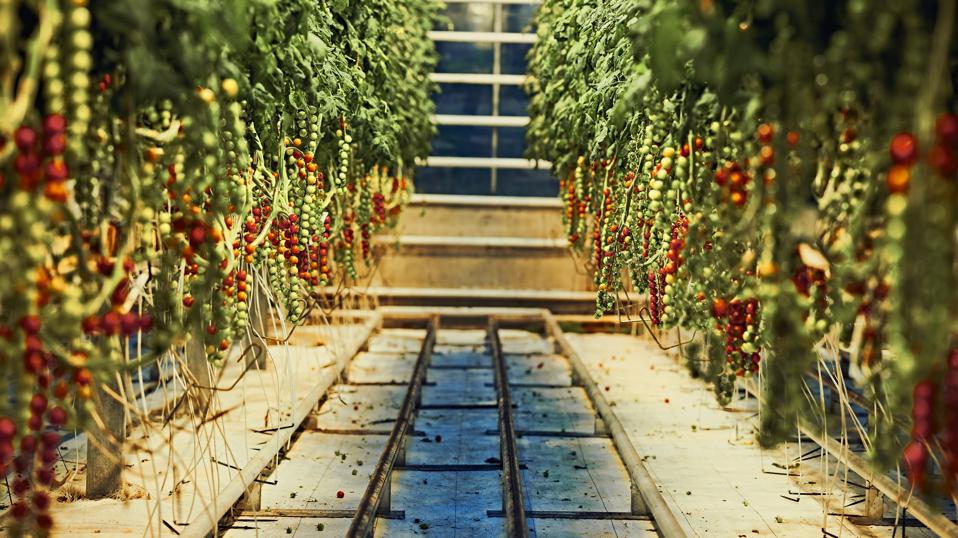
Iceland might be known for its volcanoes, glaciers and the upcoming total solar eclipse, but few places see their extreme geology and landscape influence meals quite like this country. And not just meals, but the entire food process, too.
Having harnessed renewable geothermal energy for over a century, Iceland’s culinary traditions—from greenhouse-grown produce to slow-baked breads—are integrally shaped by a sustainable, land-driven approach to food, resulting in some of the most distinctive dining experiences that I’ve had while traveling.
Rural Retreats
Here, visitors can step directly into Iceland’s food production, where farm-to-table dining and geothermal ingenuity define the culinary experience.
Friðheimar
About an hour and a half’s drive from Reykjavik and along the famed Golden Circle route lies Friðheimar, a family-run tomato farm. Despite Iceland’s long, dark winters, Friðheimar grows tomatoes year-round, serving some of the freshest vine-ripened produce you’ll taste in the country.
And Friðheimar’s passion for sustainable, locally grown food traverses beyond the dining table through experiential learning. Before meals, the team guides visitors through greenhouse tours, offering a closer look at how tomatoes are cultivated in Iceland’s unique climate.
If visiting around lunchtime, diners find themselves among the tomato plants, devouring their meal straight from the source in a fully operational growing space. Known for its signature offering, steaming bowls of delicious tomato soup and freshly baked bread, Friðheimar also offers a wide range of other creative tomato-based dishes, from ravioli to ice cream.
For dinner, head next door to another property greenhouse called Vínstofa Friðheima. As a wine bar and bistro, it offers an extended menu featuring additional farm-fresh produce: homegrown strawberries with creamy burrata, lamb salads and seafood tagliolini, alongside refreshing tomato-based cocktails and beers.
Laugarvatn Fontana
Alongside skyr and seafood, Iceland’s traditional rye bread—known as “rúgbrauð” and characterized by its dense texture and dark brown color—holds a central place in the country’s culinary identity. But rather than simply picking up a loaf from a local grocery store, Laugarvatn Fontana takes it one step further: geyser-baked bread.
Following a traditional method, the flours, sugar, baking powder, salt and milk are mixed and transferred into a pot that’s tightly wrapped to ensure spring water stays out. A hole is then dug into the boiling sand, and the bread is left to bake for 24 hours.
Situated on a geothermal hotspot, Laugarvatn Fontana offers baking experiences where visitors can join in on the digging process before sampling slices with fresh Icelandic butter and smoked fish.
Efstidalur II
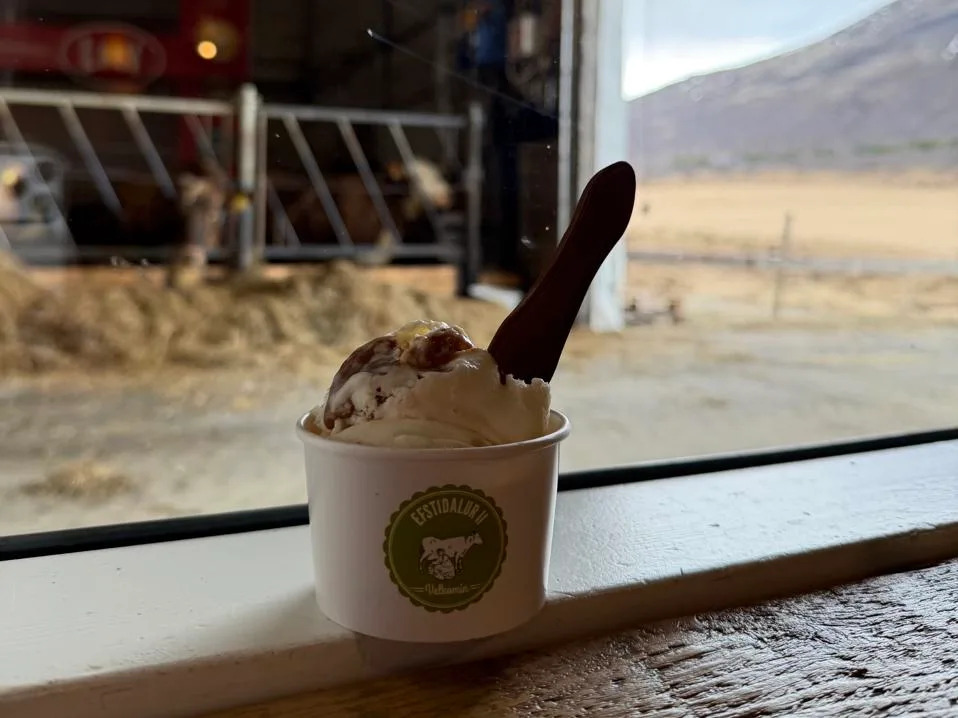
Efstidalur II ice cream overlooking their cow stables
Carinne Geil Botta
Also on the Golden Circle, this historic family-run dairy farm is the definition of farm-to-table, where guests can dine overlooking the livestock. Now under the care of seventh-generation farmers, Efstidalur II serves its own beef and dairy products in the restaurant’s soups, burgers, steaks and salads.
The dining experience is defined by complete visibility into the food system, from the surrounding pastures to finished dishes. For a sweet treat or quick stop along a Golden Circle tour, Efstidalur II’s homemade ice cream shop and coffeehouse also offer a sitting area with views into the cow stable—the very source of what’s on offer.
Lagoon Dining
Beyond Iceland’s farms and rural kitchens, some of the country’s most distinctive meals are served beside its mineral-rich lagoons.
Moss Restaurant
Arguably the most famous lagoon, the Blue Lagoon boasts not only its namesake geothermal seawater but immersive dining, too. Perched on the edges of a lava field, Moss Restaurant serves up the best of Iceland’s produce through tasting menus—think bok choy with tuna tartare and local wasabi or langoustines with cauliflower textures, sesame dressing and ginger. Led by Chef Aggi Sverrisson, this fine dining experience invites guests to travel through Iceland via its food.
Ylja
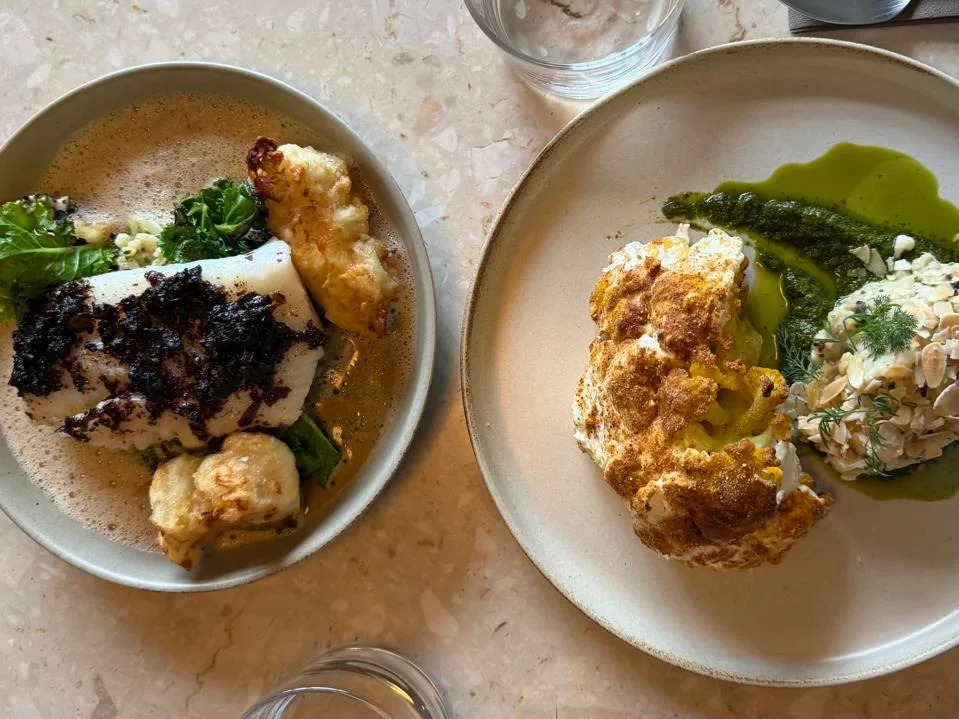
Left: slow cooked cod with rutabaga x.o., pearl barley, orzo, celeriac and mushroom sauce. Right: roasted cauliflower with orzo, couscous, herbal sauce, dulse, kale and almonds
Carinne Geil Botta
The country’s newest lagoon opening, Laugarás Lagoon, brings renowned culinary talent to its on-property restaurant, Ylja. After Chef Gísli Matt’s flagship restaurant Slippurinn and cookbook garnered international attention, he took the reins of Ylja. He did so with the goal of collaborating with the village of Laugarás to source ingredients and combine modern techniques with classic Icelandic ingredients and traditions. This all culminates in an extension of the lagoon itself, mirroring the serenity and warmth of its surroundings.
Icelandic Classics
Iceland’s food story wouldn’t be complete without mentioning a few traditional dishes, offering a deeper look into the country’s unique culinary roots.
Hákarl
A diet historically based in lamb, dairy and seafood often presents in the modern day as soups, skyr and smoked fish. But for the adventurous eater, dishes like hákarl, or fermented shark, act as a traditional, pungent delicacy, one often paired with Brennivín schnapps.
Dating back to the Viking age, the dish was developed as a preservation method, with early Icelanders using fermentation to make the shark edible, reflecting the country’s long history of adapting food techniques to extreme conditions.
Pylsur
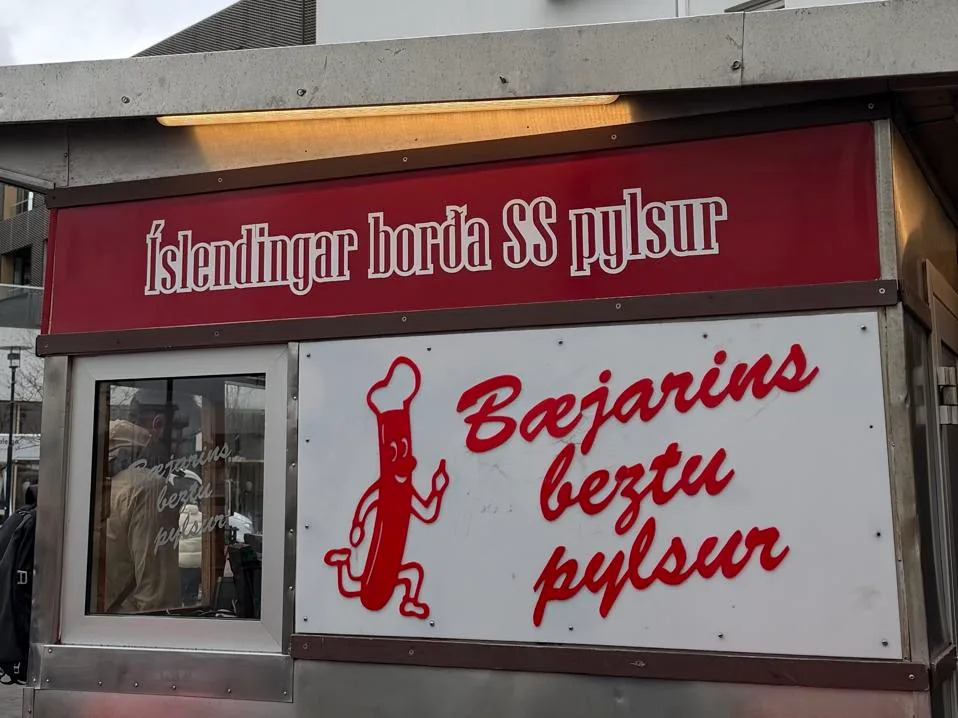
Bæjarins Beztu Pylsur stand in Reykjavík
Carinne Geil Botta
Also a popular everyday staple? The Icelandic hot dog, or pylsur. As a street food option made from Icelandic lamb, pork and beef, it is found in food stands all over the capital, most notably Baejarins Beztu Pylsur, Víkinga Pylsur and Old Harbour Hot Dogs. Topped with raw onions, crispy fried onions, Icelandic sweet mustard, ketchup and remoulade, the dish is a loaded mix of sweet and tangy flavors in every bite. Its widespread popularity reflects Iceland’s modern food culture just as much as its traditional dishes do—rooted in local ingredients and a distinct national culinary identity.
This article was originally published on Forbes.com