
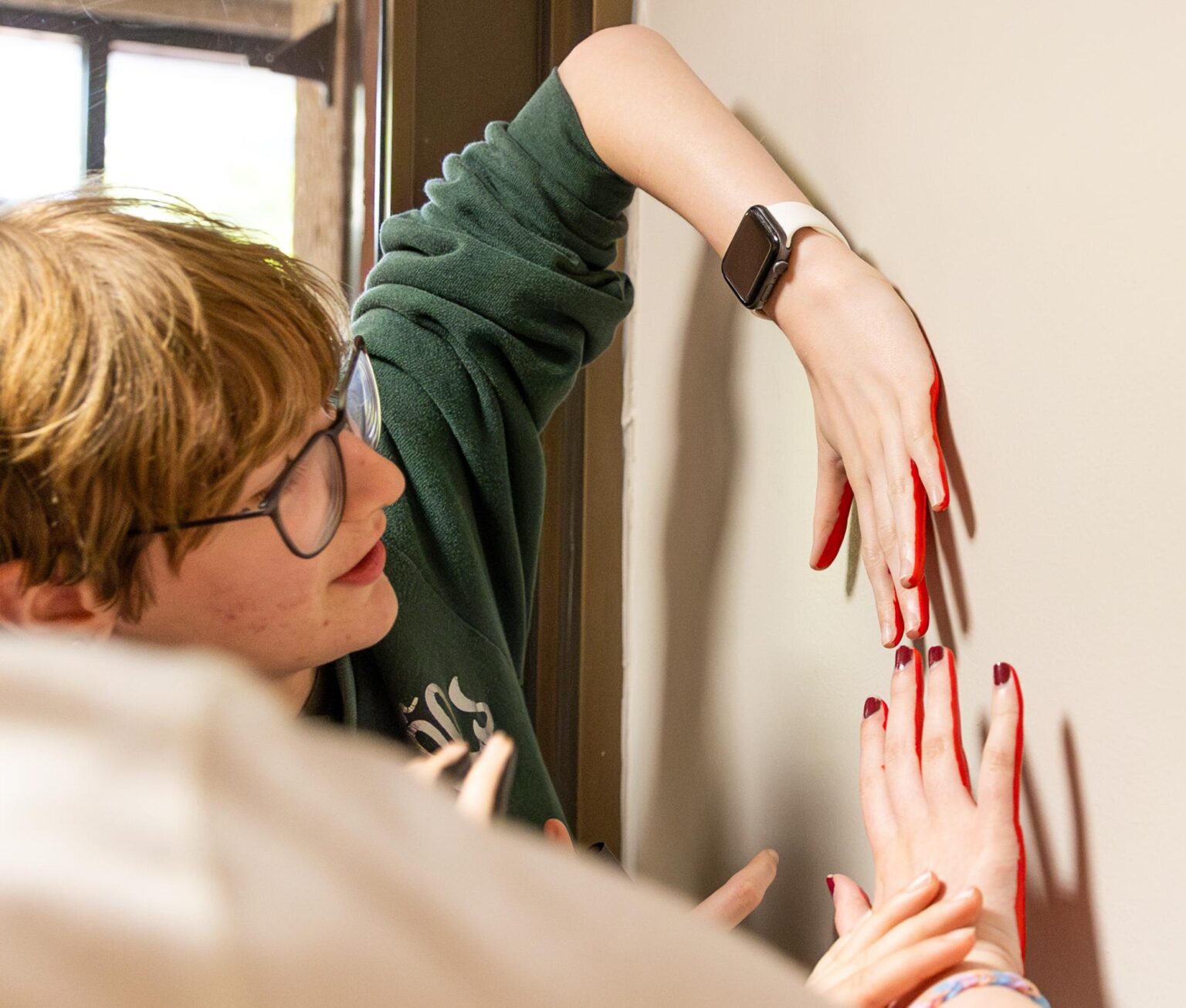
As WKU prepares to remove Douglas Keen and Hugh Poland halls, students and alumni say the dorms did more than house residents: they built friendships, shaped independence and defined generations of campus life.
Completed in 1968, Douglas Keen Hall was named for former Board of Regents member Douglas Keen. The split-level residence hall includes a seven-story wing with 130 rooms and a four-story wing with 79 rooms.
Hugh Poland Hall, completed in 1968 as Dormitory No. 9, was named for former Board of Regents and WKU alumnus Hugh Poland. The nine-story building housed 440 students and served different student populations over the years, including men, women and co-ed residents.

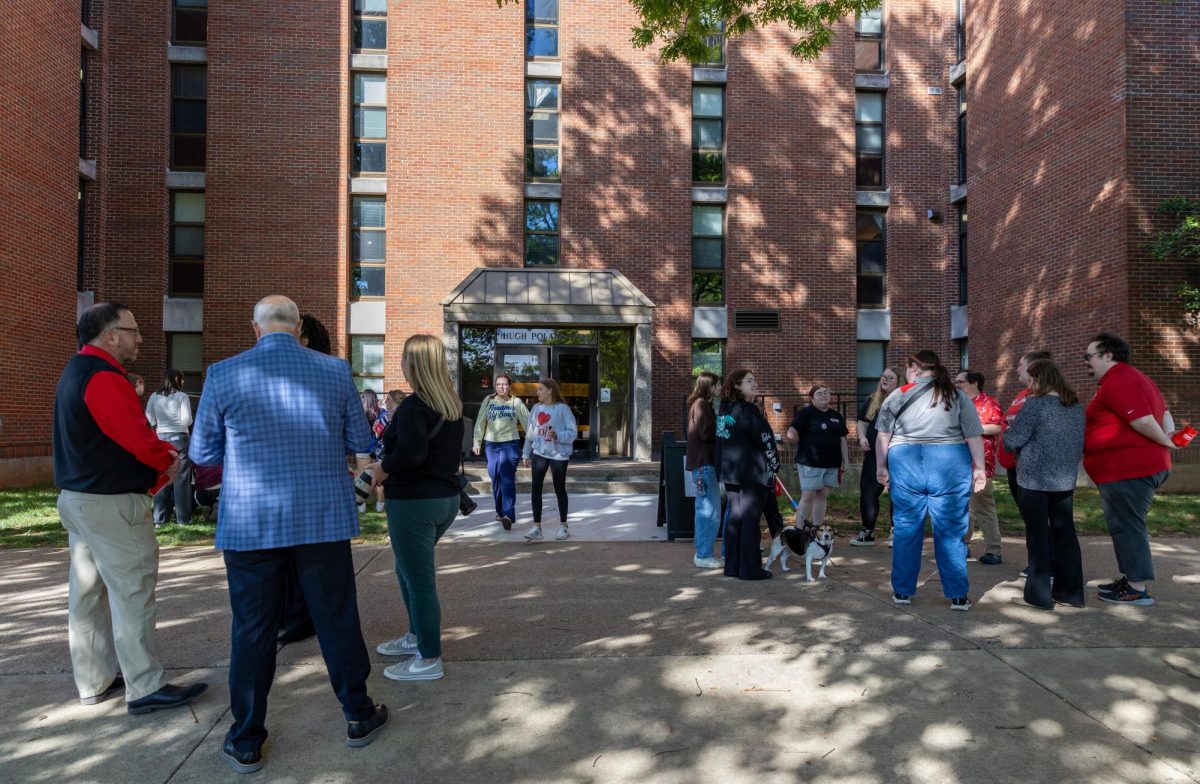 Attendees of the Hugh Poland and Douglas Keen celebration linger outside Hugh Poland Hall at Western Kentucky University, Thursday, April 30, 2026. (Bradi Hawkins)
Hosted by WKU Housing and Residence Life, the Thursday celebration at Peace Ford Tower Courtyard brought students, alumni and staff together to celebrate the history of Douglas Keen and Hugh Poland halls, two residence buildings that have been part of campus life for decades.
The event included guided tours, handprint walls, refreshments and displays about future site plans. It also gave former and current residents a chance to reflect on what the halls meant to them.
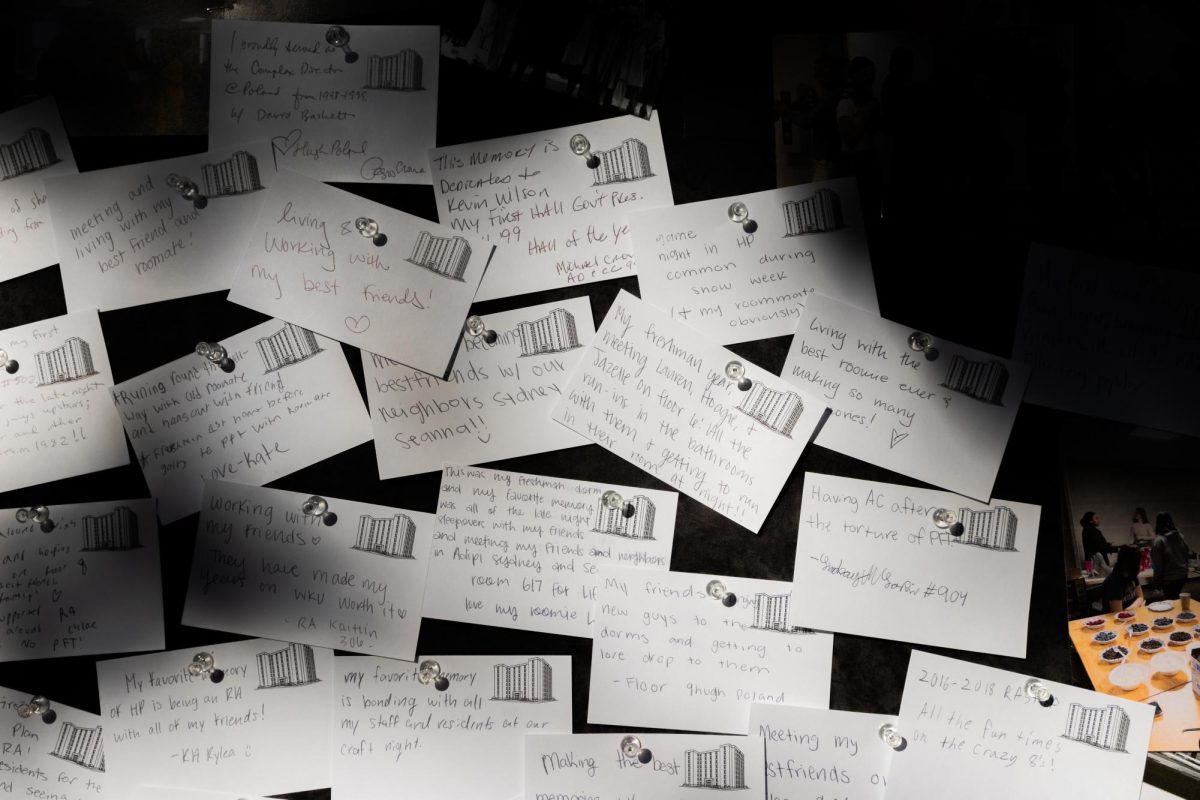 Memories written by attendees and photos fill a bulletin board outside Hugh Poland Hall at Western Kentucky University, Thursday, April 30, 2026. (Bradi Hawkins)
For many alumni, the halls were where college life began.
Doug Sims, who lived in Douglas Keen Hall with his roommate Stephen Clark in the late 1980s, said the friendships formed there stayed with him long after graduation.
“Just the friendships, the camaraderie, we knew just about everybody on our floor,” Sims said. “We all hung out and ate together and hung out on campus. Just really good memories like that.”
Sims said living in the dorm placed students at the center of campus life.
“You were right on campus every day,” Sims said, “You didn’t have to worry about getting in a car and driving 10 or 15 or 20 minutes to get home. Home was here.”
Clark said the dorm helped create a family-like environment.
“We were in a corner room, so we got to meet almost everybody on the whole floor,” Clark said. “It kind of made it seem like a family.”
Returning to campus brought back strong memories for Clark, who said he did not expect the building to come down.
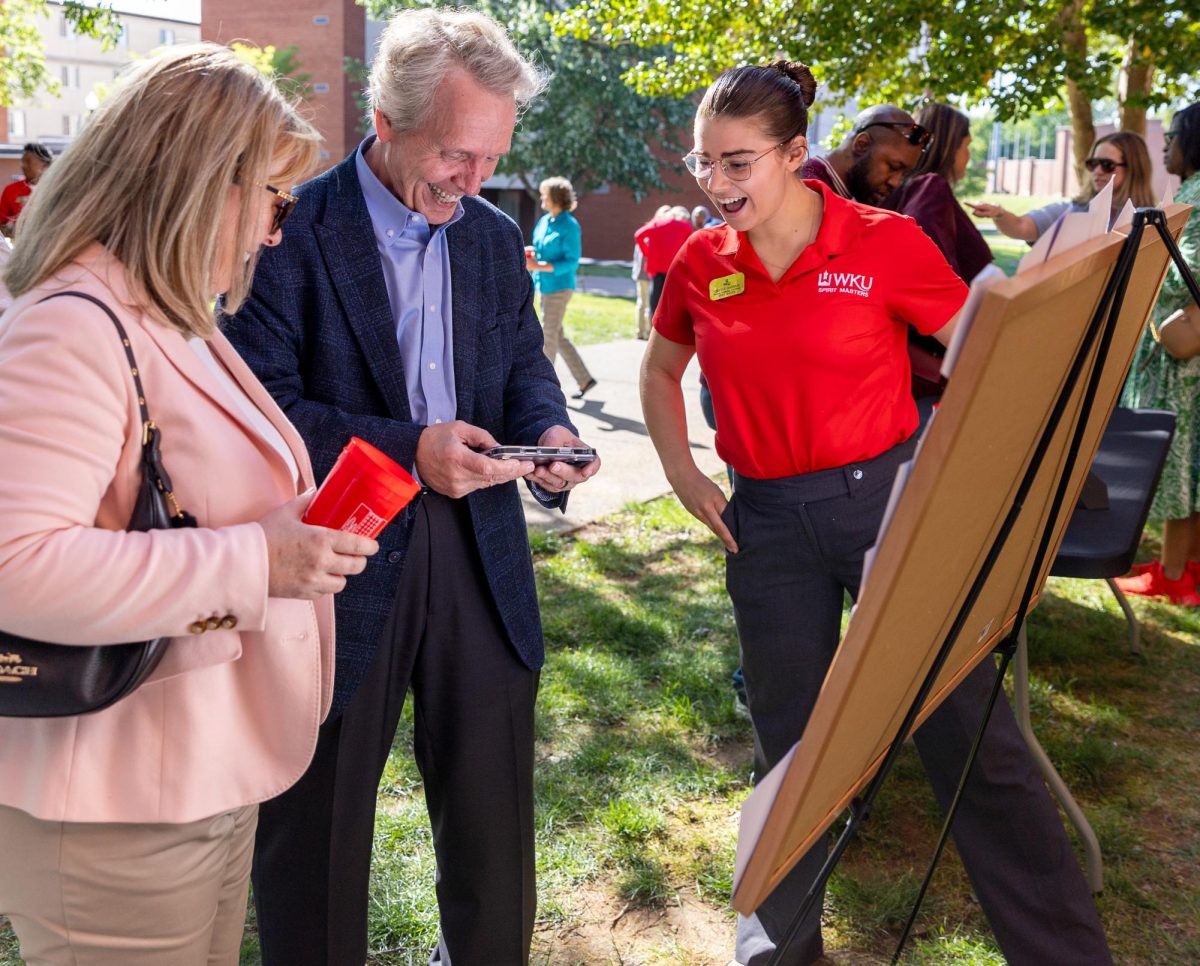 Dr. Kelli Parrrott, left, Dr. David Parrott, center, and Grayce Basham, right, discuss Parrott’s time living in Hugh Poland Hall as a freshman in 1974 at Western Kentucky University, Thursday, April 30, 2026. David shows Basham photos from his time in the residence hall, including one of him drinking in the dorm. (Bradi Hawkins)
“It’s just thinking about all the good times we had in Keen and in our room,” Clark said.
Current students said the halls still play that role today.
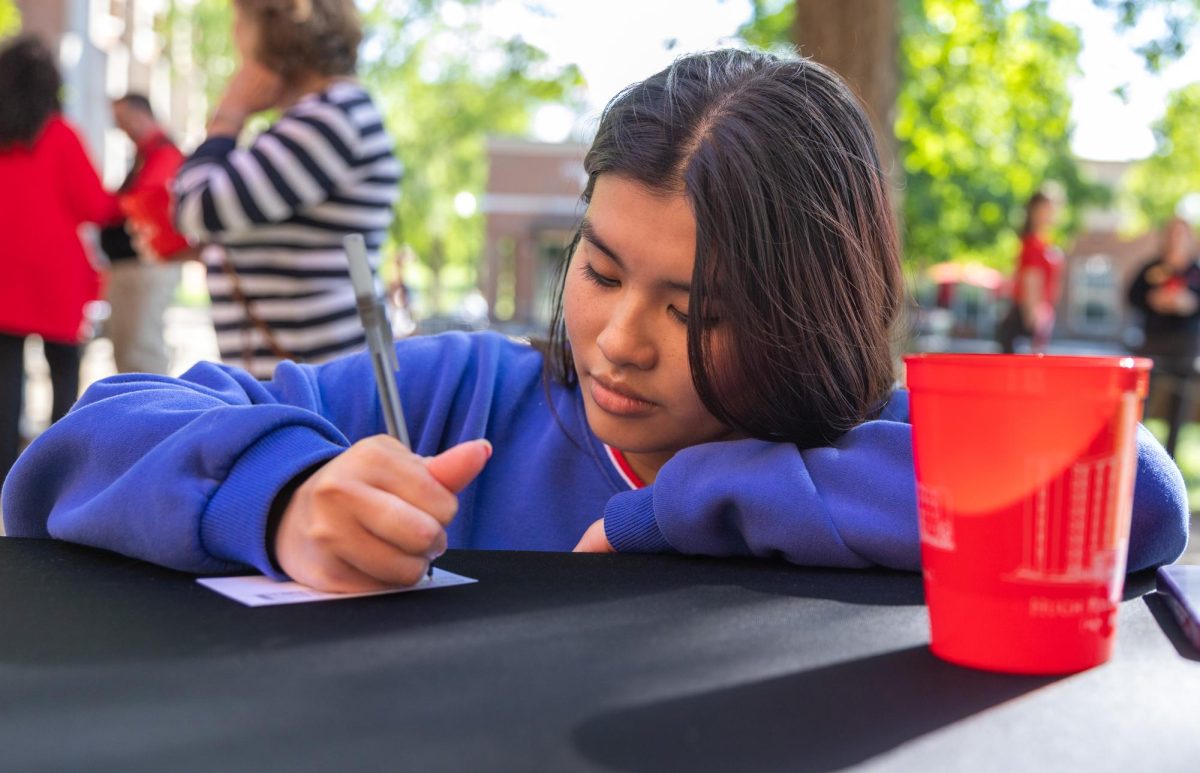 Lily States, a sophomore who has lived in Hugh Poland Hall for two years, writes a note reflecting on her memories at Western Kentucky University, Thursday, April 30, 2026. “This is my sophomore year—I’ve lived here ever since I’ve been here, so it’s going to be crazy when it’s torn down,” States said. (Bradi Hawkins)
Autumn Abell, a freshman majoring in middle school education, said events like Thursday’s celebration help students connect with campus history and each other.
“I think it’s important to keep the memories alive because it was a big part of campus,” Abell said.
Carlos Fields-Wright, a freshman majoring in ideological sciences, said the older residence halls also matter because they give some students an affordable way to live on campus, noting that Douglas currently costs $3,045 per semester. WKU President Timothy Caboni said in a meeting with the Kentucky Capitol Projects and Bond Oversight Committee in Frankfort Monday that the planned replacement hall could cost approximately $5,000.
“These are one of the few housing areas that stay cheaper compared to the more expensive forms,” Fields-Wright said. “I’m glad to stay here and learn on campus.”
Even so, Fields-Wright said the event showed why the building matters.
“It shows the appreciation to the halls and stuff along with the memories of former Hilltoppers and new Hilltoppers,” Fields-Wright said.
For those who gathered on Thursday, the event was both a celebration and a farewell. The buildings may soon come down, but for many residents, the friendships and first experience of independence that began there are part of WKU’s story.