
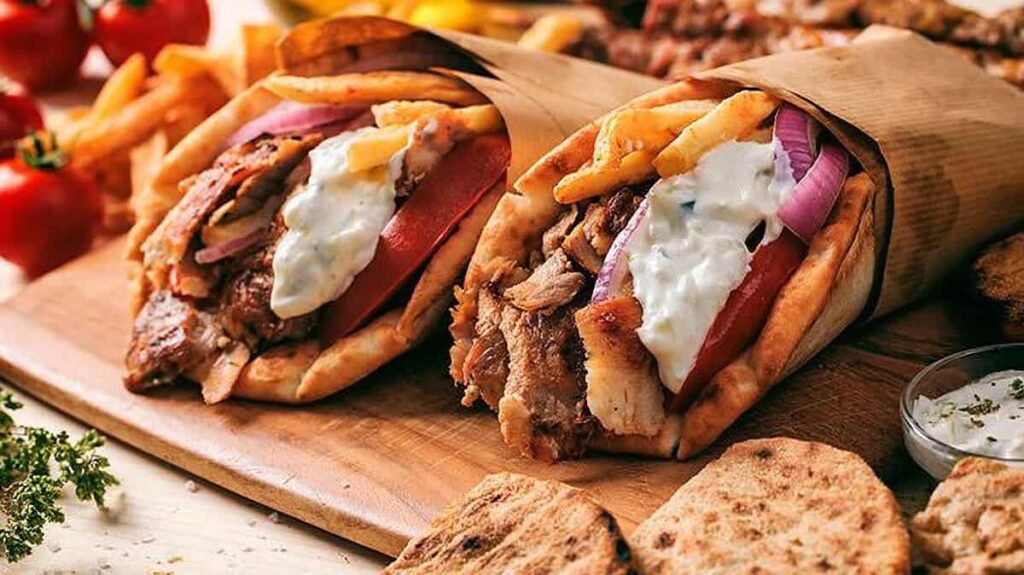
ATHENS – Traditional souvlaki, long considered Greece’s most affordable and popular street food, is rapidly becoming a costly option as rising prices hit the food service industry.
According to market data, the price of a classic souvlaki in parts of Athens now exceeds €5, while in tourist hotspots such as Santorini it can reach as high as €7.
Just a few years ago, the same staple meal typically cost around €2.50, making it a go-to choice for quick, cheap eating.
Why prices are rising
The increase reflects broader, systemic pressures across the Greek economy:
- Higher costs for raw materials such as meat, oils and vegetables
- Rising energy prices impacting production and storage
- Increased operating expenses for businesses
- Persistent inflation across the supply chain
Rather than a sudden spike, industry insiders say the change is the result of steady, cumulative increases that have now become impossible to ignore.
A blow to everyday habits
What was once a simple, affordable snack is no longer as accessible. A typical family order can now easily exceed €40, bringing the cost closer to a sit-down meal at a mid-range restaurant.
This shift is being felt more sharply than price rises in higher-end dining. When everyday staples become expensive, it directly impacts daily life—not just occasional spending.
What comes next
Industry officials warn that if energy and raw material costs continue to climb, further increases are likely.
The result: souvlaki is gradually losing its status as Greece’s quintessential “cheap food” and moving into the category of a moderately priced, but no longer everyday option.
The broader implication is clear—inflation is no longer just reflected in statistics, but in everyday habits, where even the simplest meals are no longer simple.