
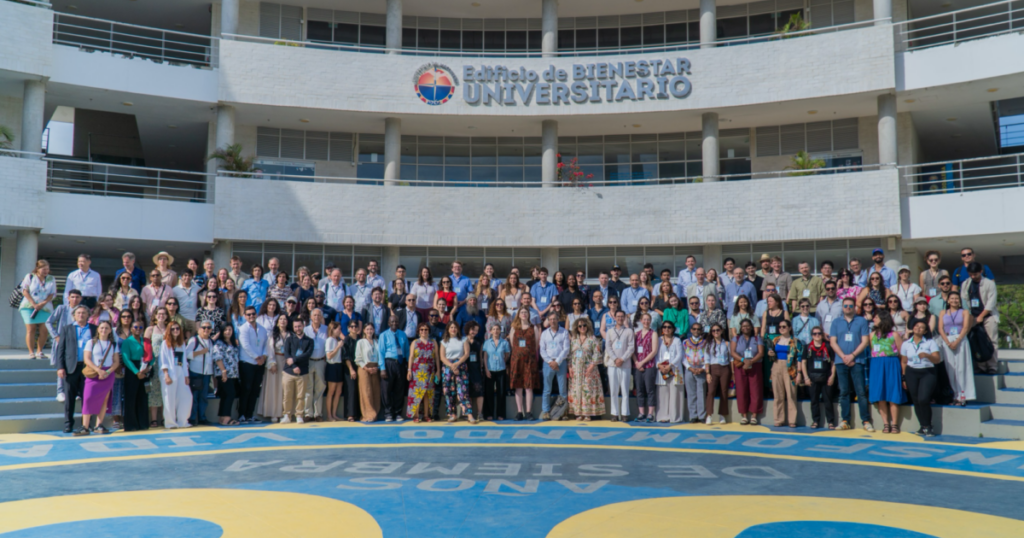
The road to Santa Marta
The Santa Marta conference has emerged in response to multiple different elements of global climate diplomacy. However, key to understanding Santa Marta is the Global Stocktake (GST). The first GST, concluded in Dubai in 2023, included an agreement across all countries to “accelerate the transition away from fossil fuels”, as part of the COP28 energy package. It is this commitment that Santa Marta was focused on.
The CAT has shown that implementing the transition away from fossil fuels, alongside action to cut methane emissions, could dramatically slow down warming almost immediately and cut 2100 warming by 0.9ºC, and would represent the biggest step forwards in climate action since the signing of Paris Agreement. Implementing the Global Stocktake is crucial for a liveable planet. We have the technical solutions – what is missing is the political will to drive implementation at the scale and pace needed.
If the process initiated at Santa Marta can catalyse greater political momentum to implement the GST energy package, it would truly represent the historic breakthrough that we need.
The Santa Marta workstreams
Participating countries have agreed to continue the conversation, including via a second conference in 2027, hosted by Ireland and Tuvalu. They also set up three key workstreams going forwards – around roadmaps, finance, and dialogue between fossil fuel importers and exporters.
New TAFF roadmaps represent a clear opportunity to turn political energy into national implementation, including by informing the next generation of NDCs and strengthening alignment with LT-LEDS as the backbone of long-term transition planning. These roadmaps need to align with the latest science around limiting overshoot of 1.5ºC, reaching net zero greenhouse gas emissions and getting temperature back below 1.5ºC well before 2100, to reduce the risk of severe and irreversible impacts. This means cutting production and use this decade, avoiding new fossil fuel lock-in, and sequencing the transition in ways that are socially and financially credible.
New roadmaps also need to tackle all fossil fuels, not just some. Further lock-in to gas remains a risk in many countries. Roadmaps also need to go beyond just phase-out dates, and address the myriad political, social, financial and institutional barriers to a rapid phase-out. Santa Marta saw the first new TAFF roadmap launched by France – more will follow. Divisions still remain within the Santa Marta attendees about how fast fossil fuels need to exit the system. With notable fossil fuel exporters like Australia, Canada and Norway among the attendees, how willing these countries really are to produce TAFF roadmaps that align with the science remains to be seen, especially given their plans to continue and even expand fossil fuel production.
Climate Analytics helped coordinate a workstream on roadmap architecture at the academic pre-conference, and will work with partners to support the development of science-aligned, ambitious and fair TAFF roadmaps.
Meanwhile, economic diversification remains an unavoidable issue. Many developing countries face high debt burdens, limited fiscal space and real dependence on fossil fuel revenues for public budgets and debt payments. The transition cannot be framed as a simple choice between ambition and delay when some countries are financially locked into fossil fuel production. There can be no transition without revenue replacement. Debt relief, concessional finance, diversification support and targeted partnerships for highly dependent countries must be part of any serious pathway forward.
Finally, Santa Marta highlighted the practical value of producer-consumer cooperation. One promising idea was coordination among major fossil fuel importers: a buyers’ coalition that sends a clear signal that future trade relationships must align with fossil fuel phase-out, economic diversification and clean energy investment. The outlines of such producer-consumer alignment remain unclear, and such cooperation would face real design challenges, including trade rules and equity concerns. But it could help shift the politics from abstract ambition to concrete incentives. Importing countries have leverage, and using that leverage responsibly could help drive a just and orderly transition. The recently agreed just transition mechanism and finance and trade discussions to be launched this year may all have a role to play in progressing this cooperation.
The role of science in guiding a fossil phase-out
Science has always been central to climate action, and Santa Marta was no different. Participants stressed that climate action must be supported by the best scientific information. Its importance was recognised by the establishment of a scientific panel on the global energy transition (SPGET), which will generate scientific evidence to support the advance of the different workstreams.
Beyond this, there was an explosion of scientific activity around the conference, including an academic pre-conference organised by scientists that aimed to inform the outcomes of the conference through a set of “12 actionable insights” on how to accelerate the transition away from fossil fuels.
It is vital that the global energy transition away from fossil fuels occurs at a rate and scale fast enough to limit peak warming to as close to 1.5ºC as possible, and enable us to reach net zero greenhouse gas emissions in the 2nd half of the century. Climate Analytics’ Highest Possible Ambition scenario demonstrates the pace of change we need – coal phased out by 2050, gas around 2060 and oil by 2070.