
Anadolu staff
04 May 2026•Update: 04 May 2026
- 2 sides sign deals on energy security, critical minerals, energy after Canberra summit
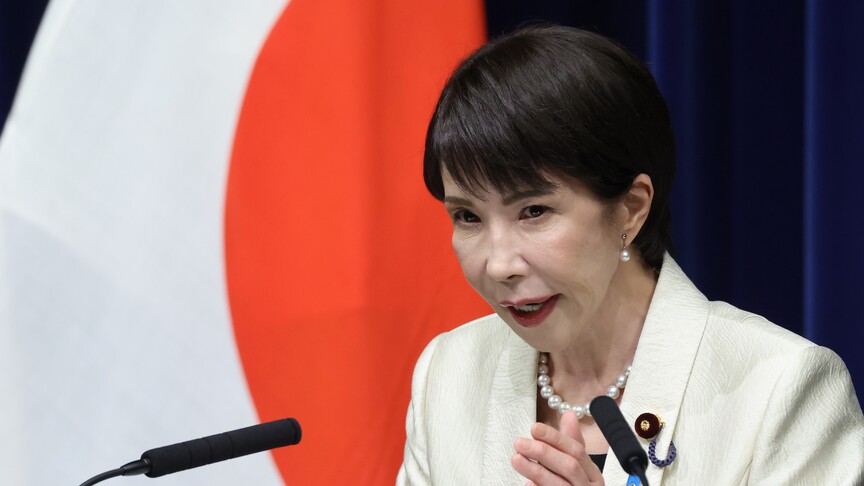
The closure of the Strait of Hormuz has been “inflicting enormous impact” on the Asia-Pacific region, Japanese Prime Minister Sanae Takaichi said Monday.
Takaichi made her comments after Japan signed agreements with Australia covering critical minerals, energy security, and defense cooperation during high-level talks with her counterpart Anthony Albanese in Canberra.
The Australian premier backed Takaichi’s statement, saying: “Today, (we are) again facing an energy shock and global instability. … Our partnership helps us secure the energy we both need,” according to an official transcript of their news conference.
“We affirmed that Japan and Australia will closely communicate with each other in responding with a sense of urgency.” said Takaichi, referring to Hormuz, which remains blocked by Iran, as well as the US.
The closure of the key waterway, through which nearly 20% of global supplies pass, has affected most of Asian nations which depend on oil supplies from the Middle East.
Takaichi arrived in Australia on Sunday for her official visit.
Canberra and Tokyo issued five outcome documents, including a joint declaration on economic security, following the summit between the two prime ministers.
“In a complex strategic environment, cooperation between Australia and Japan is essential to maintaining a peaceful, stable and prosperous region,” Albanese said in a statement.
“Enhanced defence and security cooperation between Australia and Japan increases interoperability between our defence forces, ensuring Australia and Japan can work closely together to support regional peace and security.”
Last month, Tokyo and Canberra signed a landmark $7 billion defense agreement under which Japan will supply Australia with 11 warships.
Japan and Australia “share a firm commitment to contributing to peace and stability in the region and the international community” and are “the front-runners of collaboration among like-minded partners,” Takaichi told a joint news conference on Monday, describing the ties as a “quasi-alliance.”
According to a statement from the Australian prime minister’s office, key priorities include increased information sharing, co-development, co-production and co-sustainment of defense capabilities, advanced weapons testing, enhanced training and exercises, and joint maintenance of assets.
The two sides will also collaborate on securing supply chains and critical maritime routes.
This year marks the 50th anniversary of the two nations’ basic treaty of friendship and cooperation.
Takaichi will conclude her five-day two-nation tour, which also included Vietnam, on Tuesday.