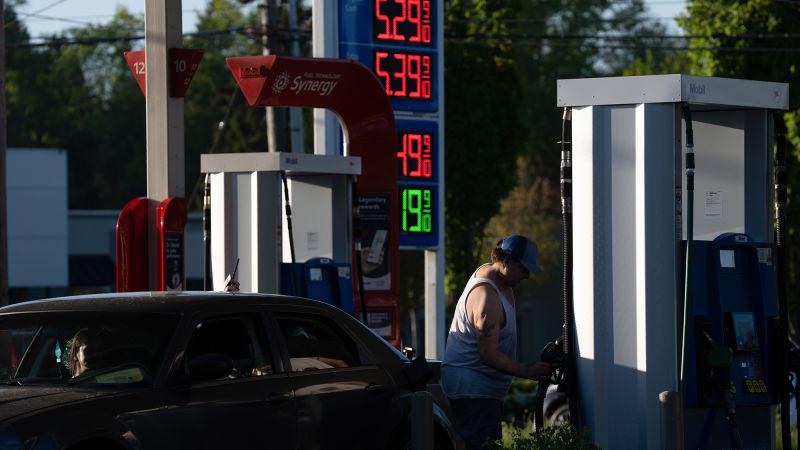
The weirdest aspect of the Iran war that has befuddled oil experts
https://edition.cnn.com/2026/05/01/business/oil-market-price-high-low-iran

The weirdest aspect of the Iran war that has befuddled oil experts
https://edition.cnn.com/2026/05/01/business/oil-market-price-high-low-iran
4 Comments
The article tries to make sense of the strangely muted reaction (so far) of the markets to the Iran war. It contrasts how the oil price rose above $120 quickly in 2022 when Russia was sanctioned and which affected about 3 million barrels of oil, yet during this crisis when around 5 TIMES that much oil has been blocked, the oil price is lower (note that these are the oil FUTURES prices mind, not the SPOT price that is already much higher, at around $150 as the article expects).
It addresses several common explanations, such as that we’re pumping more oil or that demand for oil is falling – and finds them grossly insufficient to explain this mismatch. So what is the answer? Well… –
>Oil was supposed to be at $150 by now, according to analysts’ expectations at the outset of the war. Some more aggressive forecasts predicted oil could rise even higher.
>“I would have expected prices to be above $200. It’s crazy,” said Matt Smith, lead oil analyst at Kpler. “Everyone is scratching their heads about this.”
>With just 8 million barrels of supply and 4 million barrels of demand destruction, we’re still not back to replacing the 14 million barrels per day we’ve lost because of the strait lockdown.
>So oil should be much higher. Why isn’t it?
>Speculation.
>“One thing for certain is there is a global supply crunch coming, and it’s not being fully priced in,” said Smith.
Also see this Economist round table that says the oil price rn should be anywhere from $167 to $460! if going by conventional rules of thumb calculations from the literature – [https://youtu.be/w8bvTlTMFLg?si=ESuthh94xJnn2W_4](https://youtu.be/w8bvTlTMFLg?si=ESuthh94xJnn2W_4)
There are a few reasons. The IEA report on oil for April has the data;
The oil at sea is typically 2 months demand. The closure of the strait of Hormuz will affect availability 2 months later.
The US (along with China and Japan) have released some of their strategic oil reserves.
The US strategic reserve, which has a capacity of 714 million barrels, is down to 394 (end Apr). Russia, Venezuela and Kazakhstan have shipped higher volumes (just over 1 million barrels a day – mbd).
On the flip side, the prolonged closure had led to a production drop in Iraq, Kuwait and Qatar, because there is no place to store oil. The drop in production is below the level required (Min flow rate) to operate oil wells. Restarting production from wells where production has stopped can take months.
I think prices will start increasing at a faster rate from now.
Maybe trump did have a plan after all.
One thing also not covered is the Saudi east west pipeline. It gets about 1/3 of the volume to the other side. Eases pressure a lot