
Midnight Sun Photography in Iceland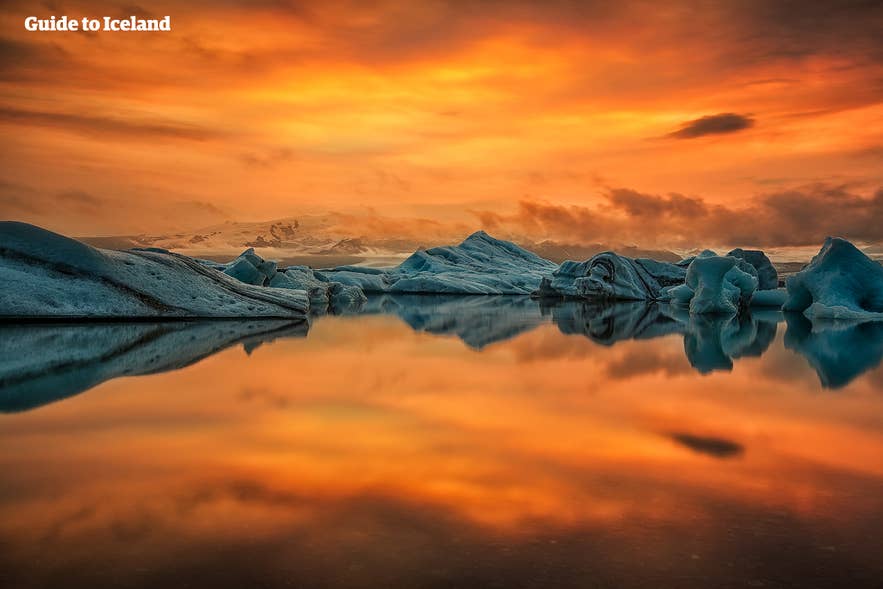
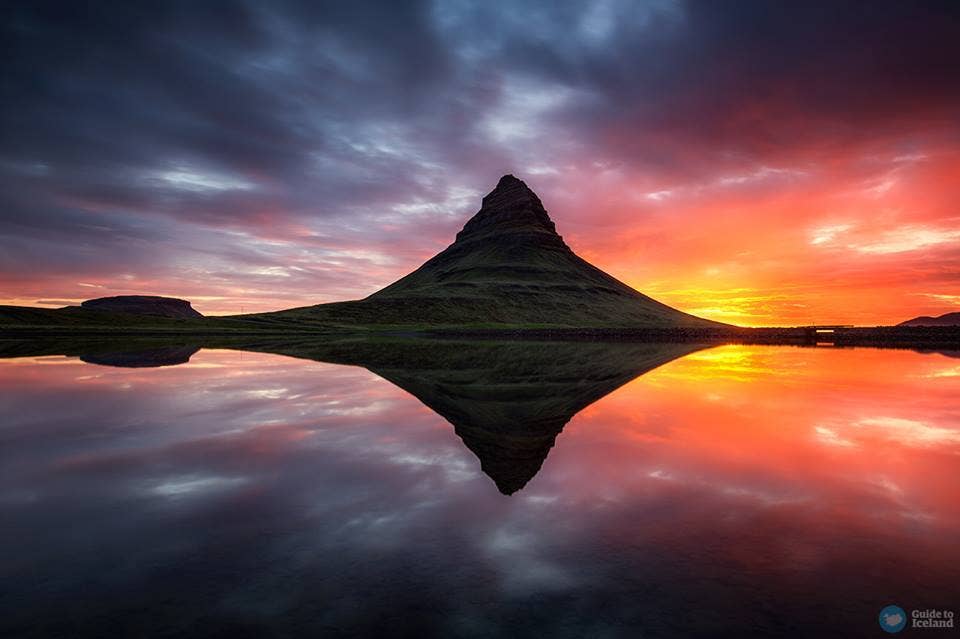
There is a perfect time for landscape photography, according to professional photographers. It’s called the “golden hour,” and it occurs during that period just before the sun sets in the evening and before it rises in the morning. Photographers call this the Golden Hour because it appears like the world is bathed in a warm, golden light.
The Golden Hour is generally considered the best time for landscape photography because the softened light accentuates natural tones, and the sky fills with beautiful pastel colors.
During the summer months, when Iceland’s midnight sun elongates the day, you get almost seven hours of Golden Hour each day. That’s a lot of photo opportunities.
Whether you’re an avid photographer or just want to get some picturesque vacation shots on your phone, thanks to the midnight sun, you’ll have plenty of amazing scenery and settings to photograph across Iceland.
Other Activities in Iceland During the Midnight Sun
If you’re looking for other festivities or events that happen during the time of the midnight sun, you’re in luck.
The Midnight Sun Run
The Midnight Sun Run occurs yearly in June in the Laugardalur valley. This is a once-in-a-lifetime opportunity to run through the night while still bathed in sunlight. You can choose to partake in a 5-kilometer or a 10-kilometer run or dare go for a half marathon.
Swimming Pools and Hot Springs under Iceland’s Midnight Sun
For visitors who would rather enjoy some quiet and relaxation in nature, experiencing the beauty of Iceland during the midnight sun is much easier. Head to one of the many geothermal swimming pools or hot springs to take a dip at any time of day.
Why Does Iceland Experience the Midnight Sun?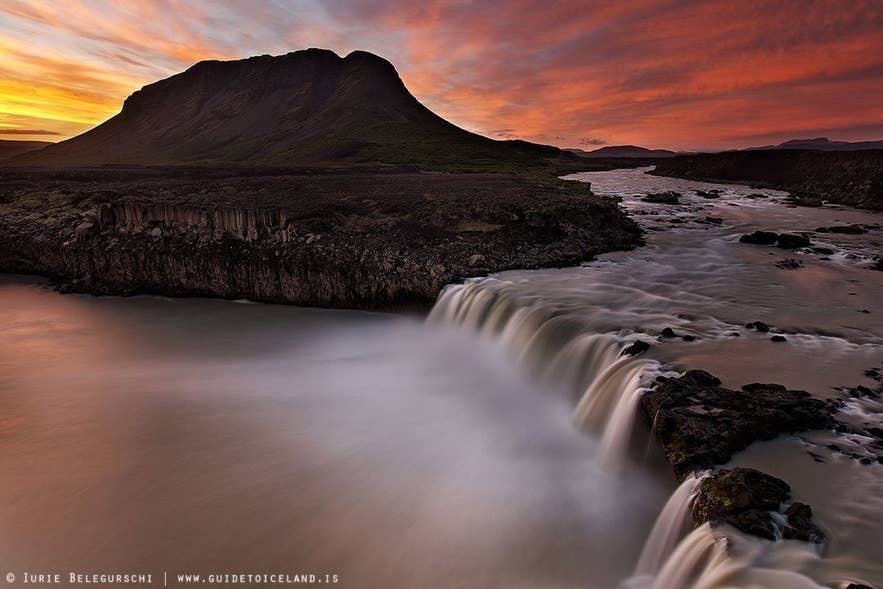
The further north or south you go on the planet, the more daylight is affected by summer and winter solstices. If you’re wondering how many hours of daylight in Iceland, it varies greatly throughout the year, from almost 24 hours during the summer to just a few hours during the winter.
Summer Solstice in Iceland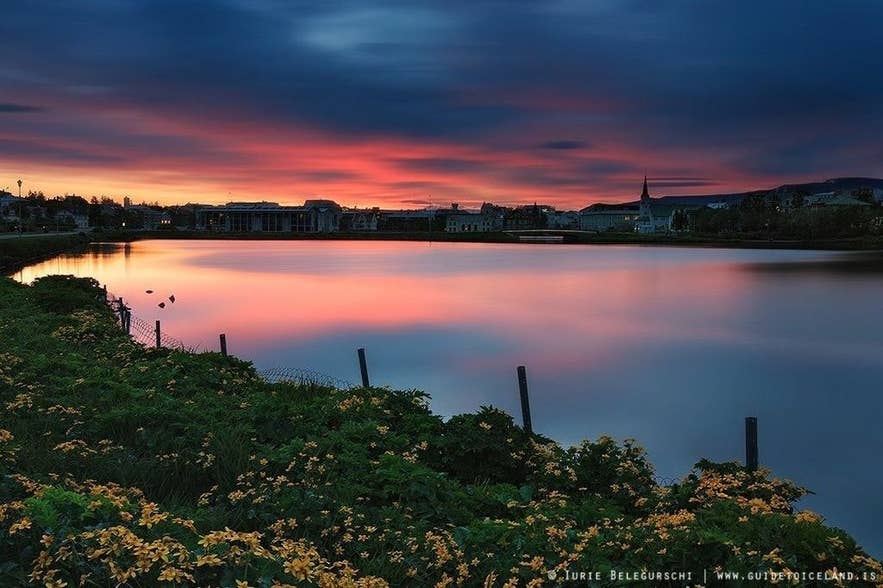
Iceland’s longest day of the year (the summer solstice) is around June 21.
On that day in Reykjavik, the sun sets just after midnight and rises again right before 3 a.m., with the sky never going completely dark.
For historical reasons, the summer solstice is usually celebrated in Iceland on Jonsmessunott on June 24, or the Nativity of John the Baptist. A lot of folklore tales are associated with that night, among them the belief that cows can talk and that rolling around naked in the morning dew can cure ailments.
The further north you go in the country—such as to Akureyri or Isafjordur—the longer you’ll find the days.
The effect makes experiencing time in Iceland a unique concept, unlike most places.
Winter Solstice in Iceland
 The year’s shortest day (the winter solstice) is around December 21.
The further north you go, the shorter the day. This means that you’ll experience different times for sunrise and sunset depending on where you are in Iceland.
You can’t see the sun at all for around two months in the town of Isafjordur in the Westfjords of Iceland. Tall mountains surround the town, and it’s situated so far north in the country that the sun doesn’t rise high enough for its beams to reach over the mountaintops in wintertime.
It’s a well-known tradition that the people in Isafjorour celebrate the first day they see the sun after two months of darkness by baking pancakes and having “sun coffee.”
The absence of sunlight is not nearly as drastic in Reykjavik, which is not surrounded by mountains and is in the country’s south. During the height of winter in Reykjavik, sunrise is around 11:30 AM and the sunset is around 3:30 PM.
Between the shortest and longest days of the year, the days grow or shorten by a few seconds up to several minutes per day.
An equinox occurs twice a year, around March 21 and September 21, when there’s roughly an equal amount of daylight and darkness.
Daylight Hours in Iceland by Month
 Iceland’s hours of daylight vary throughout the year. If you’re wondering when you can catch the midnight sun or a chance at the equally impressive northern lights, we’ve broken down the daylight hours month by month in Iceland.
Iceland Daylight Hours in January
With only a few hours of daylight, Iceland in January is defined by long nights and a strong winter atmosphere.
-
Sunrise: Around 11:00 AM
-
Sunset: Around 3:30 PM
-
Daylight hours: ~4 to 5 hours
-
What it means: Best for northern lights, ice caves, glacier hikes, and full winter experiences
Iceland Daylight Hours in February
Daylight slowly returns in Iceland during February, giving travelers more time to explore while still enjoying winter conditions.
-
Sunrise: Around 10:00 AM
-
Sunset: Around 5:30 PM
-
Daylight hours: ~7 to 8 hours
-
What it means: Great for winter road trips, frozen waterfalls, and aurora viewing
Iceland Daylight Hours in March
As Iceland moves into March, daylight becomes more balanced, making travel easier and more flexible.
-
Sunrise: Around 8:30 AM
-
Sunset: Around 7:00 PM
-
Daylight hours: ~10 to 11 hours
-
What it means: Ideal for self-drive tours, Golden Circle trips, and late-season northern lights
Iceland Daylight Hours in April
Longer days take hold across Iceland in April, opening up more time for road trips and outdoor exploration.
-
Sunrise: Around 6:45 AM
-
Sunset: Around 8:30 PM
-
Daylight hours: ~13 to 14 hours
-
What it means: Good for hiking, geothermal pools, and early puffin sightings
Iceland Daylight Hours in May
By May, Iceland experiences near-continuous daylight, especially later in the month.
-
Sunrise: Around 4:45 AM
-
Sunset: Around 10:15 PM
-
Daylight hours: ~18 hours
-
What it means: Perfect for road trips, South Coast travel, and extended sightseeing
Iceland Daylight Hours in June
The peak of the midnight sun arrives in Iceland during June, with almost no darkness at night.
-
Sunrise: 24-hour daylight
-
Sunset: 24-hour daylight
-
Daylight hours: ~24 hours
-
What it means: Best for midnight hikes, photography, and nonstop exploration
Iceland Daylight Hours in July
Iceland in July continues to enjoy near-constant daylight, making it one of the easiest months to travel.
-
Sunrise: 24-hour daylight
-
Sunset: 24-hour daylight
-
Daylight hours: ~24 hours
-
What it means: Ideal for camping, whale watching, and full Ring Road trips
Iceland Daylight Hours in August
Although daylight begins to decrease, Iceland still enjoys long, bright days throughout August.
Iceland Daylight Hours in September
In September, Iceland returns to more equal day and night hours, with darker evenings reappearing.
-
Sunrise: Around 6:15 AM
-
Sunset: Around 8:15 PM
-
Daylight hours: ~12 to 13 hours
-
What it means: Great for northern lights, autumn scenery, and fewer crowds
Iceland Daylight Hours in October
Shorter days define Iceland in October, as the country transitions fully into autumn.
-
Sunrise: Around 8:00 AM
-
Sunset: Around 6:00 PM
-
Daylight hours: ~9 to 10 hours
-
What it means: Ideal for hot springs, autumn landscapes, and aurora hunting
Iceland Daylight hours in November
Darkness becomes more prominent across Iceland in November, with limited daylight hours.
-
Sunrise: Around 9:45 AM
-
Sunset: Around 4:30 PM
-
Daylight hours: ~6 to 7 hours
-
What it means: Quiet travel season with strong northern lights and winter experiences
Iceland Daylight Hours in December
The shortest days of the year occur in Iceland during December, creating a full winter experience.
-
Sunrise: Around 11:00 AM
-
Sunset: Around 3:30 PM
-
Daylight hours: ~4 to 5 hours
-
What it means: Best for Christmas atmosphere, ice caves, and peak aurora conditions
Daylight Changes Throughout the Month in Iceland
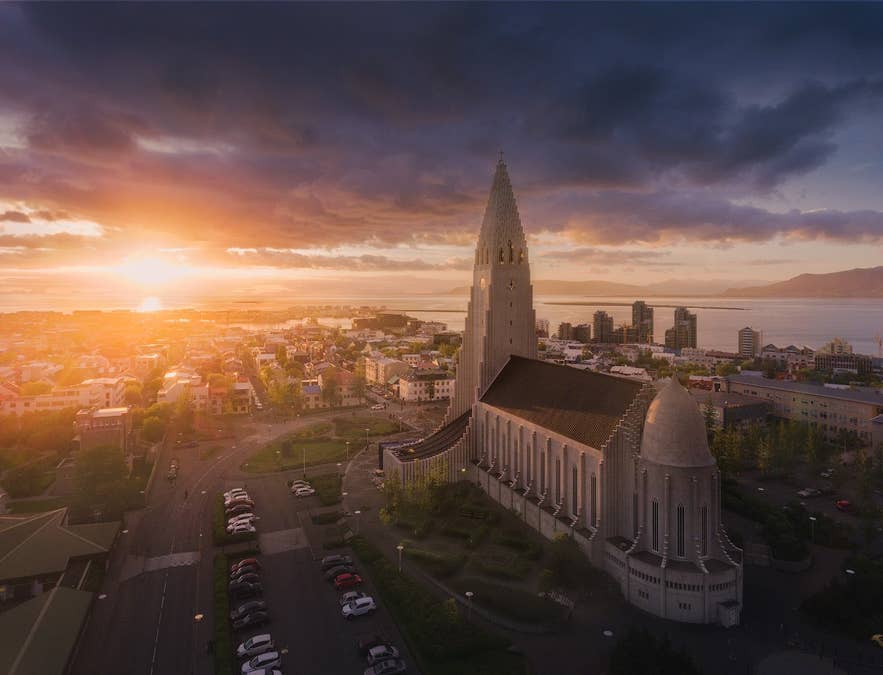
It’s worthwhile noting that there can be a drastic difference from the beginning of the month to the end. Icelands’ sunlight hours will also depend on which location you plan to visit.
Technically speaking, the midnight sun only occurs in Reykjavik between June 16 and 29 since these are the only days of the year when the sun sets after midnight.
But if you consider that the sunrise will only be a couple of hours later, you’ll realize that even though the sun isn’t up, it’s still bright. Indeed, it only dips marginally below the horizon during the civil twilight hours.
The bright nights last for around three months (one-and-a-half months before and after June 21).
So, while the height of Iceland’s midnight sun is in the last two weeks of June, you’ll also get to experience it if you visit Iceland in May, early June, July, or early August.
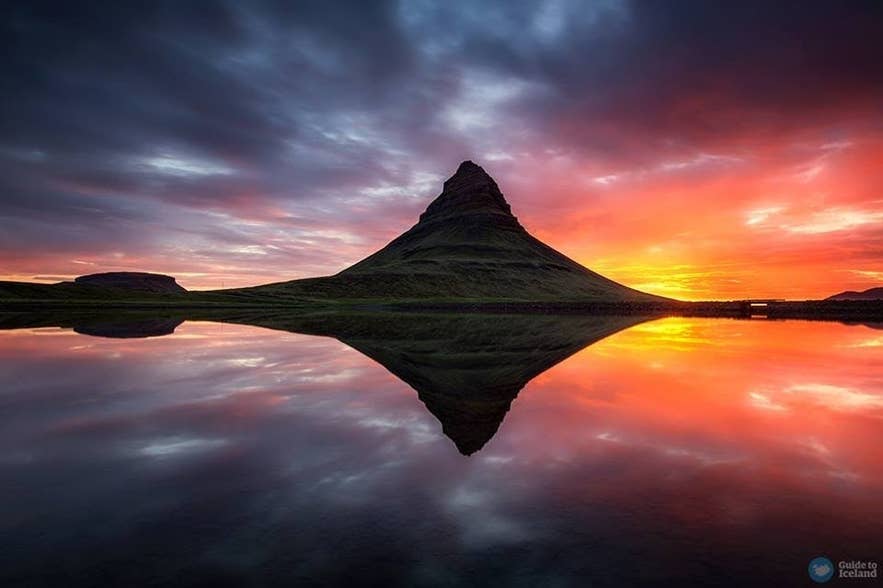
The slow sunsets and sunrises make for incredibly picturesque displays of colorful twilight skies that last for hours.
A couple of hours per night can get quite dark at the beginning of August, though not more than dusk.
Towards the end of August or the beginning of September, there will be a couple of hours of pitch-black night, so the northern lights will start appearing in the sky.
Late August or early September is the perfect time of year to experience the long days and milder weather, but still with a few hours of darkness during the night to catch some auroras dancing in the sky.
If you’re looking for a place to visit during the summertime where you can get more hours out of the day (without impacting the crazy nightlife), Iceland is the place to go.
How to Sleep in Iceland When It’s Always Bright Outside?
Naturally, many people find the concept of the midnight sun incomprehensible and can’t imagine how to get any sleep during Iceland’s summer daylight hours.
If you must sleep in total darkness, do not despair! Thankfully, there’s a clever invention called “curtains” that Icelanders utilize throughout their homes.
You can even use blackout curtains to eradicate any hint of sunlight, the curtains of choice for vampires everywhere!
You can also purchase some eye masks to wear while sleeping. It will guarantee to make it dark for your eyes, no matter how bright the room is.
Another common question is: “Isn’t it weird for it to be bright all night long?”
Well, the short answer to that is yes; after experiencing such a dark winter, the endless days of daylight hours in Iceland do make a striking difference. The long days become part of your daily life, feeding your energy with 24/7 light.
It’s great for sightseeing too! No more worrying about time restraints, needing to get somewhere, or getting home or getting to bed “before it gets dark.”
With endless days come endless possibilities for activities, events, get-togethers, and exploration.
Is the midnight sun one of your must-sees for your trip to Iceland? Or maybe you’ve already seen Iceland’s midnight sun? Was it one of the reasons you chose to visit Iceland in the summer months?