
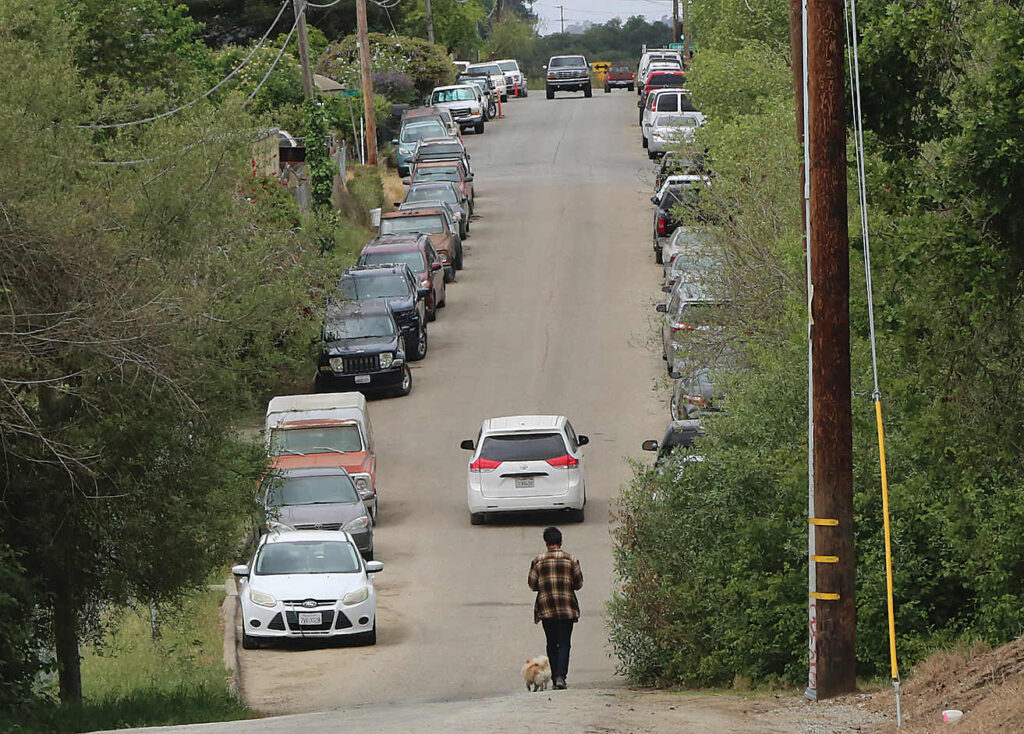
 Minto Road leading to the site of the proposed BESS facility is shown. (Tarmo Hannula/Pajaronian file)
New Leaf Energy will bypass Santa Cruz County’s permitting process and instead seek state approval for its proposed battery energy storage system near Watsonville, a move county officials long anticipated as local regulations tightened.
In a May 1 letter to County Executive Officer Nicole Coburn, the company said it will withdraw its application for the Seahawk project at 90 Minto Road and pursue the California Energy Commission’s “opt-in” permitting process under Assembly Bill 205.
The decision follows months of friction between the company and county leaders over a proposed ordinance regulating large-scale battery energy storage systems (BESS) in unincorporated areas.
New Leaf had previously supported a draft version of the ordinance, calling it among the strongest in the nation. But amendments added by the Board of Supervisors in January created “significant commercial risks” and uncertainty that made the local process “unviable,” according to Max Christian, a senior project developer for the company.
In particular, a requirement that future ownership transfers receive additional approval from the Board of Supervisors would complicate financing and delay procurement timelines needed to meet deadlines set by the California Independent System Operator, Christian wrote.
“Those amendments … created too much timing and commercial risk for Seahawk to be able to meet the CAISO’s March 2027 commercial viability deadline,” he said.
Instead, New Leaf will apply to the CEC in early summer, citing a more predictable review process with defined timelines that would allow the company to move forward with engineering and equipment procurement.
The move was foreshadowed in April, when the company submitted a pre-application to the CEC while continuing to work with the county on a local ordinance.
County officials said the shift was not a surprise.
“Given that New Leaf has been meeting with the state, this development is not unexpected,” county spokesperson Tiffany Martinez said in a statement. “While the project may move forward under state jurisdiction, the County’s expectations remain unchanged.”
The county emphasized that environmental review will still be required under the state process and said it expects local priorities—including protections for agricultural land, safety setbacks, emergency response planning and long-term site restoration—to be incorporated.
The proposed Seahawk facility has drawn scrutiny since it was introduced in 2025, particularly in the wake of a high-profile fire at a Vistra battery storage facility in Moss Landing that burned for days and raised concerns about toxic emissions.
New Leaf has said its project would use newer technology that does not rely on the same materials implicated in that fire.
In his letter, Christian said the company expects the CEC to incorporate elements of the county’s draft ordinance into its review, providing a degree of local control through the state process. He also said New Leaf will continue working with the county, including negotiating a community benefits agreement.
The company began public outreach in late 2024, meeting with local fire agencies, civic groups and elected officials, and hosting community meetings in Watsonville.
Despite the shift to state oversight, New Leaf said it remains committed to what it described as a “safe and thoroughly vetted project” that would improve grid reliability, lower energy costs and support climate goals.
The CEC process will include a full environmental review, consultation with battery safety experts, coordination with local fire agencies and public input meetings, the company said.
For county leaders, the key question now is how much influence local officials will retain as the project moves into state hands.