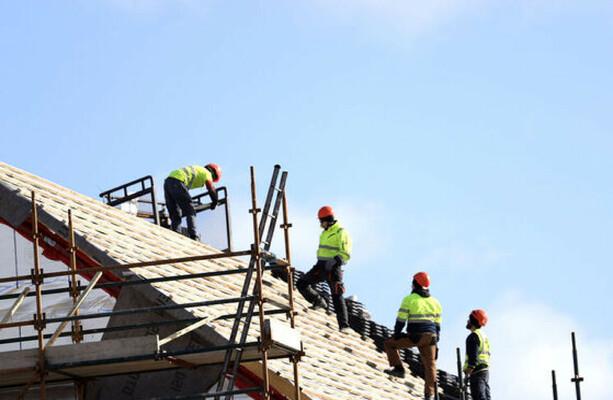
The housing crisis: Like wildfire, we need to abandon the delusion it’ll burn itself out
https://www.thejournal.ie/readme/kelly-earley-housing-crisis-fix-7031226-May2026/
Posted by grandecn

The housing crisis: Like wildfire, we need to abandon the delusion it’ll burn itself out
https://www.thejournal.ie/readme/kelly-earley-housing-crisis-fix-7031226-May2026/
Posted by grandecn
20 Comments
> Like wildfire, we need to abandon the delusion it’ll burn itself out
What the fuck? That’s exactly what it does, just because idiots built their houses in the path doesn’t change that fact
Really impressive article. Always good to remind people that a decade of excuses & half arsed policy measures are what has led us to the mess we see today.
No one thinks it’s going to resolve itself. We know it’s government policy to exacerbate the housing crisis.
Anybody remember why did the government refused help from Google to build apartments some years back?
>In just two years, from 1927 to 1929, [the ESB] managed to hire and deploy 829 workers. Many of these individuals would have required specialist knowledge and skills to take on the massive task of bringing electricity to the entire country (another significant achievement, given that education was far less accessible back then than it is today). To make great strides for future generations, Ireland’s housing ambitions have to be as lofty as those of ESB.
It’s a nice analogy until you realise the rural electrification scheme was started twenty years after the ESB was founded, and took twenty more years before it was completed.
Creating yet another state agency is easy. Actually completing the work is the tough part.
I actually thnk prefab or modular construction of homes could be part of the solution.
I think it’s a temporary problem anyway.
AI will cause job losses in a few years. Fewer people will be coming here for work. Higher unemployment.
A new company just shuffles the same workers around. We need more workers, and we need to stop putting obstacles in the way of building, particularly in the city centres.
A ‘HSE for Housing’ will surely solve everything.
The rental market for housing is the new modern day serf, many are tied into a cyclical pattern of giving the largest portion of their wage to the landlord while housing around them continues to grow farther and farther away from the working class.
We already have growing divide between rich and poor, the landlord and the renter, it’s easy blame the individual landlord here especially when the government fed into that narrative but this issue is systemic
Greed has taken hold and as long as the voter sees their property increase they appear to ignore everything else around them mentioned in the article.
Anything that’s presented as “the ONLY solution” is always always always the writers pet ideology which they would want no matter what the problem is.
Its not a wildfire and the government aren’t hoping it’ll just burn itself out, they’re throwing fuel onto it because they need property prices high. They are stimulating demand with grants while limiting supply with regulation and bureaucracy.
Does the state construction company also have to jump through every badger survey, bat survey, archaeological survey, drainage survey, planning quibble, zoning restriction, local need requirement, materials regulations, legal challenges, insurance etc etc?
Going back and looking at what councils built fifty or a hundred years ago is grand, but the fact is that none of those units would be considered liveable today and it costs huge sums of money to bring them up to the modern standard.
Where do the builders come from? the article just waves this away with “oh a hundred years ago we hired 800 people to start the ESB so obviously we can create a state construction company” laughable argument.
Go ahead and start your state construction company, within 20 years you’ll be bitching and moaning about the shit quality they put out inexplicably at greater cost than private developments and they’ll have been given a bunch of special privileges to build in certain areas etc. It will always be nice high paid jobs for the boys though being middle management.
The concept of trading participation for surety you wont be evicted as to why people would flock to work for this state company is ludicrous. The author estimates a decade of public service(or roughly the normal time post leaving college to become a first time buyer) but fails to grasp that the people who have the skills needed arent the same people as those who will be needing public homes. Not to mention that it will be on public pay scales which are rigid and below private sector salary especially for highly in demand skills like those needed for construction.
The clear disconnect between it being super easy to get workers for any project in the 1920’s- 1980s cos the country was an utter basket case where any job was a massive win and now where we’ve far more jobs than skilled workers is blinding but goes completely over the authors head.
There is no housing crisis for most people. That is the reality.
The current housing crises is by design, it’s govt policy, it’s going exactly as planned, very successful.
it’s not going to burn itself out because the govt keeps adding fuel to the fire.
People basically voted the same shower of cunts in, that have put us in this situation in the first place.
Absolutely insane idea, maybe we stop voting those people in.
Why would it burn itself out when our politicians are among the biggest beneficiaries of the current situation.
A government-implemented [Job Guarantee](https://www.jobguarantee.org/), initially to build houses, 100% public, no public private partnerships.
Why do they allow people write this sort of flawed rubbish?
>The money extracted from renters in Ireland to line the pockets of landlords could be softening the cost-of-living crisis and countering the impact of rising fuel costs.
A significant chunk of rent ends up being paid in tax to the State. Is the implication here that landlords don’t pay tax? Or is there a misconception about who is spending the money? Is it a weird point about HAP?
>According to Threshold, short-term lets outnumber long-term rentals by 4:1. There are innumerable regulatory levers that could resolve this issue quickly, but there has been no rush to address our housing emergency. Fine Gael and Fianna Fáil have sat on their hands, letting even the most palatable of policy options pass by.
According to the census, approximately 500,000 households rent. That would mean there are 2 million short-term lets in Ireland.
What she seems to be doing is confusing the number advertised on one website with the number of people renting.
>Simultaneously, the number of children in emergency accommodation continues to climb, while the country’s Gaeltacht regions are being gutted by short-term lets.
Nothing to do with the lack of jobs and the fact that most people don’t want to live in a village in the arse end of Connacht.
>The only real way out of the housing crisis is through the introduction of a state construction company and the reinvigoration of public housing in Ireland. It’s an ambitious idea, but it is not impossible.
Oh good, the HSE for Housing again.
>Often, we see the concept of a state construction company shot down by concerns about hiring and mobilising a large workforce. Again, in the 1920s, when Ireland’s economy was nowhere near as strong as it is today, we managed to set up the ESB. The ESB came after 40 years of inefficient, disconnected and expensive attempts to introduce electricity to the island in a substantial way, when people were still manually churning their butter and using oil lamps to illuminate their homes.
40 years before 1929 was 1889. Ireland wasn’t free then and the British had only opened up the first electric power plant in London in 1882. Rural electrification was completed in the 1970s.
>In just two years, from 1927 to 1929, the Board managed to hire and deploy 829 workers. Many of these individuals would have required specialist knowledge and skills to take on the massive task of bringing electricity to the entire country (another significant achievement, given that education was far less accessible back then than it is today). To make great strides for future generations, Ireland’s housing ambitions have to be as lofty as those of ESB.
Hiring less than 1,000 people is not an achievement.
>If anything, a state construction company could keep costs under control, rather than exposing us to exploitative tender processes that extract wealth from the state. By cultivating more stringent state expertise and oversight, we can end the era of exorbitant public spending on bike shelters and children’s hospitals.
This is circular reasoning with a barrel full of assumptions. What evidence is there of overspending on public building? Furthermore, merely saying that we should become better at building to become better at building doesn’t actually make that happen.
>If the building needs of the country were centralised within a state building company, the government would have far greater bargaining power when it comes to buying materials, as it would buy its supplies in larger quantities. With a state construction company, there are also huge incentives for participation.
That’s hilariously naive. Massive abuse of a monopoly position would be wildly illegal under Irish and EU law.
>Who wouldn’t trade a decade of public service (either through construction itself, or in the logistical coordination done behind the scenes), in order to ensure they are safe from the threat of eviction in the long-term? As local councils face backlash for the introduction of rent hikes, an increased supply of public housing represents a greater opportunity to increase revenue than squeezing existing tenants more tightly.
Is the implication here that people will have to work for the State to be housed by it? That’s a bit mental.
>If we can genuinely indulge frivolous ideas, like the proposed introduction of €29 million moving sculptures, there is no reason why the public cannot push the mass development of public housing onto the government’s agenda. It’s the only way out of this crisis.
A private company spending €29 million has nothing to do with public spending on housing. Assuming €1 million would get you 3 houses (albeit construction costs have gone up since), that’s 87 houses worth of money. That’s a drop in the ocean.
Ultimately this is just more populist rubbish based on wishful thinking without any cogent analysis of building costs, funding, labour supply, etc. All of which are what actually affect housing supply.
The idea that a public company could simply generate more houses just because is just magical thinking.
The Churnal A.I. slop…
I really want someone to find the first time the government said “the housing crisis can’t be solved overnight”
I wonder if Irish politicians see declining birth rates and think that means the housing crisis will be solved by a shrinking population. It won’t. First, kids live at home. An older population needs more housing per capita. Second, Ireland’s population will keep getting bigger – our older generations are smaller due to emigration. Those born in the late 70s and 80s have stuck around in more numbers so our older populations will keep growing.
Our population will peak under current trends in the 2060s. And it will be back to current levels by 2100 – but they’ll need more housing because they’ll be older. We need to build more houses – or more aggressively convert office space to residential space.