
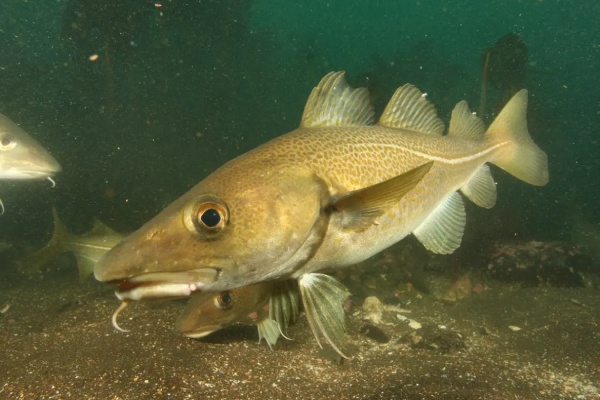
Haddock stock levels increased between 2016 and 2023 and, despite a decline over the past two years, remain above the long-term average.
The abundance index for smaller haddock of 25 cm or less increased and is now the fourth highest recorded since 1985. Larger haddock, between 61 and 80 cm, showed increased capelin presence in stomach contents compared to last year, while levels remained similar for smaller fish. Capelin was most commonly observed in haddock from Faxaflói Bay and Breiðafjörður.
Saithe & Wolffish Decline While Other Stocks Strengthen
The saithe stock index declined to levels comparable with the period from 2009 to 2011. The wolffish stock index has also decreased over the past three years and is now at its lowest level since 2013.
By contrast, several other species showed stronger indicators. Stock indices for tusk, blue ling and ling are among the highest recorded since the survey began. Abundance indices for younger size classes of these species are also at historically high levels.
Redfish trends were mixed, with overall stock levels stable but a notable increase in smaller fish measuring between 4 and 11 cm. This is the highest level recorded since 1993.
Full Results to Inform Upcoming Fisheries Advice
Further results from the survey are available through Iceland’s Marine and Freshwater Research Institute.
Key findings will be presented alongside fisheries advice for the next fishing year on 12 June 2026.
The survey remains a central component of Iceland’s fisheries management system, providing long-term data used to inform quota decisions and stock assessments across the fishing industry.