
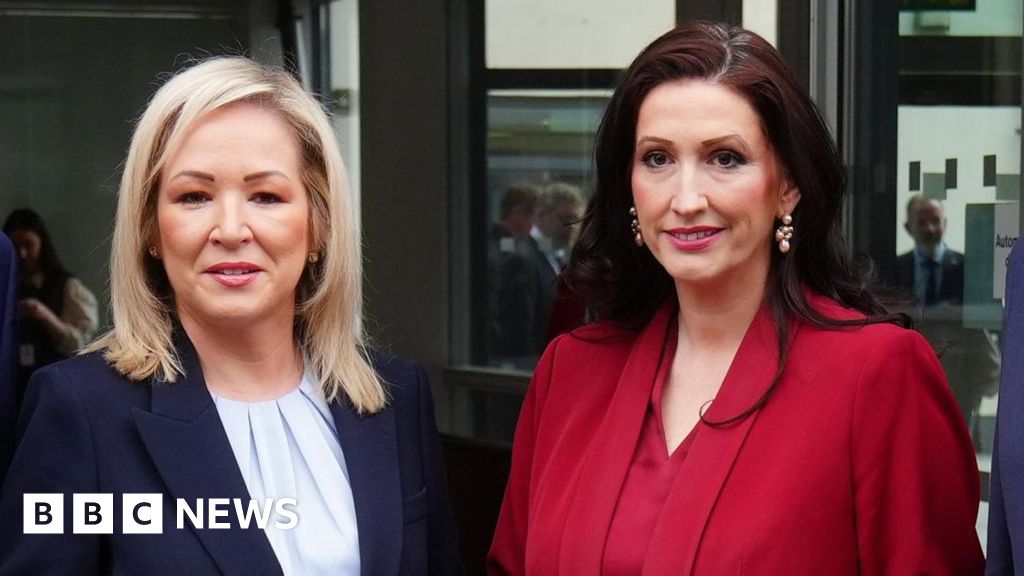
Historic local election results across Great Britain have ignited profound constitutional debates among Northern Ireland’s political leadership. Sinn Féin First Minister Michelle O’Neill has declared the results a seismic mandate for change, while unionist leaders vehemently dispute the implications.
The immediate stakes involve the very structural integrity of the United Kingdom right now. With the Scottish National Party (SNP) securing victories in Scotland and Plaid Cymru advancing in Wales, pro-independence parties are asserting unprecedented dominance. For the 1.9 million residents of Northern Ireland, these electoral shifts across the Irish Sea exacerbate existing tensions, threatening to destabilize the fragile power-sharing architecture at Stormont and accelerating demands for constitutional referendums.
The Numbers Behind the Shift
The electoral arithmetic reveals a dramatic restructuring of British politics. The collapse of traditional Conservative and Labour strongholds in favor of regional, pro-independence entities demonstrates deep-seated voter frustration. In Northern Ireland, Michelle O’Neill interprets this data as a definitive rejection of Westminster’s authority, arguing that voters are fundamentally “tired of the shackles” of centralized governance.
Conversely, Deputy First Minister Emma Little-Pengelly of the Democratic Unionist Party (DUP) reads the statistics differently. She attributes the shifting vote shares to intense frustration with the slow pace of economic delivery and crumbling public services, dismissing any correlation with a desire for constitutional severance. This polarization in data interpretation paralyzes collaborative governance, as every policy debate is viewed through the lens of ultimate sovereignty.
- Electoral Milestones: Pro-independence parties lead in Scotland (SNP) and Wales (Plaid Cymru).
- Sinn Féin Stance: Interprets results as a mandate for national self-determination.
- DUP Stance: Attributes results to economic frustration, denying constitutional implications.
- Geopolitical Impact: Accelerates the dialogue regarding a potential border poll in Ireland.
The Human Impact in a Divided Society
The constitutional rhetoric dominating the headlines masks the severe daily realities faced by citizens. Northern Ireland currently suffers from deeply strained public infrastructure, with healthcare waiting lists among the worst in Europe. A patient in Belfast waiting years for a routine consultation gains nothing from abstract debates about constitutional alignment.
The relentless focus on the “border question” diverts crucial legislative energy away from urgent socioeconomic crises. Community workers warn that the escalating political rhetoric deepens sectarian divides, alienating a younger generation that prioritizes economic opportunity and mental health resources over historical territorial disputes.
The Global Parallels
The fracturing of the United Kingdom’s political consensus mirrors global trends of regionalism and the rejection of centralized authority. In Spain, the ongoing tensions with Catalonia highlight the immense difficulties of managing strong regional identities within a unitary state structure. These conflicts demonstrate that without significant devolution of power and economic resources, regional dissatisfaction inevitably morphs into separatist movements.
For observers in Nairobi, the dynamics of devolution hold particular relevance. Kenya’s implementation of a devolved county government system was explicitly designed to mitigate the exact type of centralized marginalization currently driving the UK’s political crisis. The ongoing struggles in Great Britain serve as a powerful validation of the necessity of equitable resource distribution and robust local governance to maintain national cohesion.
The Regulatory Tightrope
The Good Friday Agreement provides the regulatory framework for Northern Ireland’s constitutional future, specifically outlining the mechanism for a border poll. However, the authority to call such a referendum rests exclusively with the Secretary of State for Northern Ireland, creating a profound democratic bottleneck. As nationalist sentiment grows regionally, the refusal to grant a referendum becomes increasingly difficult to justify legally and morally.
Politicians must navigate this volatile environment with extreme caution. The establishment of cross-border infrastructure projects, such as the newly announced tri-mode Enterprise rail fleet connecting Belfast and Dublin, illustrates the practical integration occurring independently of the constitutional debate. Economics is quietly eroding the borders that politicians loudly defend.
As the political tectonic plates of the UK continue to shift, the leaders in Stormont stand on increasingly unstable ground. The implications for the Union are staggering, and what emerges next could reshape the map of Europe.