
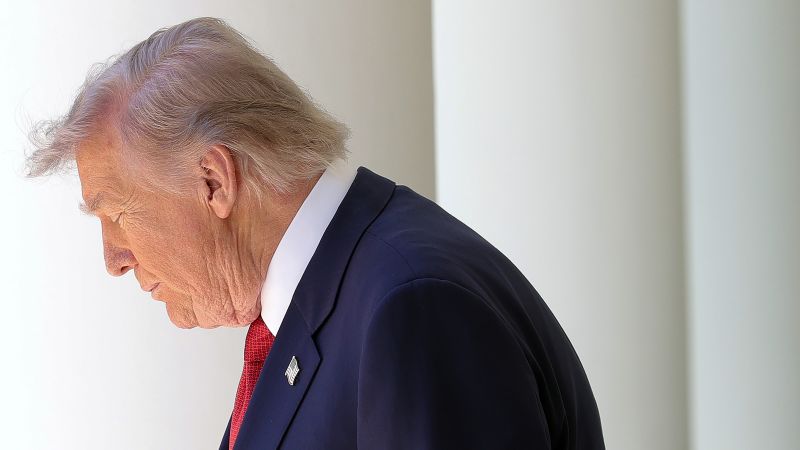
Like Lucy with the football, President Donald Trump keeps teasing that a deal to end the war with Iran is nearly over.
It’s one of a series of Iran talking points he has been repeating for months.
The war itself has changed — evolving from one of shock and awe to a monthlong ceasefire in which each side has imposed a costly blockade on the other.
But Trump’s talking points have stayed the same. The ideas he repeats include the key points that the US is in charge; Iran’s military is devastated; and things are going to be over pretty soon.
All this makes it very difficult to know how seriously to take his assurances about the proximity of a deal.
The White House messaging on the war has been ineffective, if dour polling is to be believed, but Trump’s own adherence to his script has been unshakeable.
“It’ll be over quickly,” Trump said during a tele-rally for a Republican candidate in Georgia this week.
“I think it’s got a very good chance of ending, and if it doesn’t end, we have to go back to bombing the hell out of them,” he told PBS earlier in the week.
It’s a tease he has employed over and over again since the US and Israel first attacked Iran.
“Very soon,” he told reporters on March 9.
The specific timeframe has slipped from the four to six weeks Trump projected early in the campaign, but it has always remained just off in the distance.
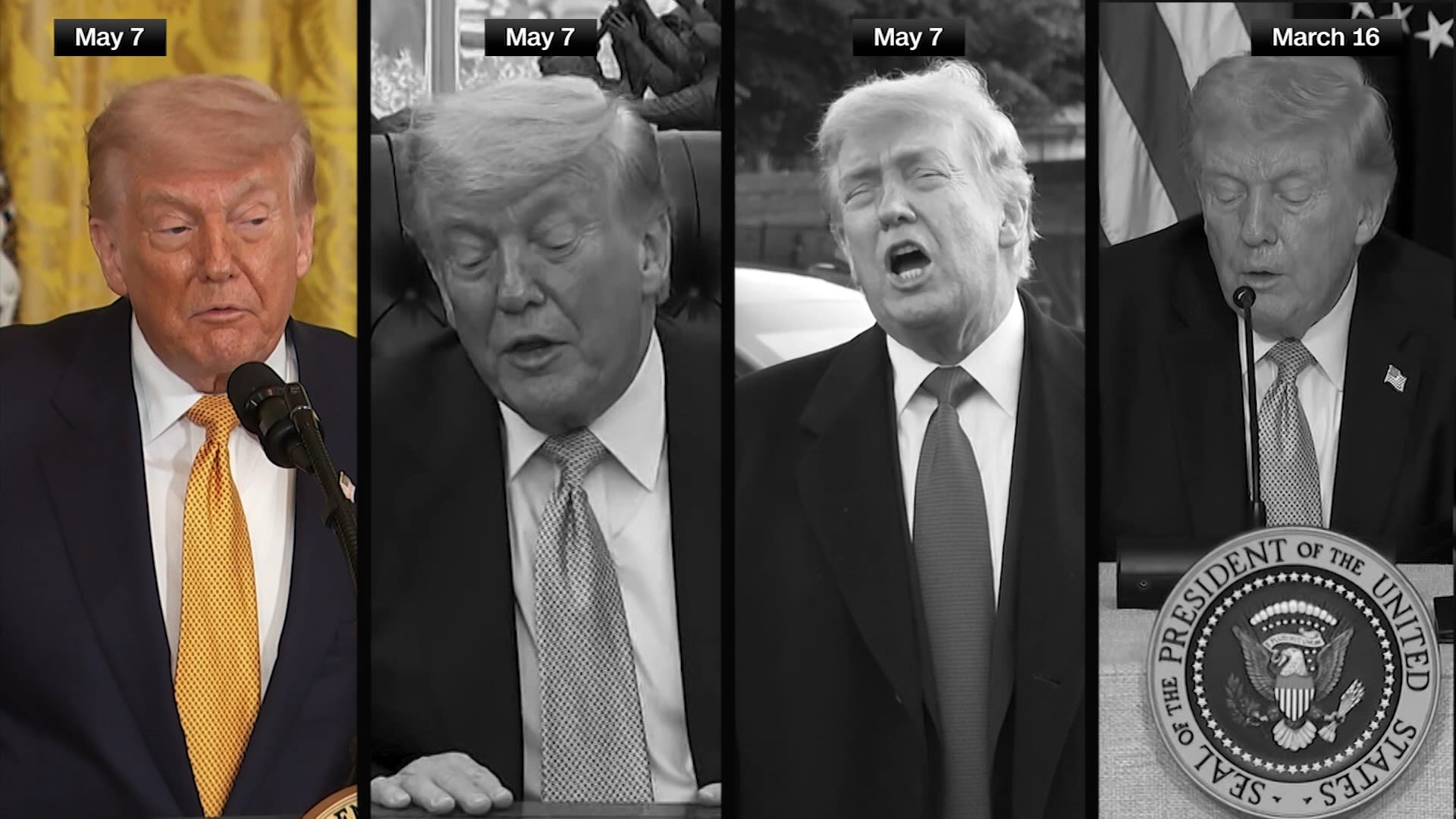
Back in April, CNN’s “Inside Politics” made a montage of times Trump had said the war would be over soon. He hasn’t stopped the tease in the weeks since.
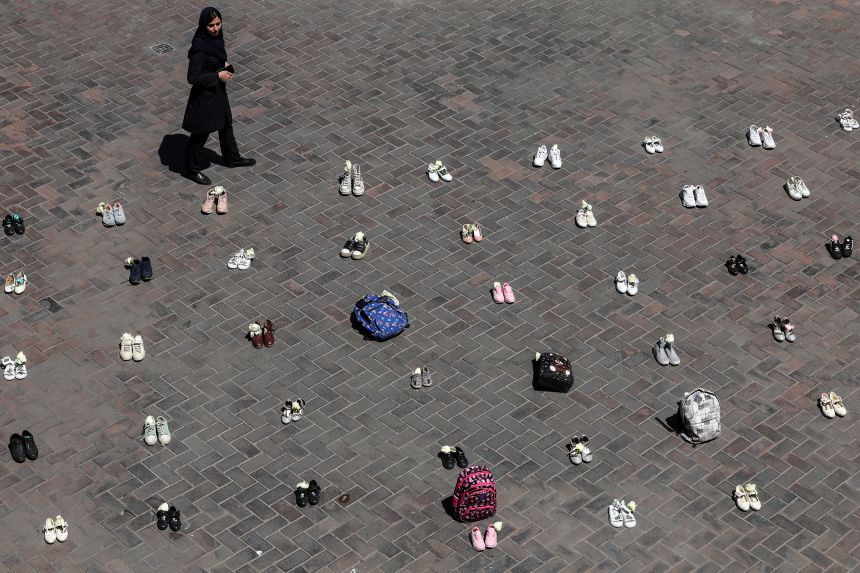
Trump has not shied away from using the word “war” to describe military conflict, which remains unauthorized by Congress. But he prefers to describe it as something less.
“I call it a skirmish because that’s what it is, it’s a skirmish. And we’re doing unbelievably well,” Trump said at the White House on Wednesday.
The word skirmish is relatively new, but the idea around it has been a constant.
“This is a short excursion into something that should have been done for 47 years,” he told reporters on March 7 on Air Force One.
“So we did a little detour and it’s working out very nicely,” he said at the White House on May 4.
 ” class=”image__dam-img image__dam-img–loading” onload=’this.classList.remove(‘image__dam-img–loading’)’ onerror=”imageLoadError(this)” height=”1080″ width=”1920″/>
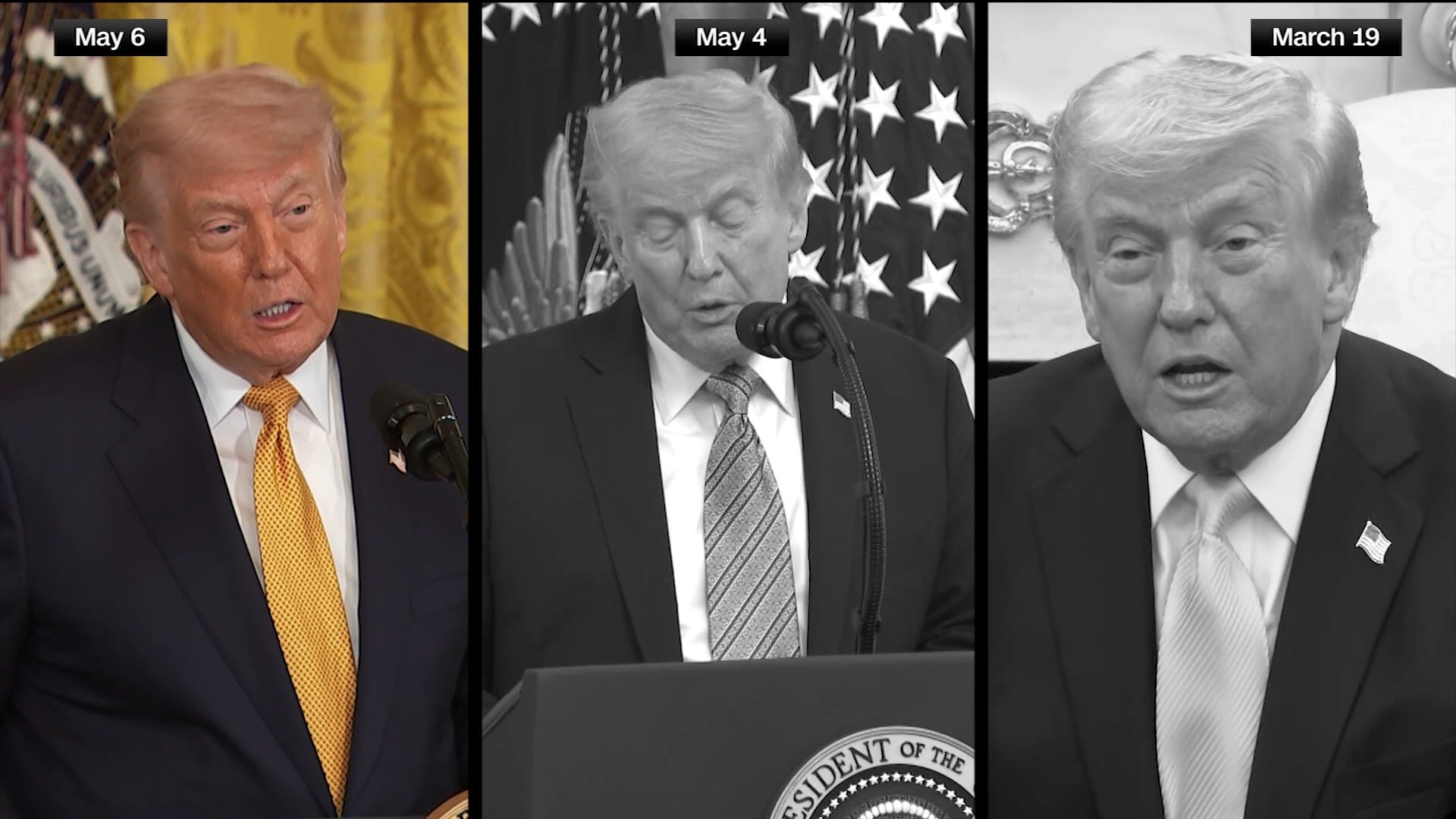
How Trump refers to the Iran war
 ” class=”image__dam-img image__dam-img–loading” onload=’this.classList.remove(‘image__dam-img–loading’)’ onerror=”imageLoadError(this)” height=”1080″ width=”1920″ loading=’lazy’/>
“They have no navy — totally wiped out — they have no air force — totally wiped out — they have no anti-aircraft capability — totally wiped out — no radar. They have no leaders. The leaders are wiped out. The whole thing — and then I read the papers and they say how well they’re doing. They’re not doing well,” Trump said May 5 at the White House.
A day earlier, he said the same thing.
“They have no navy, they have no air force, they have no anti-aircraft equipment, they have no radar, they have no nothing. They have no leaders, actually. Their leaders — the leaders happened to be gone also,” he said May 4.
It’s a talking point Trump has repeated ad nauseam, both before the April 7 ceasefire and since.
Here’s an example from his gaggle with reporters on March 20 in arguing the US had already essentially won the war:
“We’ve knocked out their navy, their air force. We’ve knocked out their anti-aircraft. We’ve knocked out everything. We’re roaming free. From a military standpoint, all they’re doing is clogging up the strait. But from a military standpoint, they’re finished,” he said back then.
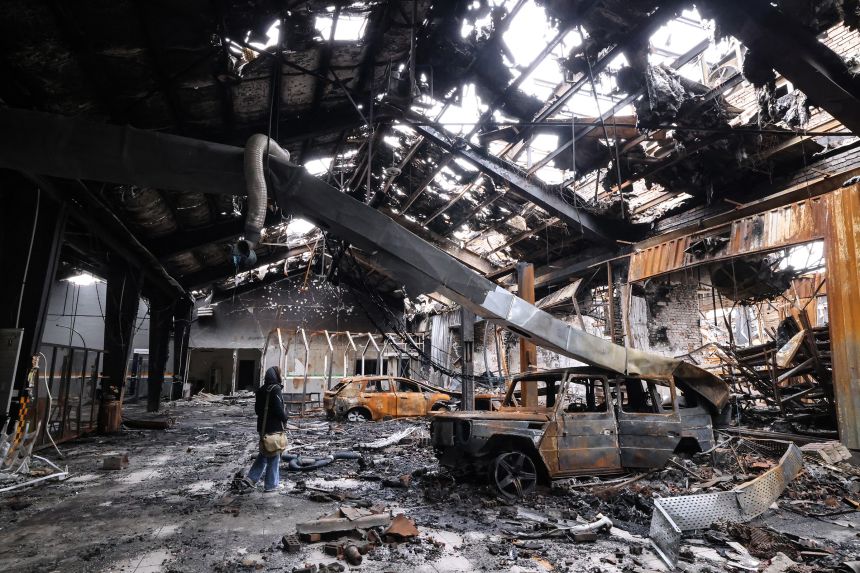
The seriousness of talks between Iran and the US has been the subject of much conjecture as they have ebbed and flowed during the war. Multipoint proposals brokered by Pakistani interlocutors have morphed into a simpler set of principles. (Some reports suggested the proposal fit onto one page, but Trump has said there’s more to it than that.)
It’s also unclear what would happen in the long term to Iran’s nuclear program. Trump has long said a major goal of the war is to make sure Iran can never have a nuclear weapon.
But Trump’s talking point is that Iran’s leadership wants a deal.
“They want to make a deal. We’ve had very good talks over the last 24 hours, and it’s very possible that we’ll make a deal,” Trump said Wednesday at the White House.
At a different Wednesday event, he said something very similar.
“We’re dealing with people that want to make a deal very much, and we’ll see whether or not they can make a deal that’s satisfactory to us. We have it very much under control,” he said.
He has been talking about how the Iranians want to make a deal for months. No deal has materialized.
“They want to make a deal,” he said on March 21.
Trump often says the Iranians want to make a deal

At that time, before the ceasefire, which was meant to help foster a deal, Trump argued the war was going according to his plan. “We are weeks ahead of schedule,” he said back then. (He’s not using that talking point anymore.)
Days later, on March 26, he was agitated that Iranians were not willing to agree to a US proposal and making threats on Truth Social:
“The Iranian negotiators are very different and ‘strange.’ They are ‘begging’ us to make a deal, which they should be doing since they have been militarily obliterated, with zero chance of a comeback, and yet they publicly state that they are only ‘looking at our proposal.’ WRONG!!!”
The situation has changed since then. There is a ceasefire, but Iran has gained leverage by shutting down the Strait of Hormuz. But the talking point remains the same.
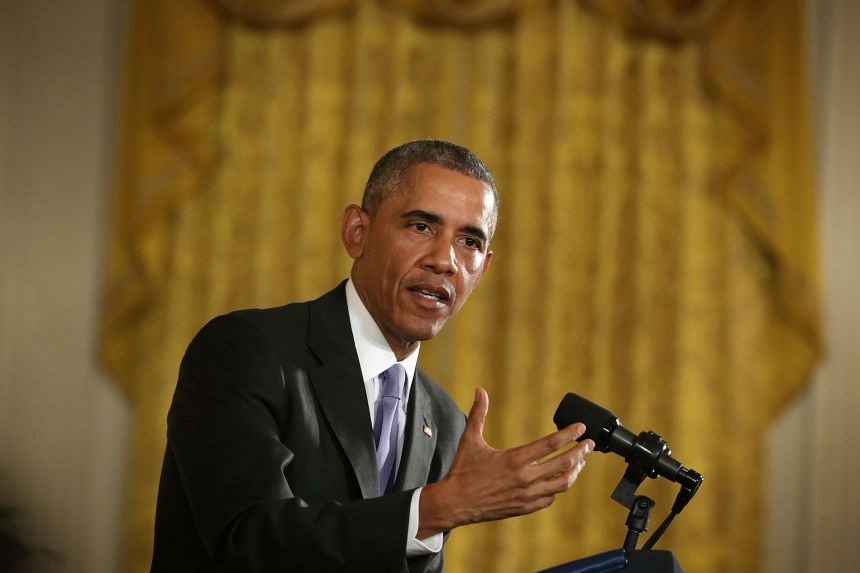
I’ve written about this before, but Trump continues to talk about the nuclear deal struck between multiple countries and Iran during the Obama administration. He repeats it often.
“Other presidents should have done this,” he said Tuesday at the White House. “Forty-seven years, they’ve (presidents) been toying with these stupid people (Iran’s leaders). In many cases, stupid people. They should have been done by Obama. He went the other way. He was giving him cash. He sent plane loads — a Boeing 757 took the seats out and put green, green cash, $1.7 billion in the plane.”
Those claims, which bend the facts of the Obama-era deal, are frequent talking points for Trump.
“The DEAL that we are making with Iran will be FAR BETTER than the JCPOA, commonly referred to as ‘The Iran Nuclear Deal,’ penned by Barack Hussein Obama and Sleepy Joe Biden, one of the Worst Deals ever made having to do with the Security of our Country,” he said April 20 on social media.
While intelligence assessments before the war did not suggest Iran was on the cusp of obtaining a nuclear weapon, Trump has argued the war was necessary to avert nuclear war.
“I can tell you, the Middle East would have been gone, Israel would have been gone, and they would have trained their sights on Europe first and then us because they’re sick people. These are sick people,” Trump said on May 5 at the White House. “And we’re not going to let lunatics have a nuclear weapon.”
The consistency of Trump’s talking points makes it hard to tell when he’s repeating the script and when he might be saying something new about negotiations on an end to the war.
CNN’s Dugald McConnell and Emily Condon contributed to this report.