
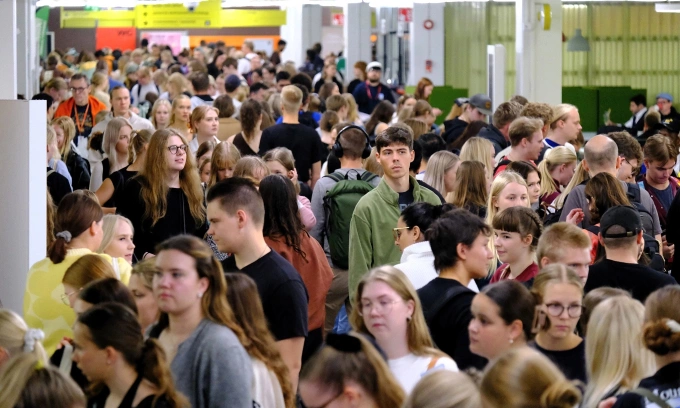
The proposal, advanced by Prime Minister Petteri Orpo’s center-right coalition, would apply to higher education and upper secondary students from outside the European Union and European Economic Area.
Under current rules, drawing social assistance can be weighed in an overall assessment of whether to cancel a residence permit but does not trigger automatic action.
The new bill would make a single payment from Kela, Finland’s social insurance agency, sufficient grounds for revocation, the Helsinki Times reported. The change would take effect later in 2026 if approved.
Finnish Immigration Service data show how rare welfare use among international students has been so far. Between September 2023 and December 2025, the agency’s automated monitoring system reviewed more than 37,000 student residence permits and flagged 333 cases in which holders had applied for basic social assistance, according to the Ministry of Economic Affairs and Employment.
None of those permits was canceled, because one-off payments did not previously trigger revocation. Officials acknowledge the new rule is meant to send a stronger signal that students must support themselves throughout their stay, not to scale up enforcement against a wave of welfare-dependent students that does not exist.
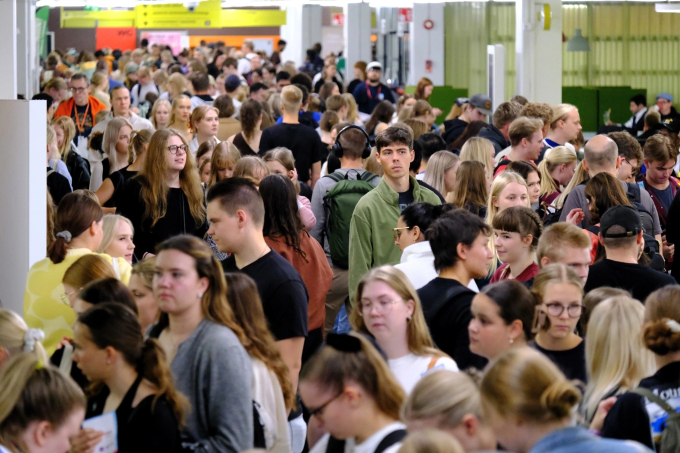
Students at Finland’s University of Oulu. Photo courtesy of the university
Minister of Employment Matias Marttinen said in a government statement that most international students in Finland are managing financially as their residence permits require, but argued the change is needed to ensure students do not slip into a vulnerable position and that permit conditions are respected. Applicants must demonstrate they can support themselves to obtain a study-based permit, so receiving social assistance is treated as a failure to meet that condition.
The April 30 bill is the first of two legislative packages tightening rules on foreign students, Yle News reported.
A second package, still being prepared, would require family members of an international student to wait until the student has lived in Finland for at least one year before applying for residence on family-ties grounds, a cooling-off period meant to give students a realistic view of Finland’s high living costs before relatives commit to relocating.
The same forthcoming package would set a specific euro figure for the financial resources students must show, replacing the current general guideline, and add a language proficiency requirement for study-based permits to prevent cases where applicants lack the language skills to complete their studies.
A wider Western tightening
The crackdown puts Finland alongside several other Western destination countries that have moved to restrict international student flows in the past two years.
Canada has slashed its study permit cap, the Netherlands has rolled back English-taught degree programs, the U.K. has barred most master’s students from bringing dependents, and Australia has nearly doubled visa fees while imposing intake caps.
Helsinki had been an outlier as a relatively open and affordable European option for non-EU students, particularly since tuition fees were introduced in 2017 and capped well below those in the Anglosphere.
Finland hosted about 22,000 international students in higher education as of 2023, including roughly 2,000 from Vietnam, according to government data.
Non-EU/EEA students currently pay tuition fees of €8,000 to €20,000 (US$9,400 – 23,500) per year, depending on the institution and program, a fraction of the cost in the U.S., U.K., or Australia. That price gap had made Finland an attractive option for South and Southeast Asian families before the latest round of restrictions.