
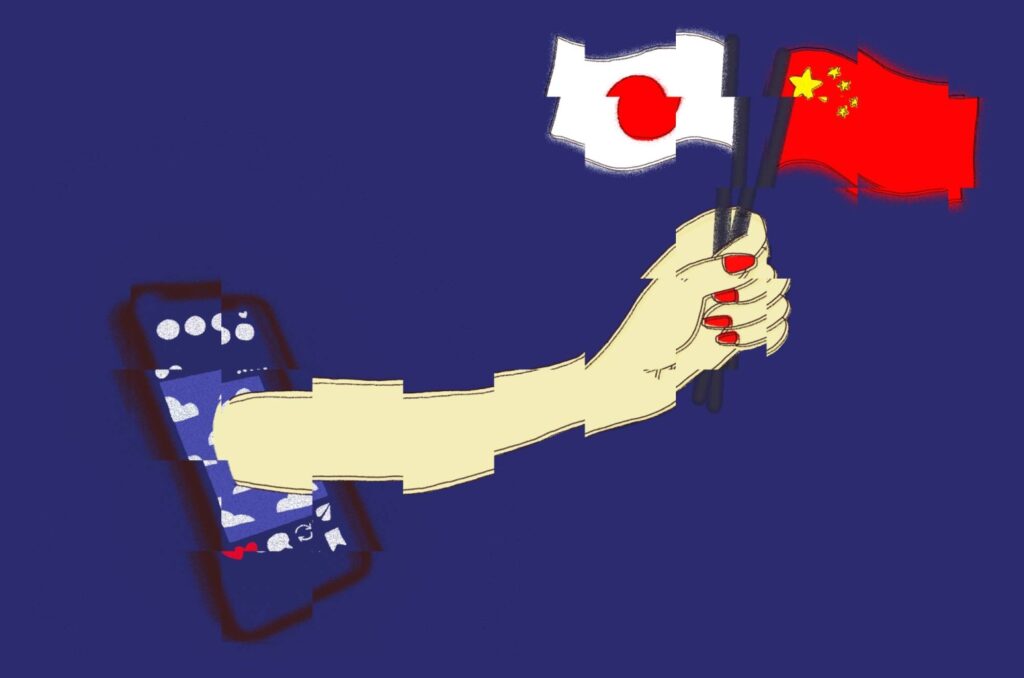
As they say online, Sakaekiko Ninomiya is “in a very Chinese time” of her life.
The 28-year-old Tokyo native, an MBA student at Shanghai Jiao Tong University, sanitizes dishes with hot tea at restaurants, treats her hay fever with acupuncture and converses easily in Mandarin with curious taxi drivers.
Ninomiya shares snippets of her everyday reality in China with roughly 33,000 followers on Instagram and 44,000 on Xiaohongshu (known in English as RedNote), a Chinese social media and e-commerce platform that blends elements of Instagram, TikTok and Pinterest and has more than 300 million monthly active users.
But this is a far cry from “Chinamaxxing,” a recent social media trend where Westerners adopt Chinese customs or practices with ardent superficiality: drinking hot water, dabbling in tai chi or even simply wearing red.
Ninomiya’s videos are part of a yearslong journey in which she has readily embraced a life abroad, reflected in clips that show her doing everything from getting massages and taste-testing the local KFC to visiting the scenic cliffs of Hunan Province’s Zhangjiajie, a UNESCO World Heritage site.
She says she feels “inspired by the speed and initiative” of a city like Shanghai, situated as it is in a country “where new ideas and services are constantly emerging.”
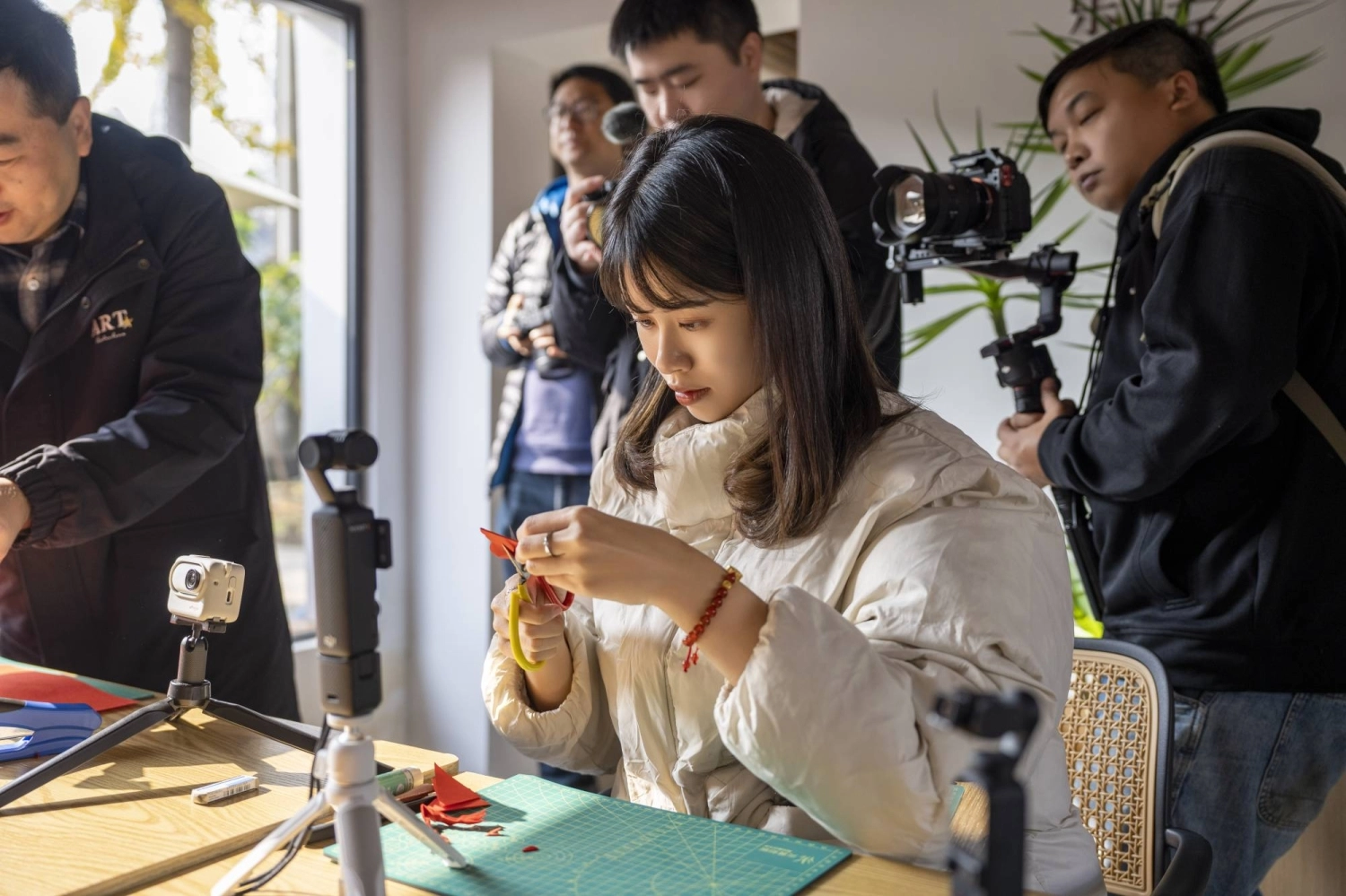
While she believes increased interest in Chinese culture is overall a net positive, Ninomiya says superficial approaches like Chinamaxxing “can obscure the values of the people who actually live there and the complexities of society.” Her goal with social media is to “guide people toward a more three-dimensional understanding of China.”
Last year, Japan received a record 42.7 million foreign visitors. The surge has included a growing number of influencers, who often draw criticism for social faux pas. Still, creators such as Paolo from Tokyo, Chris Broad and Sharla in Japan — each with audiences in the millions — have played a significant role in shaping how global viewers understand life in Japan.
Compared with those Japan-based personalities, however, Ninomiya navigates an arguably more complicated landscape. Her growth as a content creator comes at a time of deep mistrust between not just the governments of Japan and China but their societies as well.
That roughly 9 in 10 Japanese people hold unfavorable views of China has been a persistent reality for years. Chinese public sentiment toward Japan, long strained in the first place, has also worsened amid renewed tensions following Prime Minister Sanae Takaichi’s November remarks suggesting that a Chinese naval blockade of Taiwan could constitute a “survival-threatening situation” for Japan.
Fallout from the remarks quickly spilled into cultural life. Concerts by Japanese artists — including Ayumi Hamasaki, who performed to an empty arena in Shanghai after her show was canceled — were abruptly halted, while releases for Japanese films such as “Detective Conan” and “Cells at Work!” were postponed as Beijing tightened restrictions on Japan-made entertainment and advised its citizens to avoid traveling to the country.
Against this backdrop, Japanese vloggers and influencers on Xiaohongshu, Instagram and YouTube offer glimpses of cultural exchange — functioning, in effect, as digital diplomats even as a cloud of antipathy continues to hover over the political domain.
Public-facing personas
A mere 92,900 Japanese citizens live in China today, a 38% decline from a peak of 150,000 in 2012. That same year, more than 21,000 Japanese students were studying in China. By 2023, according to Japan’s education ministry, that number had fallen to around 3,000 — a drop of 85%.
Though the digital pond of the Chinese internet is massive, bilingual Japanese vloggers are still a rare breed, which perhaps explains the broad interest in these content creators.
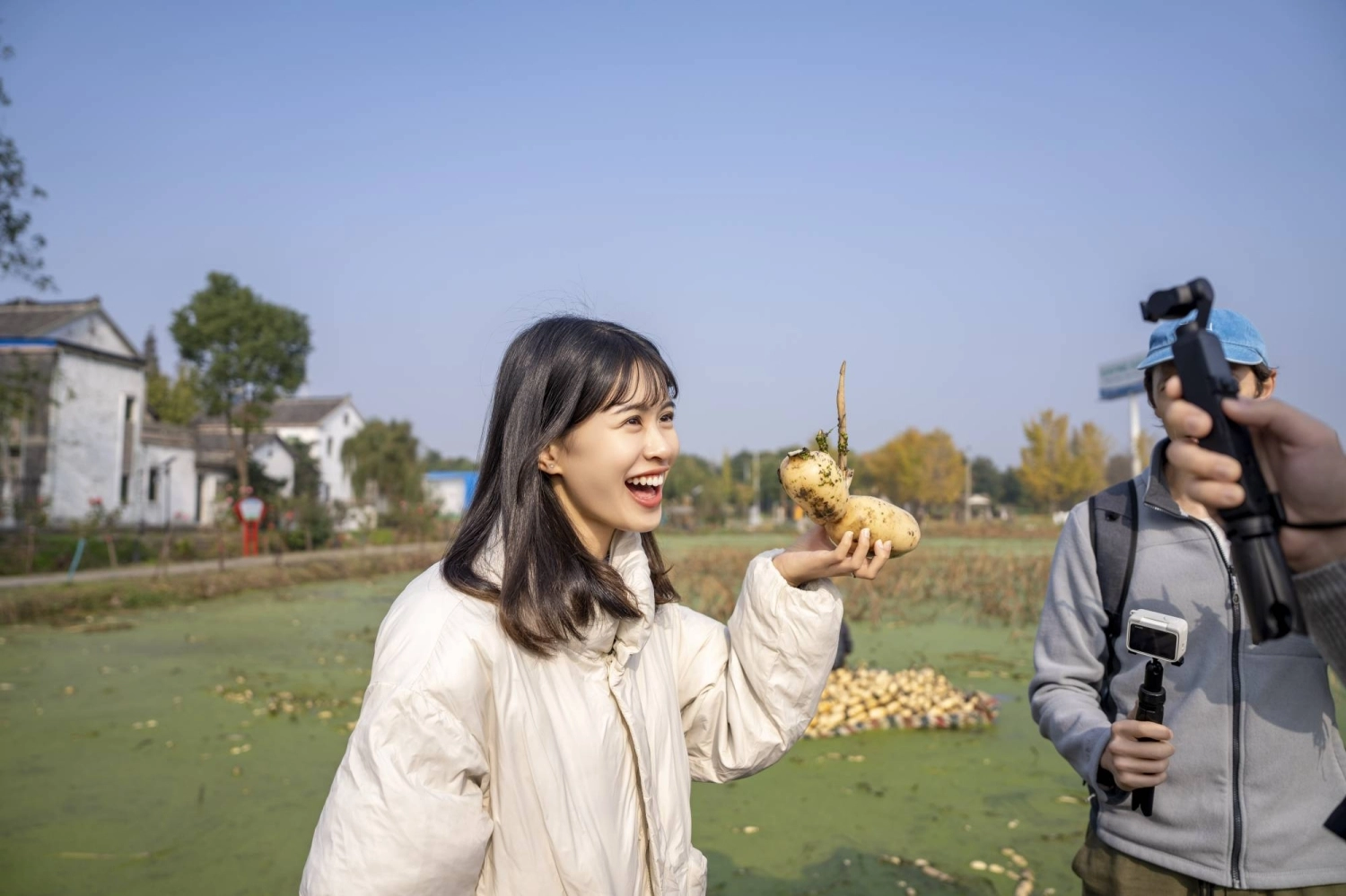
Ninomiya says she was inspired to pursue graduate studies in China during a short stint in Xiamen, Fujian Province, in 2023, when she was able to experience “everyday culture and values that you don’t see as a tourist.”
Xiamen was also the entry point for Shunsuke “Dragon” Nakamura, 29, who says the kindness of Chinese students at Xiamen University, where he did a three-week study abroad course in 2017, left a lasting impression.
“I was surprised by how different China was from what I had imagined,” he recalls.
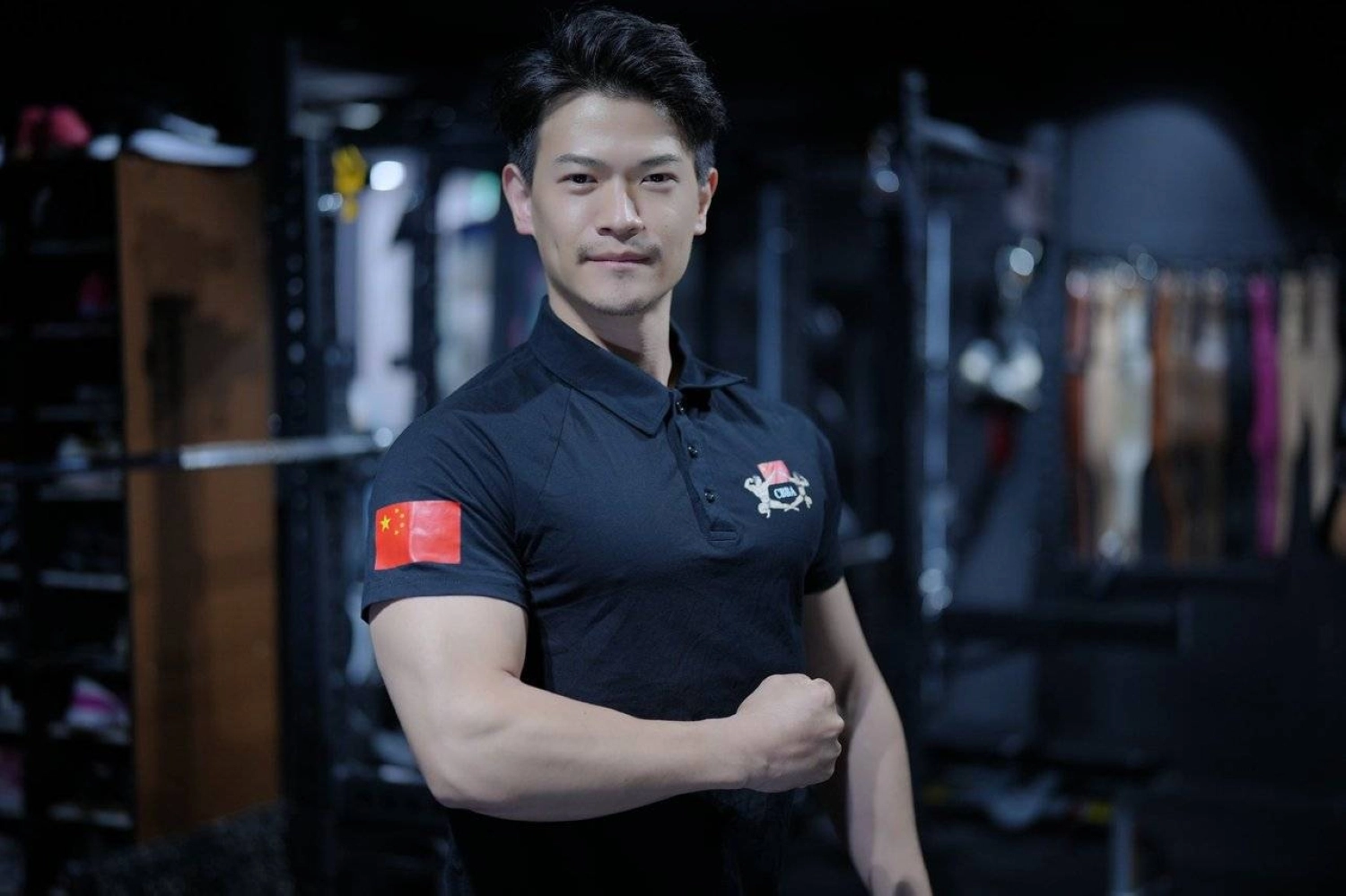
In 2024, Nakamura returned to spend 10 months in Beijing, a time in which he also traveled extensively from Inner Mongolia to southwest Sichuan Province. He now works as a personal trainer in Tokyo while maintaining a presence on Xiaohongshu, where he shares friendly video messages in fluent Mandarin with more than 32,000 followers.
Mutual cultural appreciation exists among social media users, he says, including Japanese people who are open to learning more about China firsthand and Chinese people with a fondness for Japanese language and culture. “Compared to Japan, I get the sense that there are more (Chinese) people who want to voice their opinions and leave comments,” he says.
While the Japanese population in China has declined, the inverse is true in Japan. Chinese nationals are the largest group of foreign residents, numbering more than 930,000 at the end of 2025. Roughly 124,000 are students, according to the Japan Student Services Organization, accounting for more than one-third of all international students.
This asymmetry helps shape the audiences that Ninomiya, Nakamura and their contemporaries attract. Their Xiaohongshu posts — often subtitled in both Chinese and Japanese — create a space for both Japanophiles in China and overseas Chinese viewers who can see their country anew through a defamiliarized lens.
“You speak Chinese really well,” one user commented on Nakamura’s recent video of a stretch of cherry blossoms in Saitama. “Let’s have a drink in Shinjuku sometime.”
Meanwhile, platforms such as Instagram and YouTube reach a complementary demographic: Japan-based viewers curious about life in China. Ninomiya says she keeps both audiences in mind, aiming to “create content that connects both perspectives.” Her videos often focus on shared experiences — taking ID photos, visiting a Christmas market, trying food stalls at a festival — that resonate across cultural lines. Some of her Japanese followers say their perceptions of China have shifted or that they’ve been inspired to visit. Even relatively mundane content, she says, “can greatly change people’s impressions of a country.”
That visibility comes with risks, however.
After posting about a Japanese singer’s concert in Nanjing in November 2025, Nakamura received a wave of hostile messages from Chinese users angered by his invocation of a city associated with the brutality of Japanese wartime occupation. The backlash came just as bilateral tensions were worsening — a reminder of how quickly history and politics can transform the tenor of social media.
Criticism flows in both directions. “An MBA in a communist country?” commented a user on Ninomiya’s Instagram reel about her graduate school orientation. “Are you kidding me?”
At close range
These Japanese content creators have followed diverse paths to their online niches.
Kazuki Ota, a business owner in his 30s, first visited China in 2015 after traveling to more than 30 countries. “I didn’t have any real sense of Chinese people,” he says, recalling how unexpectedly different — and fascinating — Shanghai seemed from the rest of the world.
He later learned Mandarin informally while working in New York, where he spent much of his time with Chinese friends. Now based in Tokyo, Ota travels to China monthly for business and leisure, documenting his experiences on Xiaohongshu for more than 120,000 followers.
His vlogs, narrated in a casual mash-up of Mandarin and Japanese, alternate between experiences like a wedding ceremony in Kyoto and a solo voyage to the southwestern metropolis of Chongqing.
Other influencers offer an even more intimate vantage point.
Xingcai, who goes by an online handle for privacy reasons, grew up in Aichi Prefecture and first studied in China as a university student. She later returned on a Chinese government scholarship and settled in Nanjing in 2019 after marrying her Chinese husband. They have two daughters together.
Her videos — primarily in Japanese — chronicle family life for an audience of around 8,000 subscribers on YouTube: trips to Shanghai Disneyland, visits to the zoo, rides on high-speed trains. On the Chinese platform Bilibili, a video about bubble tea shops in Nanjing has drawn nearly 1 million views.
Unlike the other creators, Xingcai offers a view into daily life from a family perspective. With her husband and in-laws occasionally appearing in her videos, she occupies a space that is neither fully foreign nor fully local.
That proximity lends even more credibility to how her content is received.
In one of Xingcai’s early videos, she shared a list of essential apps for navigating life in China, from mobile payments to translation tools. “That was helpful!” one Japanese viewer commented. Another, responding to a vlog about Lunar New Year, wrote: “I could really feel the fun atmosphere of your big family! … It’s so nice that dads in China help out with cooking, too.”
These exchanges may seem small, but they point to a broader dynamic at play.
The appeal of these Japanese influencers is not simply surface-level. In a study of Chinese social media users’ interactions with foreign influencers on Xiaohongshu and Douyin, researchers at Beijing Foreign Studies University found that “genuine admiration and curiosity” toward non-Chinese creators is a key driver of their popularity.
Such content can also function as a form of “soft validation,” the researchers noted, in which foreigners’ online engagement is interpreted as an acknowledgment of China’s cultural appeal.
In that sense, even casual videos can take on an outsized significance. They offer not only a slice of life beyond the headlines but recognition of a shared humanity that resonates with audiences on both sides.
The limits of diplomacy
Efforts to improve cultural ties between China and Japan have not been limited to individuals.
In April 2025, officials from China, Japan and South Korea inaugurated the Year of China-Japan-Korea Cultural Exchange, an initiative aimed at fostering closer ties through tourism, media and the arts. Yet even as those efforts got underway, relations between Tokyo and Beijing deteriorated, with the restrictions on entertainment and travel underscoring how quickly progress can stall.
Top-down initiatives, however well-intentioned, often struggle to translate into sustained public engagement. Grassroots actors operate differently.
Content creators such as Ninomiya, Nakamura, Ota and Xingcai reach audiences not through policy or messaging but through accumulation — small, repeated glimpses of ordinary life that, over time, reshape perception.
That influence is neither uniform nor guaranteed. History continues to surface in unexpected ways, and political tensions can intrude at any moment. But for those willing to engage, these digital spaces provide something increasingly rare: a sense of familiarity — or even affinity — across a widening divide.
While Ota hopes Sino-Japanese relations will improve, he admits that “periods of strained relations will never completely disappear,” making mutual understanding all the more critical. “I think it’s important to … see and experience things for yourself.”
Xingcai notes that, above all else, misconceptions on both sides come from a “lack of information.” Actual opportunities for exchange and interaction can help remedy this situation.
Ninomiya, for her part, says history should be “properly understood and confronted head-on.” Her overall experience abroad has been eye-opening: “I feel like I can see the good points of Japan and China more objectively than before.”
Sakaekiko Ninomiya is on Instagram and Xiaohongshu as @sakae_kiko. Dragon Nakamura is on Instagram as @dragonnakamura and Xiaohongshu as @shunpachi_style. Kazuki Ota is on Xiaohongshu as @kazukiyixi. Xingcai is on YouTube as @xingcai_in_china.