
It’s not a visible pain, it doesn’t come with a rash or open wound, but one in seven women in the U.S. suffer from it – postpartum depression, according to March of Dimes. For new mothers, postpartum depression is only one of the major health concerns they should be aware of. And for healthcare providers, it’s not always immediately recognizable that a woman is postpartum.

There’s postpartum depression and postpartum anxiety. It is normal to have some type of anxiety when you go home with a baby, but it is not normal to have so much anxiety to where you are not able to enjoy motherhood and your new baby. At this point, it is important to seek medical attention.
– Yawana Ragin, MSN, ARPN, WHNP-BC, Maternal Fetal Nurse Practitioner, UNM Hospital
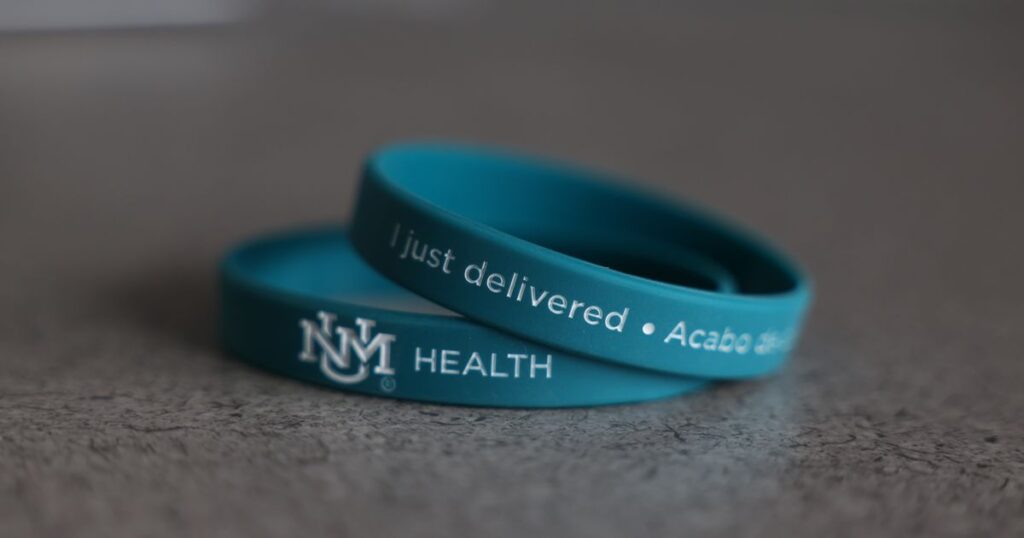
That’s why a team of maternal health experts at The University of New Mexico Hospital joined together to create wristbands for postpartum mothers to wear.
Postpartum starts right after birth and can last up to eight weeks. During that time, the body goes through major emotional and physical changes. A lot of those changes are normal, but there can be complications; some even life-threatening.
Samantha Schmaltz, MSN, RNC-MNN, NE-BC, was The University of New Mexico Hospital mother-baby unit director for seven years. She’s been providing maternal healthcare for 20 years. One of her last projects before leaving this role, was to create these wristbands and a campaign to bring awareness to postpartum health.
The wristbands, available now, are given to patients when they are discharged after giving birth. Those patients are asked to wear them 24/7, even at home, for six weeks. Patients also receive an educational handout with the wristbands that details all the signs and symptoms to be aware of during the postpartum period.
If you experience any of these symptoms, notify a provider as soon as possible.
- Heavy vaginal bleeding, soaking one or more pads in an hour
- Large blood clots, the size of an egg or larger
- Painful, warm, red, swollen leg—usually only one leg (could indicate blood clots)
- Fever 100.4 or higher (could indicate leftover placenta or an infection)
- Severe headaches not relieved by medication
- Blurry vision or seeing spots
- Extreme fatigue not relieved by rest
Wearing the wristband is supposed to remind new mothers not to ignore any symptoms they may be having. The wristbands also function like a traditional medical bracelet would- alerting providers and the public that this person is postpartum and needs specialized care.
Since the bracelets have been rolled out, staff at UNM have been educated on what to do if a patient comes in wearing one. For example, if a postpartum patient comes to the emergency department, that patient can be rerouted straight to OB triage.
Schmaltz said it’s common for postpartum mothers to neglect themselves after giving birth.
“Sometimes they will minimize the symptoms they’re feeling themselves to take care of baby and make sure that baby has everything they need,” Schmaltz said. “The wristband initiative is to highlight those symptoms and let new moms know they need to pay attention to those symptoms and seek treatment, because it’s important and it can be related to their long-term health.”
Yawana Ragin, MSN, ARPN, WHNP-BC, is a UNM Hospital maternal fetal nurse practitioner.
She said the bracelets will help get postpartum patients quicker care by alerting hospital staff when they come in.
- Anything higher than 140/90 = Seek immediate help
- Anything higher than 160/110 = Life threatening, Call 911
“If you’re able to drive, or somebody’s able to drive you to the emergency room, coming straight to OB triage is the best thing to do,” Ragin said.
There’s more to look out for during postpartum than patients may expect, and it can be hard to tell what’s “normal” or when to seek treatment.
“There’s postpartum depression and postpartum anxiety,” Ragin said. “It is normal to have some type of anxiety when you go home with a baby, but it is not normal to have so much anxiety to where you are not able to enjoy motherhood and your new baby. At this point, it is important to seek medical attention.”
Along with mental health complications, there can also be a myriad of physical symptoms.
“During pregnancy and postpartum, you’re in a hypercoagulable state due to the high estrogen in your body,” Ragin said. This means that you are at a higher risk of getting blood clots. Usually, if one of your legs becomes larger than the other, red and swollen—and warm and painful to touch, it is time to seek medical intervention.”
“Other things that you want to watch out for that give a red alarm are heavy vaginal bleeding—that is soaking one or more pads in an hour—and large blood clots about the size of an egg or larger,” she continued.
Ragin said it’s also crucial to monitor blood pressure during postpartum and look out for symptoms of high blood pressure like dizziness or blurred vision. These are among the symptoms that can indicate preeclampsia, which can be life threatening.
Ragin stressed it’s important to help postpartum mothers as much as possible. Even little things like changing the baby’s diaper for her goes a long way. But there’s also professional help available at UNM too.
“We have a counseling team called Journeys that we can refer moms to, especially when they already have the history of depression and anxiety before pregnancy,” Ragin said.
The Journeys Program offers behavioral health services to those who are currently pregnant, recently gave birth (up to 12 months postpartum) or recently experienced the loss of a pregnancy or a child.
“There’s always help here at UNM,” Ragin said.
To learn more about care after delivery, click here.