
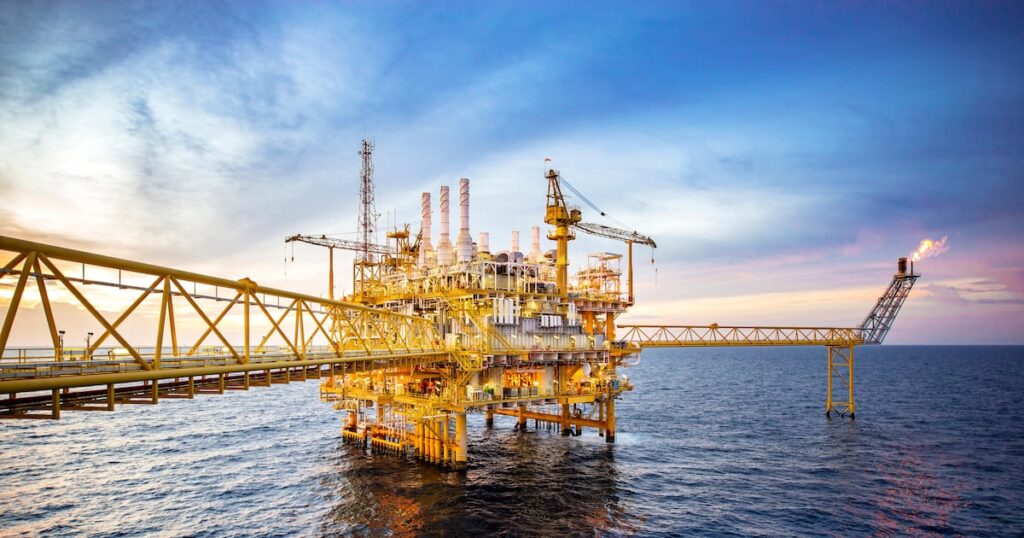
Businesses across Northern Ireland are navigating an increasingly fragile economic landscape, as geopolitical tensions and persistent inflationary pressures weigh heavily on confidence and performance.
While many firms report that conditions are “not as bad as they could be,” there is little doubt that the operating environment remains challenging, with significant risks looming in the months ahead.
At the heart of current concerns is the ongoing conflict in the Middle East, which has introduced a new layer of uncertainty to an already volatile global economy.
Although the immediate impact has largely been felt at the production level – particularly among farmers – there are growing signs that businesses are bracing for wider disruption.
So far, supply chains have held up, with companies reporting few interruptions to the flow of goods.
The real challenge is the price of those goods on global markets. Without doubt, caution is beginning to shape decision-making.
A local business travel firm has told me that while current activity remains stable, corporate clients are increasingly seeking flexibility, with demand for adjustable fare options rising sharply.
Business travellers are also tightening travel policies, particularly for routes involving the Gulf region.
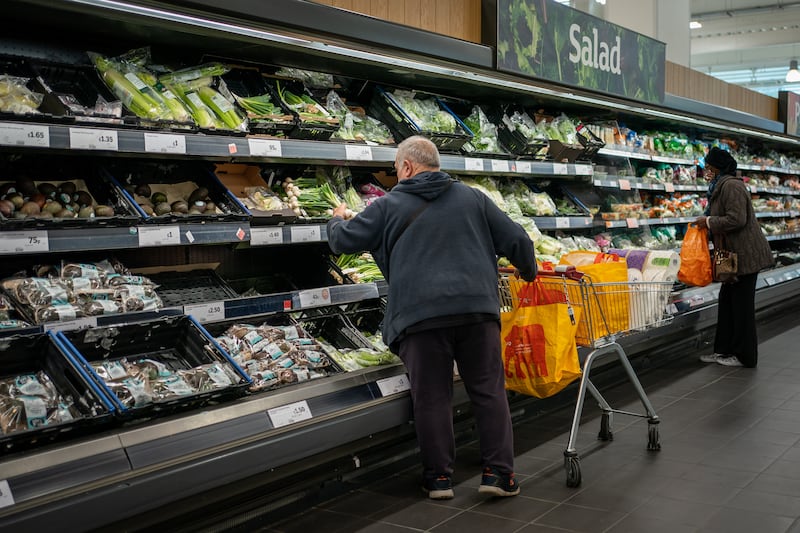 The Iran war has driven a sharp rise in food price inflation (Aaron Chown/PA)
This cautious approach reflects a broader sensitivity within the business community to how the geopolitical situation may evolve.
Tourism operators in Northern Ireland are already feeling the strain. Despite significant investment in anticipation of a strong summer season, some businesses report cancellations from US tour operators, particularly for itineraries involving Middle Eastern stopovers.
Industry representatives warn that while protecting outbound tourism is important, equal attention must be given to safeguarding inbound tourism, a key export sector for the region.
Local tourism companies have also raised concerns about existing barriers to tourism such as the lack of duty-free incentives and the introduction of Electronic Travel Authorisation (ETA), all of which risk dampening visitor numbers.
Domestically, demand conditions are becoming increasingly uneven across sectors. For example, the hospitality sector describes a climate where simply matching last year’s performance is considered a success. “Flat is the new up,” as one operator put it, with consumers dining out less frequently and hotels offering reduced prices to maintain occupancy levels.
Retailers report similar trends, with households cutting back on discretionary spending and remaining highly price sensitive. However, on the upside, the recent spell of good weather provided a modest boost to convenience store spending, but underlying demand remains subdued.
In contrast, engineering and manufacturing firms across Northern Ireland continue to demonstrate resilience, supported by strong order books and sustained demand from the United States.
The construction sector presents a mixed picture. Activity in Northern Ireland has plateaued, while the market in the Republic appears more robust.
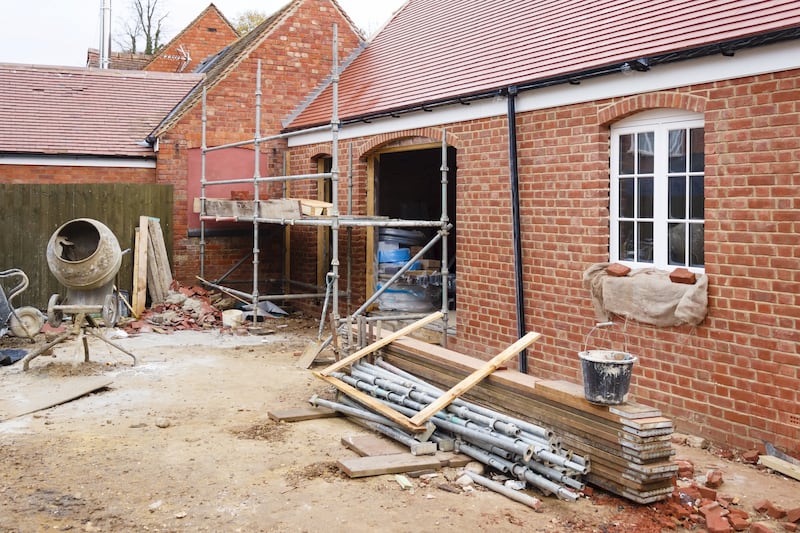 Activity in the construction sector in Northern Ireland has plateaued, recently surveys reveal (PaulMaguire/Getty Images/iStockphoto)
Meanwhile, the transport sector is witnessing behavioural shifts driven by high fuel costs, including increased use of public transport, cycling, and remote working.
Recent data shows public transport usage in Northern Ireland rising by around 5% year-on-year, and commuting times on local trains and buses are reported to be significantly busier.
Despite these sectoral variations, a common theme emerges: the economy is not facing a collapse in supply, but rather a cost-driven squeeze.
Essential inputs such as energy, fertiliser, and agricultural supplies remain available, albeit at significantly higher prices on global markets.
Logistics pressures, which previously caused delays of up to 10 days, have eased considerably, with delivery times now typically reduced to one or two days.
However, rising costs are placing severe pressure on margins throughout supply chains. In the agri-food sector, input costs have surged dramatically, with fertiliser prices alone increasing by 40% since the onset of the Middle East crisis. At the same time, producers are yet to see corresponding increases in the prices they receive, creating a lag that is squeezing profitability.
Industry leaders warn that food inflation is likely to accelerate sharply from September, when contracts with retailers are renegotiated. As one stakeholder observed, “the days of cheap food and cheap energy are over.”
Energy costs remain a central concern. While there is no immediate shortage of supply, extreme price volatility – driven by global competition and geopolitical tensions – is feeding directly into broader inflation.
Oil prices continue to fluctuate, diesel supply imbalances persist, and aviation fuel constraints are already affecting flight operations. Businesses also point to differences in government support, noting that measures in the Republic of Ireland, such as targeted subsidies, may leave Northern Ireland firms at a competitive disadvantage.
The labour market offers little relief for employers. Most businesses report limited scope for further cost-cutting, having already implemented efficiency measures. Instead, firms are making marginal adjustments, such as leaving vacancies unfilled.
Wage pressures remain present but contained, with expected increases in the range of 2.5% to 4%, influenced in part by the National Living Wage and by the sector. Nevertheless, concerns are growing that pay rises may not keep pace with inflation, potentially fuelling tensions between employees and employers.
Looking ahead, the short-term outlook is cautiously manageable, but the risks are firmly tilted to the downside, particularly as winter approaches. Rising energy costs, persistent inflation, and geopolitical uncertainty all threaten to intensify the pressures facing businesses.
 Angela McGowan (DARREN KIDD)
Against this backdrop, the coming months will be a critical test of Northern Ireland’s economic resilience.
- Angela McGowan is director of CBI Northern Ireland