
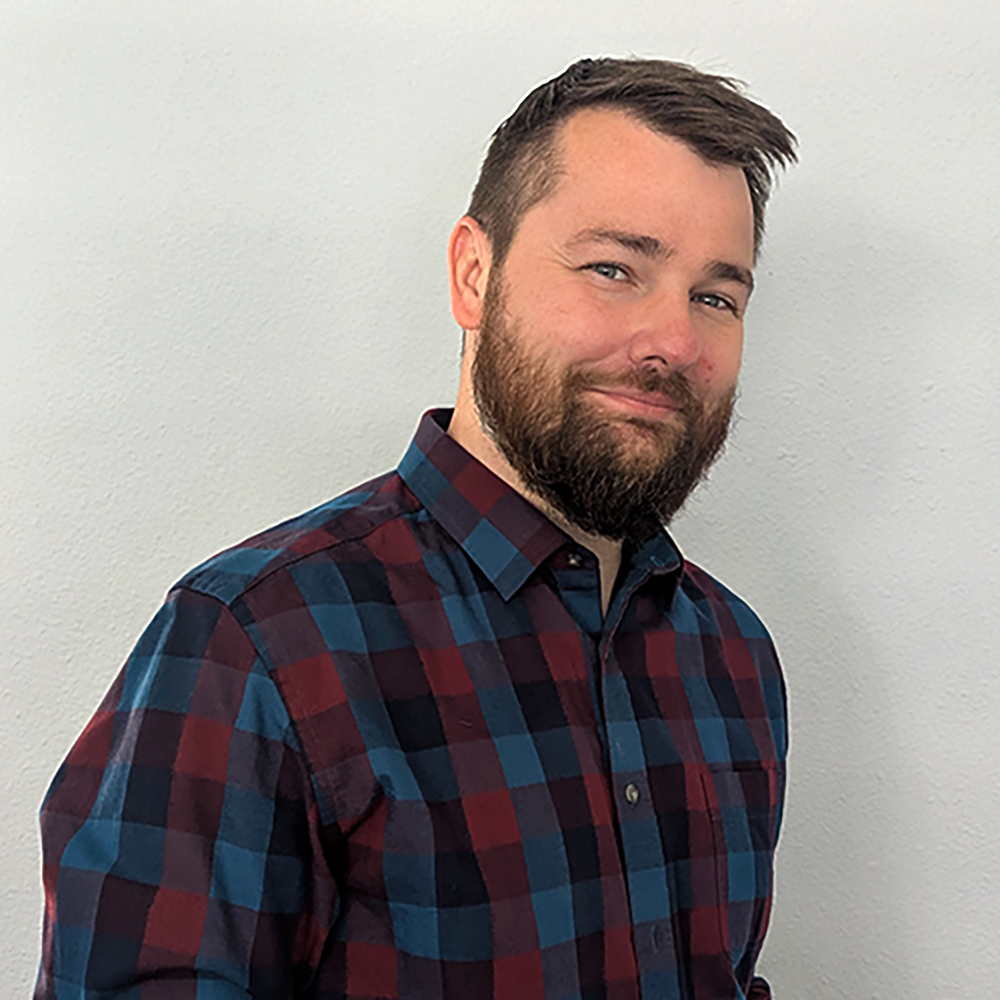
 Ben Lyons
Ben Lyons is a veritable font of information about misinformation. Lyons, an associate professor of communication at the University of Utah, has been researching misinformation since he was a graduate student, becoming one of the nation’s foremost experts. His first book, Misinformation and the Aging American: The Paradox of Engagement and Truth Discernment, is forthcoming this fall from Oxford University Press. His next book will build on that work, focusing on how older and younger adults polarize differently in today’s political media landscape—and he will be writing it not only as a professor but also as a 2026 Carnegie Fellow.
Carnegie Fellowships are prestigious, nationally competitive grants awarded around a research theme; this year, each fellow receives a $200,000 stipend to explore the causes of political polarization and to identify possible solutions. The U was invited to nominate two scholars for the honor, and 24 fellows were selected for the cohort.
“Andrew Carnegie saw it as his mission to encourage, in the broadest and most liberal manner, investigations, research, and discovery, and the application of knowledge to the improvement of mankind,” said Dame Louise Richardson, president of Carnegie Corporation of New York and chair of the Andrew Carnegie Fellows jury. “Through support of our fellows, we are continuing that mission and seeking to harness the insights of scholars of all ages, stages, and disciplines to help us understand the nature of political polarization in the United States today and to devise a means of mitigating its impact on American society.”
For his part, Lyons is eager to get started on the next book, untangling the knotty theoretical mass of political polarization, misinformation, and anti-democratic behavior. Using national survey data and an innovative methodology called Ecological Momentary Assessment combined with in-depth interviews, he will be studying how polarization manifests differently across age groups and designing and testing targeted interventions to reduce these divides. He hopes to partner with several nonprofit and advocacy organizations such as AARP, Let’s Talk Unite, and More In Common to see how this research can make an impact in the community.
Lyons is the first Carnegie Fellow from the U since the program’s inception in 2015. He says, “It’s an awesome opportunity, and very humbling to have my research recognized in this way. This Carnegie Fellowship will allow me to further communication research about political polarization and connect with community organizations to make a real difference.”
Associate Vice President for Research Jakob Jensen applauds the achievement, saying, “Ben Lyons’ selection as a Carnegie Fellowship recipient is a powerful testament to the clarity, relevance, and ambition of his work. This fellowship recognizes scholars who not only advance knowledge, but also help society grapple with its most pressing challenges. Ben exemplifies that ideal. His achievement reflects the very best of what we strive for in research—rigor, impact, and a commitment to engaging the world beyond the academy.”
Lyons’ fellowship will begin this fall, during which he is looking forward to working with and learning from his colleagues in the Carnegie Fellows cohort as well as writing the book.
Please join us in congratulating our colleague!
Learn more about the Andrew Carnegie Fellows Program, the work of past honorees, the criteria for proposals, and explore a historical timeline of scholarly research supported by Carnegie.