
By Kathrin Werner and Martin Hesse
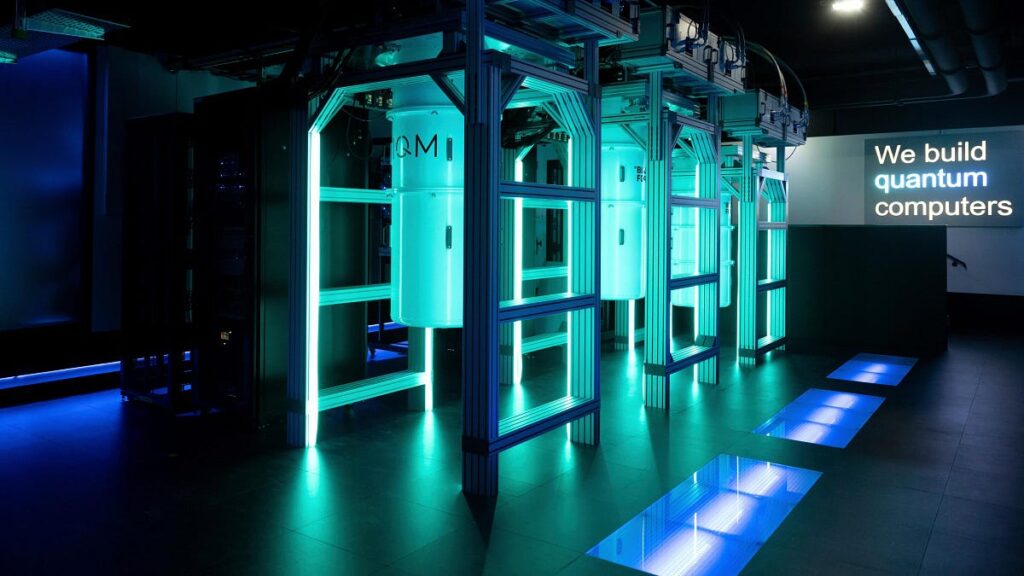
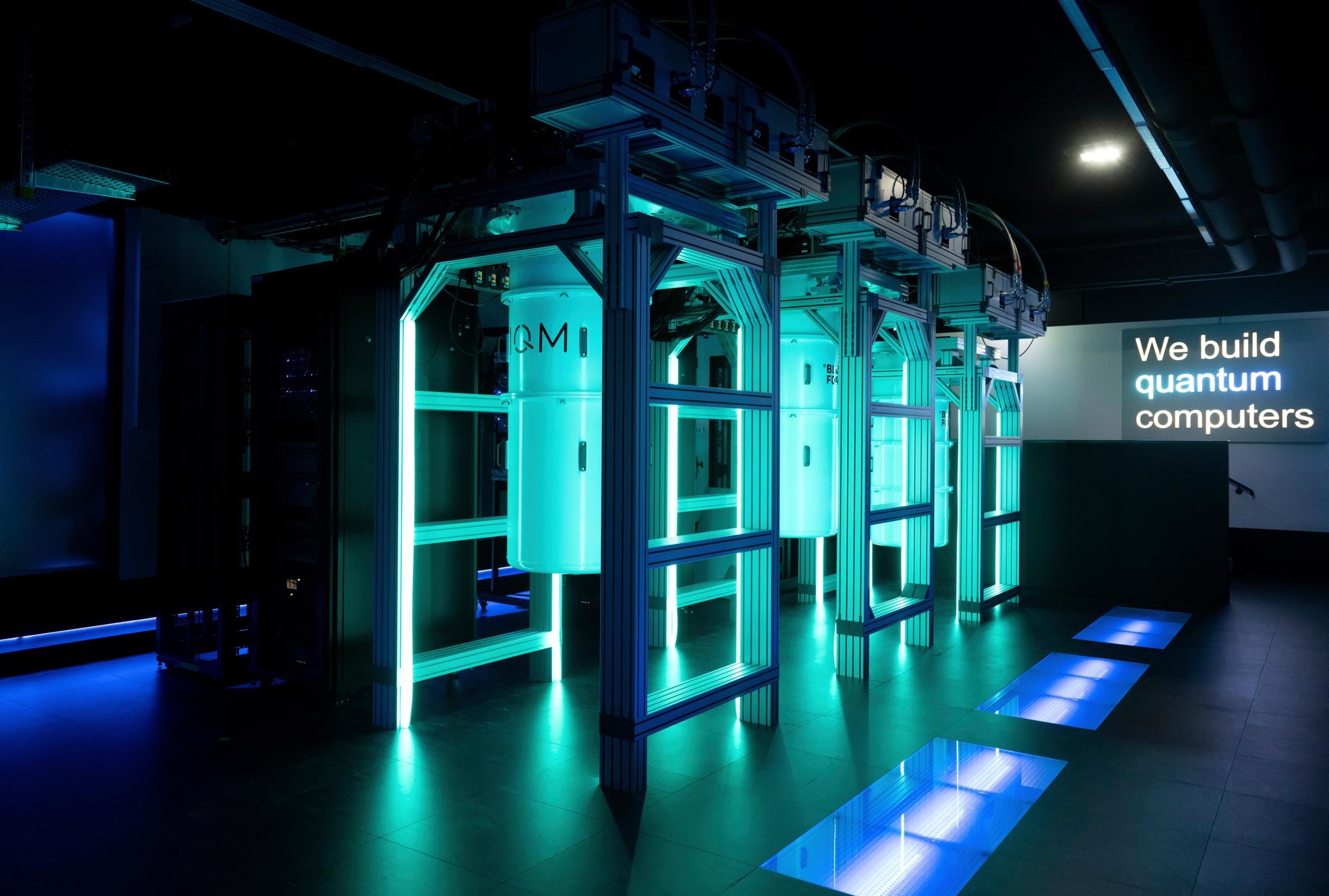
To understand just how complex the business of quantum computing is, one must first play dress-up. Light-blue full-body suit, hood, mask, rubber gloves, overshoes. Only then do you pass through an airlock into the cleanroom where Microsoft is researching the future of computing. Not a single speck of dust is allowed inside. Quantum computers and their precursors are hyper-sensitive.
In the pale light of the laboratory, Lauri Sainiemi, a Finnish manager for the U.S. corporation, attempts to explain the technology in layman’s terms. He speaks of wafers, nanopatterns, and electron-beam lithography. The company that most people associate with Word and Windows is acting here as a basic researcher, chemical group, semiconductor manufacturer, mechanical engineer, and algorithm tinkerer all at once.
Microsoft has funneled more than one billion Danish kroner—over 134 million euros—into this quantum lab alone. “Now we perform every step ourselves, right here under one roof,” says Sainiemi.
This “here” is not in the United States. It is in Europe—specifically in Lyngby, a suburb of Copenhagen. Why here and not in Silicon Valley, home to the prestigious Stanford University and a mountain of investor cash?
“Europe is at the forefront of the quantum revolution,” says Sainiemi. Much of the fundamental science for quantum computing originated here, where Niels Bohr formulated his famous interpretation of quantum mechanics in the 1920s.
A century after Bohr’s discovery, Microsoft intends to turn Copenhagen into a hub for the commercial use of quantum technology. The tech is standing on the threshold between pure research and solving relevant real-world problems. It is only a few years, Sainiemi says, “until we can truly extract value from quantum computers.”
According to experts, the value Sainiemi speaks of is gargantuan. The consulting firm BCG estimates that quantum computer manufacturers alone could generate annual revenues of 80 to 160 billion euros in the medium to long term—roughly three times the recent output of the German steel industry.
The potential global economic value of quantum technologies could even reach 2.5 to 3.5 trillion euros. These mega-computers could enable the development of new medications and help save enormous healthcare costs.
The military is also interested. Quantum computers can crack encryption; quantum sensing can detect stealth aircraft or submarines; and quantum communication can enable eavesdrop-proof data transmission.
And in this cycle of Quantum Monopoly, are we truly to believe that Europe is about to drop hotels on the board’s prime real estate before the Americans have even finished their first laps?