
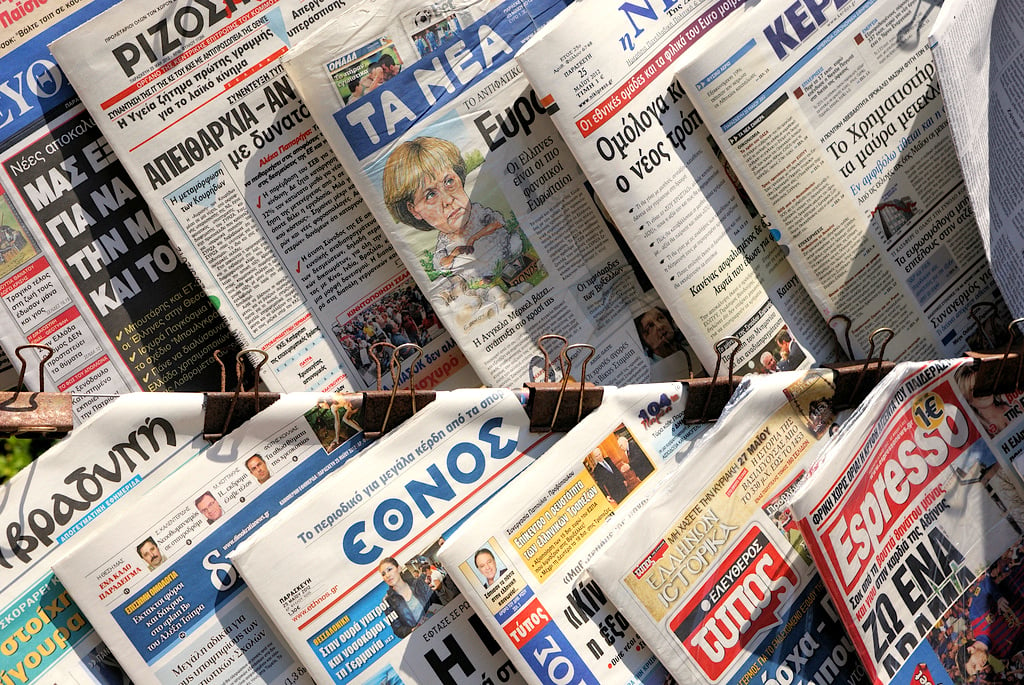
While physical attacks remain the most visible form of violence against journalists, other threats have become increasingly pervasive: economic pressure is intensifying, political interference is growing, and press freedom is steadily eroding.
The annual report of the Reporters Without Borders shows that even within the European Union, long considered a stronghold for democratic values and independent journalism, there has been a noticeable shift in the landscape.
Ricardo Gutiérrez, the general secretary of the European Federation of Journalists (EFJ) since 2013, explains how pressure from both politicians and concentrated media ownership have become major threats to media freedom and independent journalism.
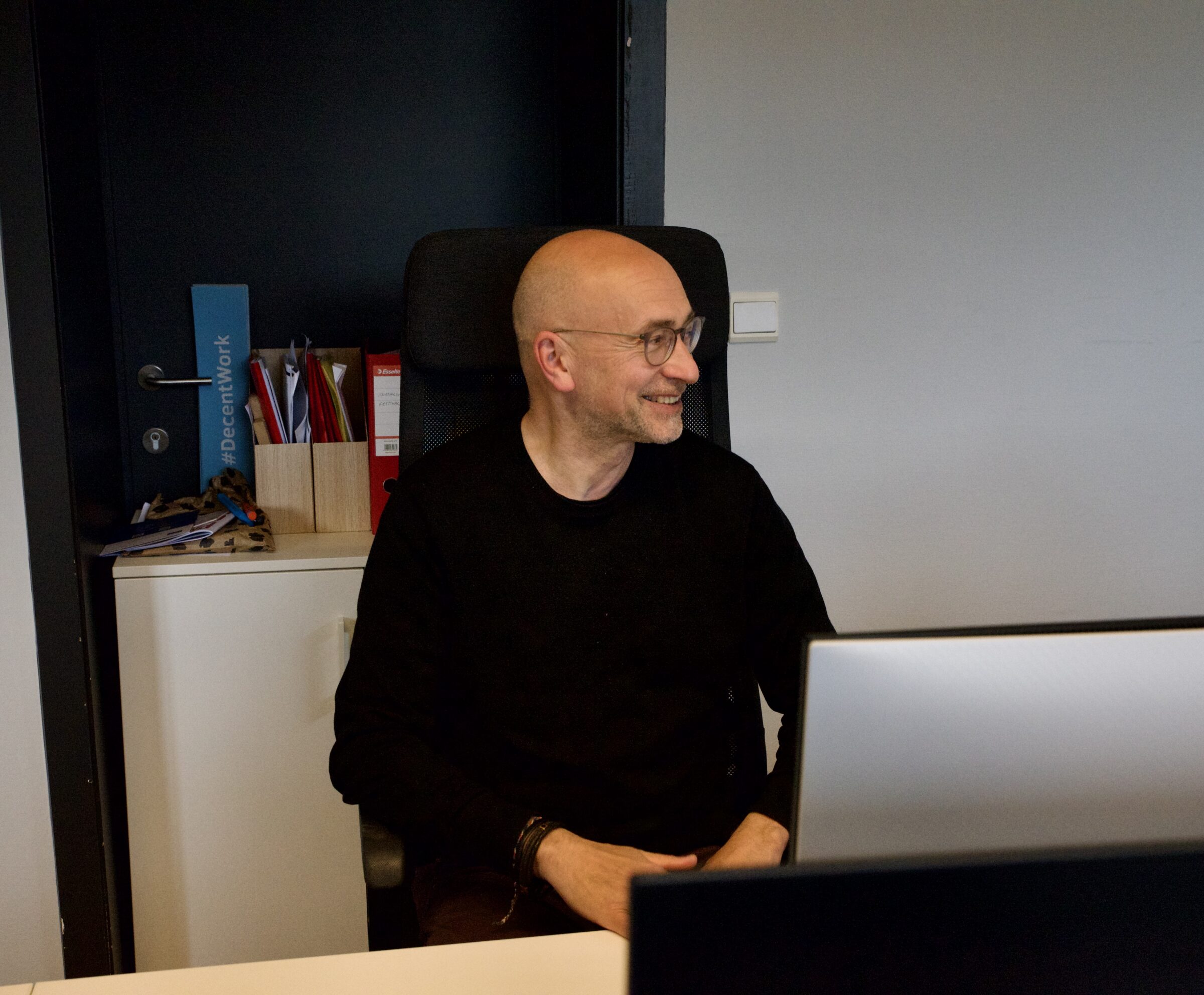 Ricardo Gutiérrez. Source : Gaia Neiman/EUobs
What is the current state of the media landscape across Europe?
There is a natural trend to concentrate ownership. If the business is not functioning, many actors will have as an only solution to sell the company. Of course they will sell it to a bigger company and that’s how you have a tendency of concentration of the media. Not all types of concentrations are worrying.
Can you provide specific examples?
In the Nordic countries of Europe, you have a high level of concentration of the media, but you have owners who are convinced that it is important to maintain plurality. So within their own group, they maintain diversity. They can have a radical right newspaper and a radical left one at the same time.
Their aim is not to influence the public opinion, but to sell newspapers, subscriptions. The Nordic group Schibsted is a good example. It is a group present in Norway, Finland and Sweden. There is a huge concentration in these countries, but with what we call an internal pluralism. There is not a plurality of media providers but a plurality within the media providers. They maintain plurality.
The opposite is what is happening in France, where you have a high level of concentration of the media. The best known is the group Bolloré, who when in charge, change the editors-in-chief in a way to promote some political ideas. So their aim is not to make business by selling newspapers. Their aim is to influence the public opinion.
In this case, it is the far-right ideas that are promoted through the media, through TV stations, radio, daily newspaper, magazines.
Vincent Bolloré is becoming a tycoon in France. That’s why we should be cautious on the concept of media concentration.
On the other hand, the important fight for us is in favour of editorial autonomy.
Can you expand on this?
We need to have independent newsrooms, independent from the owner. That is not what is happening in France. In France, there is a concentration of ownership and in addition a lack of autonomy of the newsrooms. So these newsrooms are strongly under control of the owner Vincent Bolloré, who is deciding who will be the editor-in-chief, who is firing journalists because he considers them as ‘too leftist’.
On the other hand, Norway had a kind of a scandal a few weeks ago. The public broadcaster and the major publisher group decided to hide a public interest information, that the former prime minister [Thorbjørn] Jagland, who was the former secretary general of the Council of Europe, and who is the president of the Nobel Committee, a public figure, tried to commit suicide and that he was sent to hospital. It had to do with his involvement in the Epstein files.
I’m not Norwegian but from here, I believe it is public interest information. The two major groups decided not to publish. But the little independent media published the information. Then the others followed. It shows the importance of having a pluralistic ecosystem.
How is the European Union responding to potential threats to media freedom?
The EU adopted in 2025 a very important legal framework, which is the European Media Freedom Act. That was totally unexpected from the EU as media freedom is not a European competency, but a national one.

Normally, the EU has no right to vote on legal regulations related to media freedom. They managed to do it against the position of states like Germany, who were totally against the EMFA [European Media Freedom Act] initially.
In a way, the intergovernmental organisations are more open to support media freedom and independent journalism than member states. The member states will claim that they are in favour of media freedom, but they don’t do anything about it. They don’t take action.
Ricardo Gutiérrez has been the general secretary of the European Federation of Journalists (EFJ) since 2013. Before that he worked 23 years for Le Soir, Belgian-francophone daily. As a staff journalist, he used to be the representative for Belgian Association of Journalists within the newsroom.
The EFJ has 75 journalistic member organisations from 44 countries. They represent 300,000 journalists around Europe.
Why?