
Editor’s note: Zaur Nurmamedov is a journalist and a graduate of the Faculty of Political Science at the Academy of Public Administration under the President of the Republic of Azerbaijan (1993–1999). He previously served as first deputy editor-in-chief of the Vesti.Az news portal (2009–2023). The views expressed in this article are his own and do not necessarily reflect the position of News.Az.
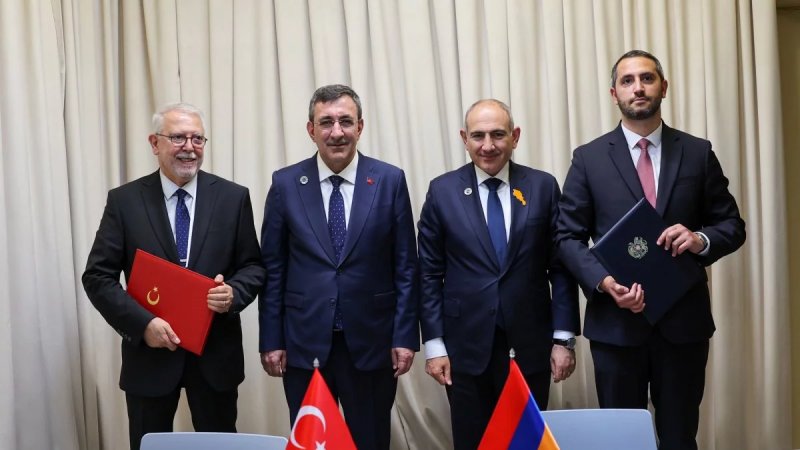
Armenia and Türkiye have reached one of the most significant practical stages in the normalisation of relations in recent decades. Ankara has announced that all bureaucratic preparations for launching direct trade with Armenia were completed as of 11 May 2026. This means that goods moving between Türkiye and Armenia via third countries can now be officially registered as bilateral trade, with Türkiye or Armenia indicated as the country of origin or final destination. Previously, this option had been restricted, effectively keeping trade in a more complicated, indirect and less transparent format.
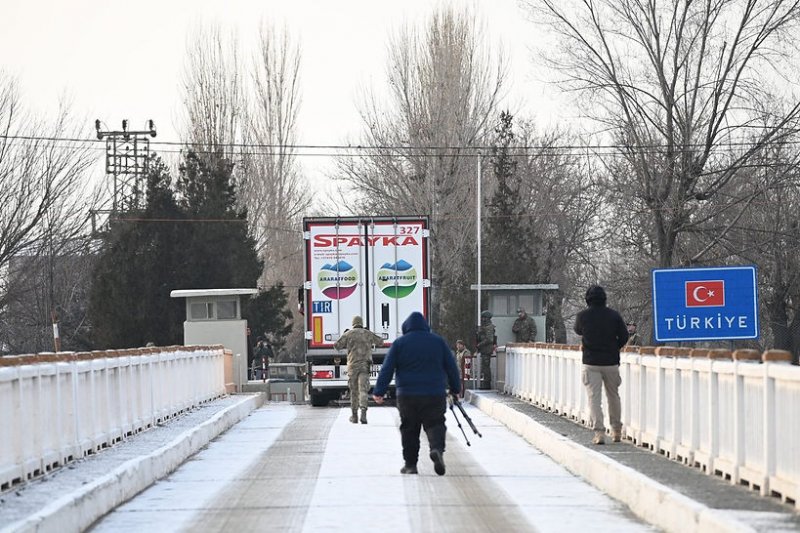
Formally, this does not yet amount to the opening of the land border between Armenia and Türkiye. The shared border remains closed, and shipments will continue to pass through third countries. However, the political significance of this step goes far beyond an ordinary customs procedure. For the first time in many years, Ankara and Yerevan are creating a mechanism that allows businesses to operate directly, even though goods still do not physically cross the common border. In a region where transport routes and trade links have for decades been shaped by political conflict, this could signal a gradual shift from diplomatic rhetoric to concrete economic engagement.
Turkish Foreign Ministry spokesperson Öncü Keçeli said that preparations for the launch of direct trade had been completed as part of confidence-building measures implemented since 2022. He also stressed that technical and bureaucratic work on opening the common border is ongoing. Türkiye has presented the decision as a contribution to strengthening peace, economic ties and cooperation in the South Caucasus.
Yerevan welcomed Ankara’s decision. Armenian Foreign Ministry spokesperson Ani Badalyan described the removal of restrictions on bilateral trade as an important step towards establishing full and normal relations between the two countries. According to her, this process could logically continue with the opening of the Armenia–Türkiye border and the establishment of diplomatic relations.
Source: Getty Images
For Armenian businesses, this step has not only political but also practical significance. Armenia’s Ministry of Economy informed the business community about the launch of direct trade with Türkiye and noted that the new arrangement could help reduce delivery costs and transit times, while also opening additional markets and avenues for cooperation. For Armenia, a landlocked country dependent on external transport corridors, even a partial simplification of trade with Türkiye could have a tangible economic impact.
At the same time, it is important to understand that the new arrangement does not amount to an immediate breakthrough. As long as the border remains closed, logistics will continue to operate via third countries. This limits the potential impact, particularly for small and medium-sized enterprises, for which speed, transport costs and route predictability are critical. Nevertheless, the ability to officially register goods as Armenia–Türkiye trade reduces administrative barriers and creates a basis for the further expansion of commercial ties.
The closure of the Armenia–Türkiye border in 1993 became one of the key factors behind Armenia’s regional isolation. Türkiye closed the border at the time in support of Azerbaijan amid the conflict over Karabakh. Since then, relations between Ankara and Yerevan have remained frozen, despite periodic attempts at normalisation. The current process began in late 2021, when the two sides appointed special representatives for talks. In the following years, direct flights were restored, and several steps were taken to ease contacts between the two countries.
The latest decision comes at a time when the South Caucasus is undergoing a period of active transformation in its transport and political architecture. Following Azerbaijan’s restoration of its territorial integrity and progress on the peace agenda between Baku and Yerevan, regional communications have once again become a central issue in diplomacy.
For Türkiye, normalisation with Armenia may form part of a broader strategy to strengthen its economic and transport presence in the South Caucasus. For Armenia, it offers an opportunity to reduce dependence on a limited number of routes and gain additional openings for foreign trade.
However, further progress will depend on several factors. The first is the state of the Armenia–Azerbaijan peace process. Ankara has traditionally coordinated its policy towards Armenia with Baku, which is why the full opening of the border is unlikely to be considered separately from the broader regional agenda. The second factor is the readiness of the parties to move from symbolic steps to infrastructure-based decisions, including the modernisation of border checkpoints, coordination of customs procedures, transport rules and security mechanisms. The third factor is domestic political stability in Armenia, where normalisation with Türkiye remains a sensitive issue.
For Azerbaijan, this process also matters. On the one hand, the opening of trade mechanisms between Armenia and Türkiye could help reduce tensions in the region and expand economic interdependence. On the other hand, Baku will closely monitor the process to ensure that normalisation between Ankara and Yerevan does not proceed separately from commitments related to peace, communications and regional security. In this sense, the new stage in Armenia–Türkiye trade may either become part of broader stabilisation in the South Caucasus or remain a limited technical step without major political follow-through.
The key conclusion is that Ankara and Yerevan have, for the first time in many years, created a practical mechanism for direct economic interaction. This is not yet an open border or full diplomatic relations, but it is no longer a situation of complete blockage. If the two sides are able to build on this step with further measures, Armenia–Türkiye normalisation could become one of the important elements of a new regional reality, in which economic ties gradually begin to replace the old logic of isolation and closed borders.
(If you possess specialized knowledge and wish to contribute, please reach out to us at opinions@news.az).