
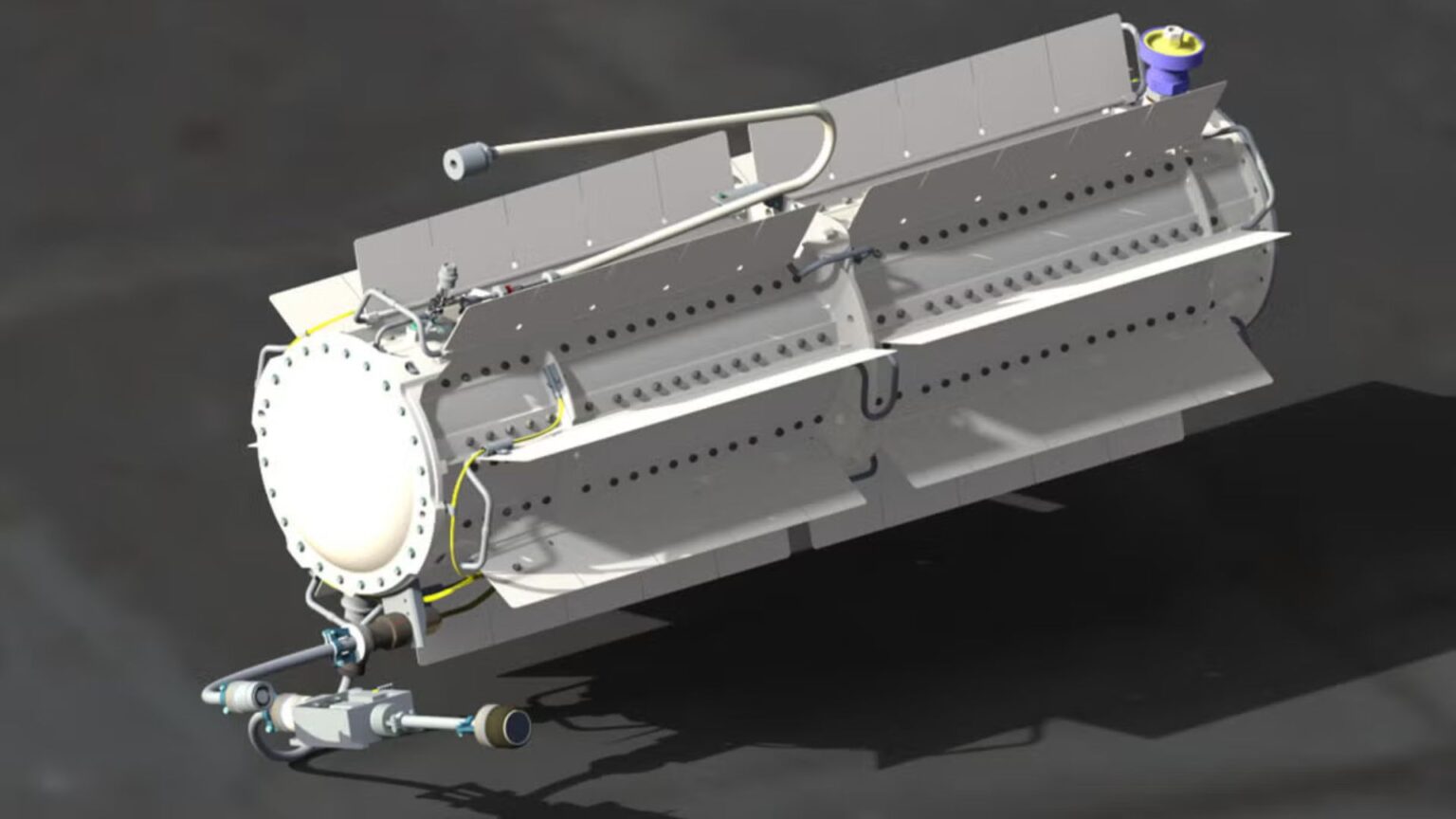
NASA could soon gain a more powerful energy source for missions far beyond Mars after a next-generation nuclear space generator cleared a major development milestone. L3Harris announced that its Next-Generation Radioisotope Thermoelectric Generator, or Next Gen RTG, passed its critical design review on April 2. The review confirms the system meets technical requirements and can move toward manufacturing.
The new generator could begin powering NASA deep-space missions in the early 2030s. Engineers designed the system for spacecraft operating in the outer solar system, where sunlight becomes too weak for solar panels to work efficiently.
Power for deep space
The Next Gen RTG produces roughly 250 watts of electricity at the start of its operational life. It generates that power by converting heat from decaying plutonium-238 into electricity. NASA has relied on RTGs for decades. The technology-powered historic missions include Voyager, Cassini, New Horizons, and the Curiosity and Perseverance Mars rovers.
Unlike the RTGs used on Mars rovers, the new system targets spacecraft operating in the vacuum of deep space. Engineers optimized the design for heat rejection and power generation in extremely cold environments. That improvement allows the generator to produce more electricity without increasing its overall weight. The compact design could become critical for future missions, where every kilogram affects launch costs and spacecraft performance.
“The Next Gen RTG represents a significant leap forward in efficiency,” said Bill Sack, general manager of RocketWorks and Power Systems at L3Harris. He added that the system delivers more power within the same mass range, an important factor for long-range exploration missions.
Uranus mission plans
NASA could use the new generator on several future projects, including a proposed Uranus orbiter. That spacecraft would likely carry two Next Gen RTGs. The generators would not only provide electricity. They would also keep onboard systems warm enough to function in the freezing outer solar system.
The mission concept reflects growing interest in exploring distant planets and moons that remain largely unexplored. Scientists have pushed for a Uranus mission for years because the planet may reveal new clues about planetary formation and icy worlds.
The technology could also support missions to Neptune and Triton, long-duration probes studying outer planet moons, and future Kuiper Belt explorers traveling farther than New Horizons. Engineers even see the system supporting interstellar precursor missions that could venture beyond the path of Voyager 1 and Voyager 2.
Restarting critical production
The U.S. Department of Energy’s Idaho National Laboratory selected L3Harris in 2021 to revive and modernize the technology behind earlier RTGs. The effort involved rebuilding capabilities that had seen limited production in recent years. Engineers also had to replace outdated components and recover incomplete technical documentation tied to older systems.
“We are proving we can do it again,” said Leo Gard, Space Propulsion and Power Systems program manager at L3Harris. Gard said engineers recreated missing technical details and found modern replacements for obsolete parts through extensive problem-solving.
L3Harris leads overall integration work for the program. Teledyne Energy Systems supplies thermoelectric components, while BAE Systems develops insulation systems for the generator.
The program is expected to reach production readiness review in 2027.